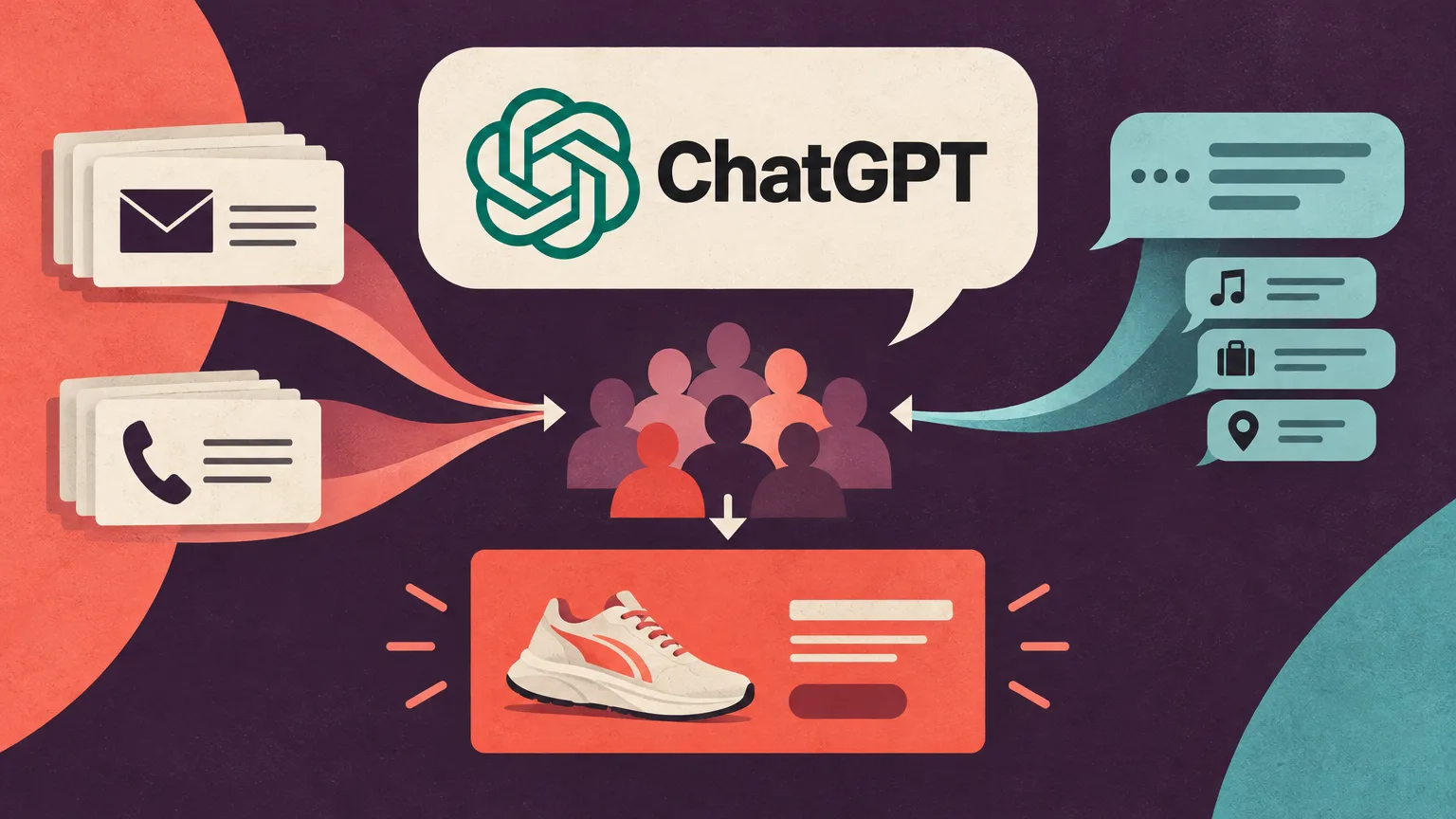
ChatGPT’s advertising system lets advertisers reach groups of users using contact lists supplied by advertisers, while also using prompt content to select ads. 404 Media documented both options in its tests.
Conversation context helps select ads
To examine the system, 404 Media ran two ads of its own inside ChatGPT. Both raised concerns about conversation privacy and linked to its reporting on Project Lily, in which contractors read real users’ prompts.
When setting up a campaign, advertisers can provide context hints describing topics, keywords or types of conversations relevant to their offering. OpenAI says these details help match ads to conversations, rather than acting as rules that require an exact match.
Contact lists can form custom audiences
Another option documented in 404 Media’s testing is creating a custom audience. Advertisers upload unhashed email addresses or phone numbers, which OpenAI matches against ChatGPT accounts. Matching accounts can then be included in the audience targeted by a campaign.
The outlet also found that the system accepts hashed versions of email addresses and phone numbers—digital fingerprints of those details. Advertisers can also use Android advertising IDs.
An OpenAI spokesperson said audience inclusion filters and audience-based bid adjustments require at least 25,000 matched users. Being on an advertiser’s list does not, by itself, cause an ad to appear. The company also says advertisers cannot see which individuals matched or select particular people within an audience.
The OpenAI spokesperson also told 404 Media that uploaded files are deleted after processing. That usually happens within 24 hours of upload, the spokesperson said.
Current chats can inform ads even with personalization off
Users can turn off ad personalization, which allows past chats, activity and preferences to inform ad selection. But the setting’s text, highlighted by 404 Media, explicitly says ads may still be selected based on the conversation currently taking place.
Ads appear alongside answers and generated images
OpenAI first introduced ChatGPT ads in the United States in February, then expanded them to other countries. Users on the Free and Go plans often see ads beneath responses to their prompts. In October 2026, the company also added ads alongside image generation results.