When Chatbots Replace Search Boxes: Who Wins at Checkout?
Behind every aspect of our digital lives, a quiet but fundamental revolution is taking place in e-commerce. Search boxes, which have been a basic tool for navigating websites for decades, are beginning to give way to conversational chatbots. This transformation is changing not only the way consumers browse online stores, but is also fundamentally reshaping the checkout process and the ecosystem connected to it.
The Evolution from Search to Conversation
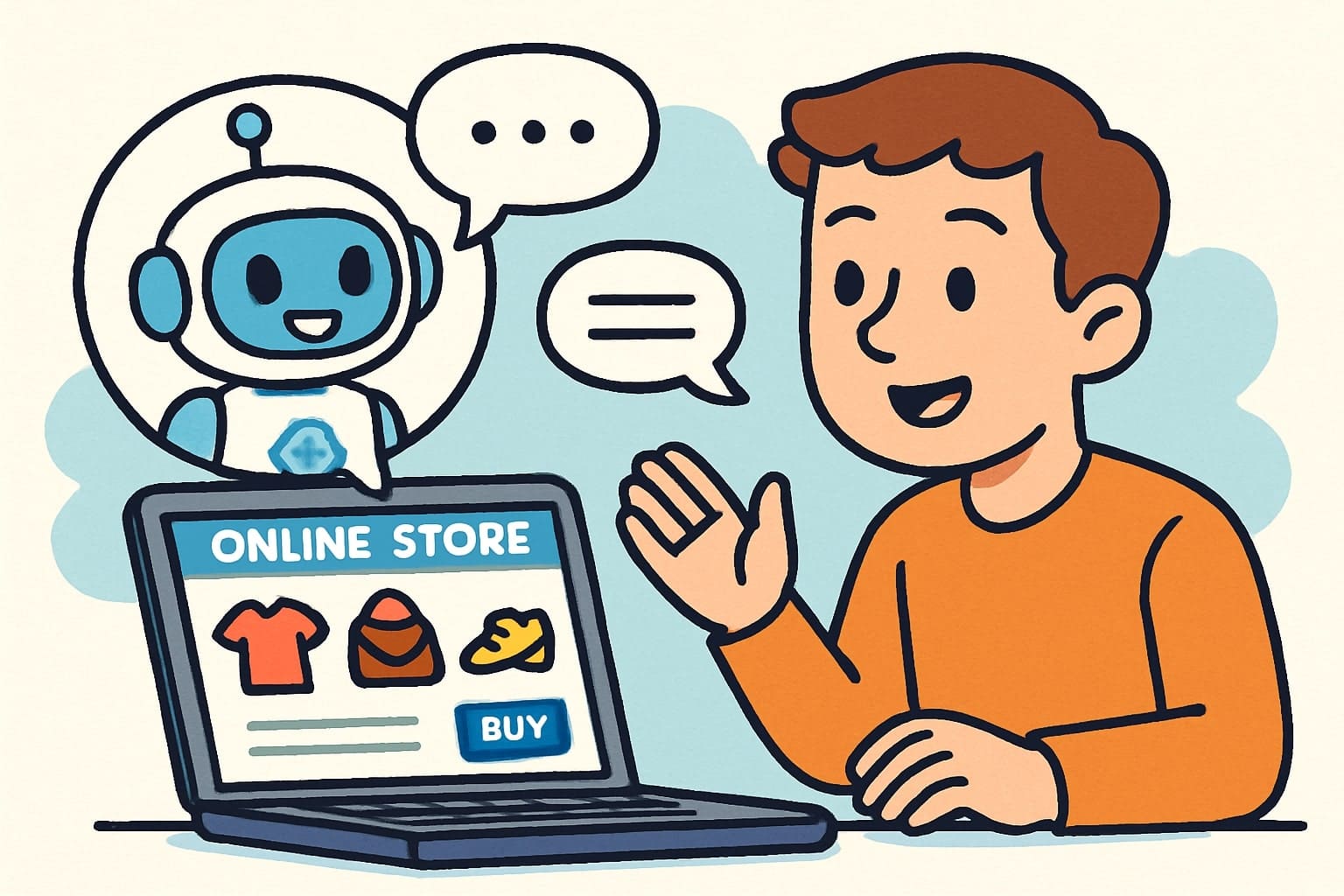
Traditional search boxes have always been a limited tool. They required users to formulate precise queries and use specialized language – you had to know exactly what you were looking for and how to describe it using keywords. Who among us has never experienced frustration when search results did not match what we actually wanted to find? "Search boxes are essentially one-way communication," explains e-commerce technology expert Alex Cohen. "The user enters a query and the system tries to find the best answer. There is no real dialogue, no understanding of context, no humanity." Chatbots powered by advanced large language models (LLMs) are fundamentally changing this dynamic. Instead of merely searching by keywords, they offer conversation. They can ask follow-up questions, better understand the customer's intent, offer alternatives and, above all – remember the context of the entire conversation. This shift from search to conversation represents a fundamental change in how consumers interact with online stores. It is like the difference between asking a salesperson in a store versus simply walking through the aisles looking for brands.
A New Path to Checkout
The real revolution, however, is coming in the way chatbots are transforming the path to purchase. The traditional e-commerce journey usually looks like this: search → browse results → select a product → add to cart → checkout. This journey is linear and often full of friction points that lead to cart abandonment. With conversational chatbots, this journey becomes smoother and more natural. A customer can start with an informal conversation about their needs ("I'm looking for something for hiking in rainy weather"), the chatbot can offer recommendations, answer specific questions about materials, availability or alternatives, and ultimately offer the option to complete the purchase directly within the conversation. "What we are seeing is a compression of the purchasing journey," says consumer behavior analyst Maria Levitská. "A chatbot can take a customer from initial interest to payment within a single conversation, eliminate transitions between pages and reduce the risk of cart abandonment." Data from early implementations is remarkable. Companies report increases of up to 35% in conversion rates among customers who interact with AI chatbots, and a 23% increase in average order value. The reason is simple – personalized assistance leads to better purchasing decisions.
Technological Infrastructure for Conversational Commerce
Implementing a truly effective conversational commerce solution requires deep integration of several technological layers:
- Language models – The foundation consists of advanced LLM models capable of understanding natural language, maintaining conversational context and generating relevant responses.
- Product database – The chatbot must have current and detailed access to information about products, prices, availability and other attributes.
- Personalization engine – To provide truly relevant recommendations, the system needs access to data about customer preferences, purchase history and browsing behavior.
- Payment integration – A key element is seamless integration with payment systems, enabling transactions to be completed directly within the conversational interface.
- Omnichannel architecture – The most advanced implementations enable smooth transitions between different channels (web, mobile apps, voice assistants) while preserving conversational context.
This complex technological infrastructure represents a significant investment, but the potential return is staggering. "Conversational commerce is not just better search – it is a complete rethinking of the customer journey," explains the chief technology officer of the ConvoCommerce platform.
Who Is Really Winning?
In this new era of conversational commerce, the question arises as to who the real winners of this transformation are. Analysis shows that the benefits and risks extend across the entire ecosystem. Merchants gain several major advantages:
- Higher conversion rates – Personalized assistance leads to a higher likelihood of completing a purchase.
- Increased cart value – Intelligent recommendations can subtly increase order size.
- Reduced customer support costs – Chatbots can answer common questions, freeing human agents to handle more complex cases.
- Richer customer data – Conversations provide deeper insight into customer preferences and purchasing behavior.
An interesting finding is that larger merchants who can invest in their own solutions gain a competitive advantage. Smaller merchants often depend on third-party solutions, creating a new market dynamic.
From the consumer's perspective, there are also significant benefits:
- Personalized assistance – Similar to an assistant in a brick-and-mortar store, but available 24/7.
- More efficient shopping – Finding what you are really looking for faster.
- Less cognitive load – There is no need to browse dozens of result pages and compare alternatives.
- More consistent experience – A well-designed chatbot provides a reliable level of service without depending on human factors.
Consumer behavior research shows that 72% of customers who have used high-quality conversational shopping once prefer this approach to traditional search.
Payment providers and fintech companies – this sector is perhaps undergoing the most interesting transformation:
- Integration directly into the conversation – Payment buttons and forms are becoming part of the chat interface.
- New opportunities for upselling financial products – "Would you like to split the payment into three installments at no additional cost?" can become a natural part of the conversation.
- Reduced payment friction – A payment process integrated into the conversation can significantly reduce cart abandonment.
"We are seeing that payment providers capable of seamless integration into conversational interfaces are gaining a significant share of the market," notes a financial sector analyst. "It is not just about processing the transaction, but about being a natural part of the overall conversational experience."
The biggest winners could be the technology platforms that control both language models and access to customers:
- Increased merchant dependence – E-commerce companies are becoming more dependent on platforms that provide AI infrastructure.
- Access to rich data – Platforms gain valuable data about purchasing preferences across many merchants.
- Strategic position in the payment chain – The opportunity to become a gatekeeper between customers, merchants and payment systems.
This concentration of power raises legitimate concerns about the future competitive environment in e-commerce.
Who Is Leading the Race?
- Shop AI by Shopify
Shopify, one of the largest e-commerce platforms, introduced Shop AI – a conversational assistant integrated directly into its platform. This tool enables small and medium-sized merchants to offer advanced conversational shopping without the need for in-house development. A key innovation is its integration with the Shop Pay payment platform, which allows transactions to be completed directly within the conversation. Early data shows a 28% increase in conversions for merchants that have implemented this feature. - Microsoft Copilot for Commerce
Microsoft has joined forces with several major retail chains to create a specialized version of its Copilot assistant focused on shopping. This system combines the capabilities of GPT-4 with proprietary product catalogs and customer data. Of particular interest is the fact that Microsoft integrated this system with its payment platform, creating a complete ecosystem from search to payment. - Google Shopping with Bard
Google is experimenting with integrating its AI assistant Bard into Google Shopping. This enables natural conversations about products that transition seamlessly into the option to purchase. Google's strategic advantage is the amount of data it already has about users' purchasing preferences, as well as its role as the gateway to the internet for billions of users.
Challenges and Risks. Despite the promising outlook, several significant obstacles remain:
- Privacy and trust
For effective personalization, chatbots need access to large amounts of personal data. This raises legitimate concerns about privacy and potential misuse. Merchants and platforms must find a balance between personalization and privacy protection. "A more conversational approach can paradoxically lead to greater sharing of personal information," warns a privacy expert. "People often reveal more in a conversation with a chatbot than they would ever enter into a search box." - Accuracy and reliability
Despite advances in AI technologies, chatbots are not infallible. Incorrect recommendations or a misunderstanding of the customer's intent can lead to frustration and loss of trust. The best implementations therefore combine AI with the option to easily switch to human assistance. - Concentration of power
As already mentioned, there is a risk that several technology giants will control the entire shopping process from search to payment. This could lead to reduced competition and innovation in the long term.
The Future of Conversational Commerce
Experts predict that by 2027, more than 50% of online transactions will be initiated or completed through conversational interfaces. This represents a fundamental shift in e-commerce, comparable to the transition from desktops to mobile devices. Several trends that will shape this future:
- Multimodal interaction – Future chatbots will combine text, images and video. For example, a customer will be able to show a photo of a product and ask about similar alternatives.
- Deeper personalization – With more data and better algorithms, chatbots will become increasingly better at predicting customer needs and preferences.
- Decentralized identities and payments – Blockchain technology and decentralized identities may provide an alternative to centralized platforms.
- Regulatory intervention – As these systems become more important, regulators are likely to take a greater interest in fair access, algorithmic transparency and consumer protection.
A Balanced Future?
The transition from search boxes to conversational chatbots represents more than just a technological change – it is a transformation of the entire way we shop online. This change brings the potential for a better customer experience, greater efficiency for merchants and new opportunities for innovation. The key question remains whether the benefits will be distributed fairly across the ecosystem, or whether this transformation will lead to further concentration of power in the hands of a few technology giants. For merchants, payment providers and technology companies, it is now critical not only to monitor this trend, but to actively shape the future of conversational commerce in a way that maximizes value for customers and ensures a healthy competitive environment. One thing is certain – those who adapt quickly to this new shopping paradigm will have a significant advantage in the coming era of conversational commerce.