American Lawmakers Seek to Ban the Use of China’s DeepSeek AI Model in Federal Contracts
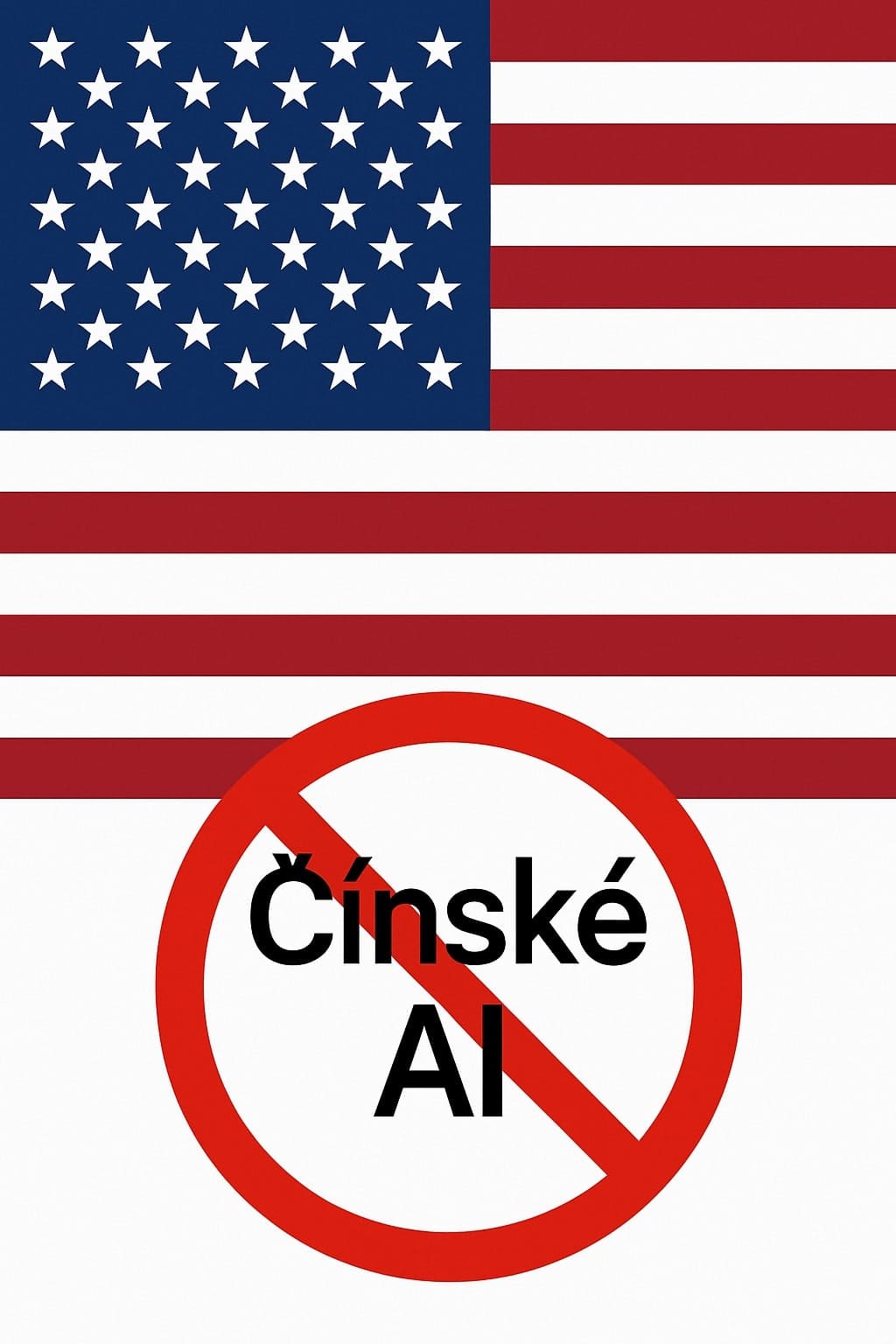
At a time of growing national security concerns related to the use of foreign technologies, the U.S. Congress has turned its attention to another potential threat – the Chinese artificial intelligence model DeepSeek. A new legislative proposal, jointly introduced by Senators Bill Cassidy (R-La.) and Jacky Rosen (D-Nev.), would prohibit federal contractors from using this technology in government contracts.
DeepSeek as a Security Risk
DeepSeek, a powerful artificial intelligence model developed by the Chinese technology company of the same name, has become the subject of increased scrutiny by U.S. security experts. The company, which was founded by former employees of ByteDance (the owner of TikTok) and Baidu, has attracted considerable attention in the AI field thanks to its advanced language and coding models. In his statement, Senator Cassidy emphasized: "Federal contractors using AI models developed in China, such as DeepSeek, pose a direct risk to the national security of the United States. We must not allow sensitive government information to be exposed to the risk of access by the Chinese Communist Party." The proposed legislation, titled the "Secure AI for Government Contractors Act," would effectively prohibit the use of AI models developed in countries designated as "foreign adversaries," specifically including DeepSeek, in the performance of federal contracts. This step follows a similar rationale to earlier bans on technologies from companies such as Huawei, Kaspersky Lab, and TikTok in the federal environment.
DeepSeek’s Technical Capabilities and Growing Influence
DeepSeek has attracted attention in the AI community thanks to its powerful models, including DeepSeek-Coder, a model specifically designed for programming that is considered one of the most capable open-source models for code generation. The company recently also released its flagship language model, DeepSeek LLM, which competes with models such as GPT-4 and Claude. "What makes DeepSeek particularly concerning is the combination of its advanced technical capabilities and its ties to the Chinese technology ecosystem," a security analyst specializing in AI technologies, who wished to remain anonymous, told CyberScoop. "Unlike some American AI models, DeepSeek operates in a legal environment where the Chinese government may demand access to data and technologies under its national security laws." DeepSeek publicly presents itself as an independent technology company focused on AI research and development, but critics point out that Chinese laws, including the 2017 National Intelligence Law, could potentially force the company to cooperate with government agencies.
Broader Context of Legislative Efforts to Regulate Foreign AI
The proposal by Senators Cassidy and Rosen is not an isolated initiative. It fits into the broader context of growing awareness of the potential risks associated with the use of foreign technologies, particularly in critical infrastructure and government systems. Senator Rosen noted: "With the rapid development of artificial intelligence, we must ensure that our government data and systems remain protected from foreign threats. This bill provides a clear framework for federal contractors to take advantage of AI innovation without compromising national security." The bill stipulates that federal contractors will have to certify that they do not use the aforementioned technologies when performing government contracts. It also requires the Office of Management and Budget (OMB), in cooperation with the National Institute of Standards and Technology (NIST) and the Department of Homeland Security (DHS), to develop standards and procedures for implementing these restrictions.
Industry and Expert Reactions
The proposed legislation has elicited mixed reactions among technology industry representatives and security experts. "While I understand the national security concerns, we must be careful not to restrict innovation and competitiveness through excessive regulations," said Alan Davidson, executive director of the Association for Advanced Computing Technologies. "Many American companies use various AI models, including open-source tools, and a blanket ban could have unintended consequences." By contrast, Dmitri Alperovitch, co-founder of CrowdStrike and now chairman of the Silverado Policy Accelerator, supports the legislation: "After years of seeing foreign adversaries use our own technologies against us, it is time to take a proactive approach to AI. The cost of ignoring these risks could be astronomical."
Impacts on Federal Contractors
If the law passes in its current form, it could have significant impacts on the federal contractor ecosystem. Many contractors are experimenting with various AI tools to increase efficiency and reduce costs when performing government contracts. Experts warn that implementing the law would require considerable compliance efforts. "It will be challenging to define exactly what 'using' an AI model such as DeepSeek means," explains Katherine Williams, an attorney specializing in government contracts. "Are contractors using these models directly? Or are they using services and products built on them? These details will have to be carefully worked out in the implementing regulations." According to estimates by the analytics firm Govini, approximately 30% of federal contractors use some form of AI technology, and this share is growing rapidly. However, it is unclear how many of them could be directly affected by a ban on DeepSeek or similar models.
International Perspective and Potential Countermeasures
China’s response to the proposed restrictions has so far been restrained. A spokesperson for China’s Foreign Ministry merely remarked in general terms that "the United States should not politicize trade and technology issues or create artificial barriers to international cooperation." Some analysts, however, warn that such legislation could lead to retaliatory measures. "China has its own extensive government procurement market and could easily implement similar restrictions on American technologies," warns Dr. Li Wei, a professor of international relations at Tsinghua University. "We are beginning to witness the increasing fragmentation of the global technology landscape." Meanwhile, experts emphasize that technological restrictions alone will not be sufficient to ensure security. "We need to invest in robust domestic capabilities in AI and advanced technologies," says Dr. Samantha Power of Georgetown University’s Center for Security and Emerging Technology. "It is not enough simply to block foreign technologies – we must build our own resilient alternatives."
What Comes Next
The legislative proposal is now headed to the Senate Committee on Homeland Security and Governmental Affairs for further consideration. If approved by the committee, it will be presented to the full Senate for a vote. A parallel version of the proposal is also expected in the House of Representatives. Meanwhile, it was announced that the Committee on Foreign Investment in the United States (CFIUS) has launched a review of certain American investments in DeepSeek, further increasing pressure on the Chinese AI company. Senator Cassidy concluded his statement with a clear warning: "We cannot allow technologies funded and controlled by our adversaries to be used in critical government systems. This is not about protectionism – it is about basic national security." As the debate over foreign AI and its security implications develops, one thing is certain – the technological competition between the United States and China is moving into a new, potentially even more significant phase, in which artificial intelligence plays a central role in the national security strategies of both countries.