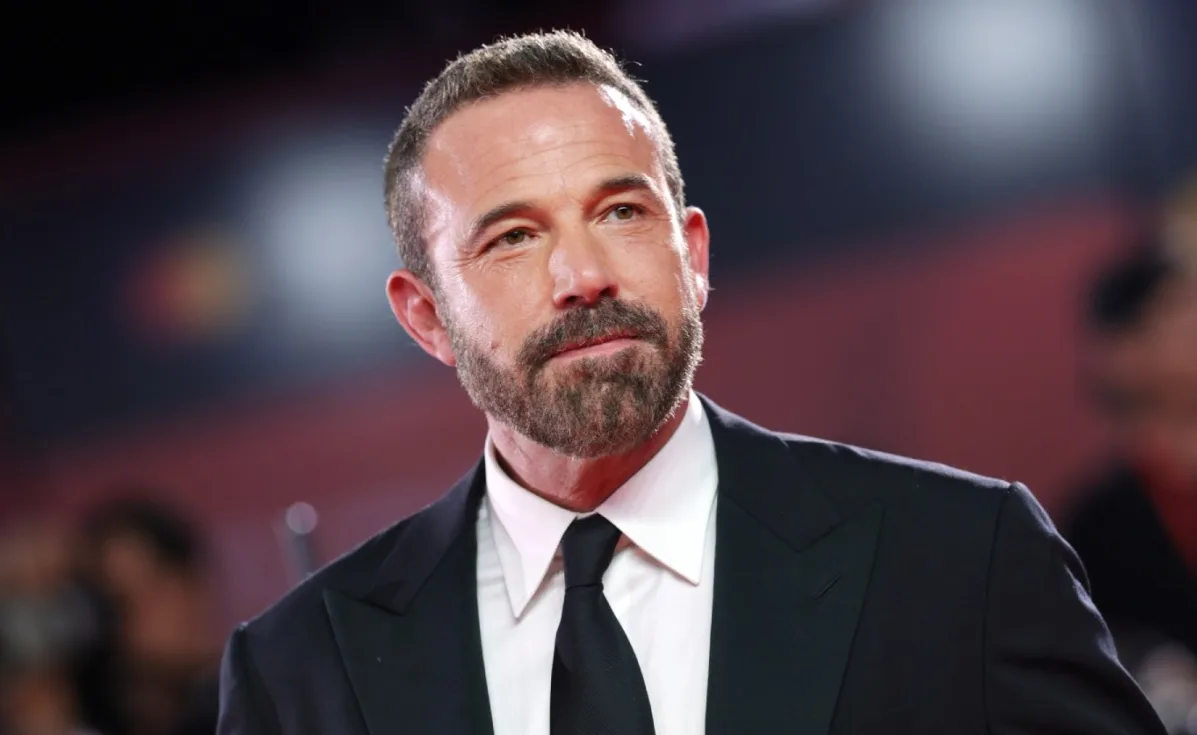
Videos have been circulating online this week in which Hollywood star Ben Affleck effortlessly explains neural networks, graphics cards, and the training of artificial intelligence models. People on social media are amazed and joke that the wrong actor was cast as the hidden genius in Good Will Hunting. But Affleck is not just blowing smoke. Four years ago, he founded a company that develops artificial intelligence tools for filmmakers, and this year he sold it to Netflix.
He Has Loved Computers Since Childhood
The most widely shared clip comes from an interview for GQ magazine’s “One More Question” series. Affleck modestly told journalist Zach Baron that he had been interested in computers since childhood. According to him, he got into artificial intelligence when filmmaking was transitioning from traditional film stock to digital recording. Filmmakers have, after all, been using machine learning to create visual effects for many years.
Affleck says he writes fairly terrible scripts in Python. But then he began talking about convolutional neural networks, the predecessors of today’s models, and the so-called tensor. He immediately explained to the interviewer that it is simply a way of converting an image into numbers—specifically the batch order, frame number, and red, green, and blue values for each pixel. He described the whole thing as completely simple, which the internet did not quite buy.
According to him, neural networks are mainly used in film to identify patterns and edges in an image. A computer can, for example, determine exactly where a windowsill ends, making it easier for visual effects artists to replace a green background with anything else.
Fame Opened the Door to OpenAI
Affleck makes no secret of the fact that his name helped him enter the world of artificial intelligence. His status as a Hollywood star gave him access to technologies that were not yet publicly available. He visited OpenAI, for example, and it was these visits that led him to the idea that he could get involved in the field himself.
His first impression was far from enthusiastic. When he first saw what early artificial intelligence models could do, he says he nearly had a stroke. At the Bloomberg Screentime conference in Los Angeles, he then described to journalist Lucas Shaw what followed. He learned Python and discovered for the first time what it takes to raise money and launch his own business.
Eight Months of Filming Just for the Data
Affleck founded InterPositive in 2022 and kept quiet about it for a long time. He was troubled by the fact that many video models had been trained on the work of people he knew personally, and he believed such an approach could not succeed as a business. He therefore chose a more expensive path. He raised money and spent roughly eight months filming with a large number of cameras and other equipment to create his own training material.
This material was used to create a final training layer for freely available models. Affleck takes a finished model, unfreezes its weights—that is, the settings the model acquired during training—and fine-tunes it so that it can meet the demands of a real film crew. Each production can then further train the model on its own footage. The filmed material and everything the model learns from it remain with the filmmakers.
Netflix Did Not Buy a Machine That Turns Text into Movies
InterPositive’s tools do not work by having someone write a sentence and letting a computer make a movie from it. The system builds a model from footage shot by the crew during individual days of filming, which the director then uses in post-production. It helps with relighting shots, color, and visual effects. According to Affleck, the model has learned to understand visual logic and continuity in editing even when the crew is missing a shot or the lighting did not work out. He says they also built safeguards into the tools to ensure that creative decisions remain in the hands of artists.
Netflix announced the acquisition in March. It took over the entire sixteen-person team and appointed Affleck as its chief adviser. It plans to offer the tools to creators it works with and does not intend to sell them to others. Chief Content Officer Bela Bajaria says the technology gives filmmakers more options, greater control, and better protection for their vision.
Netflix did not disclose the price until later, in its quarterly report. It paid nearly $600 million in cash for the company. Affleck, however, says that figure is inaccurate because he was not the sole owner of the company.
He also tested the technology on his own film Animals, which he directed, co-wrote, and stars in. It arrives on Netflix today, and artificial intelligence assisted with its post-production. Affleck does not want to reveal exactly where it was used. He compares it to a magician explaining a trick before the show.
He Calls Fear of AI Propaganda
Hollywood has long been on alert over artificial intelligence; among other things, it contributed to strikes by screenwriters and actors in 2023. Affleck is trying to calm the atmosphere. He dismisses the image of artificial intelligence as a vague, terrifying alien, as well as predictions of mass layoffs, as propaganda. He claims that the same number of people, if not more, now work on films made with the help of AI.
However, he offered no figures to support this, and the overall data suggest the opposite. According to the U.S. Department of Labor, nearly 50,000 jobs disappeared from film and video production between 2016 and 2026, roughly one-fifth of the total. This decline, however, has many causes and began before artificial intelligence appeared on set. A Pew Research Center survey also showed that seven in ten Americans expect there to be fewer jobs because of AI in twenty years.
Affleck does not completely dismiss these concerns; he simply sees the risks elsewhere. He worries about his children at school, about the fact that the number of top grades awarded at universities has increased by 30 percent over the past three years, and about so-called learned helplessness. He says the idea of Skynet taking control of the world or the film industry does not concern him. He also took a jab at the technology companies themselves, asking how many people would buy a product advertised as something that would destroy them.
At the conference, Shaw also presented him with a skeptical interpretation of the entire deal, suggesting that Netflix had acquired a respected filmmaker as cover for everything it planned to do with artificial intelligence. Affleck called that a highly cynical view and added that Netflix leaves the decisions to directors.
Shaw began the interview by noting that Affleck came across as someone who was genuinely engaged in the work. LinkedIn users are already joking that he could easily take a job as an engineer at Anthropic. Affleck is also one of hundreds of people in Hollywood who have signed a statement by the Creators Coalition on AI, which says that their position is not one of complete rejection of artificial intelligence.
Sources: techcrunch.com, forbes.com and businessinsider.com