Meta announced in December that it was buying Singapore-based AI startup Manus for more than two billion dollars. The company, which managed to surpass $100 million in annual revenue just eight months after launching, was expected to bolster Mark Zuckerberg's ambitions in the artificial intelligence race. At the time, it looked like a good deal. Four months later, all that remains is rubble and a diplomatic crisis.
Manus is no ordinary startup. Chinese media called it the “second DeepSeek.” Access codes for its AI agent, which can autonomously write research reports or analyze data, were resold on Chinese online marketplaces for more than a thousand dollars.
Why Beijing said no
Manus was founded in Beijing in 2022. Its founders, Xiao Hong, Ji Yichao, and Tao Zhang, established a company called Butterfly Effect. In the summer of 2025, they moved its headquarters to Singapore, re-registered the company, and opened the door to Western capital. The strategy had a name: "Singapore-washing". Chinese startups formally relocated beyond Beijing's reach while continuing to operate from China in practice.
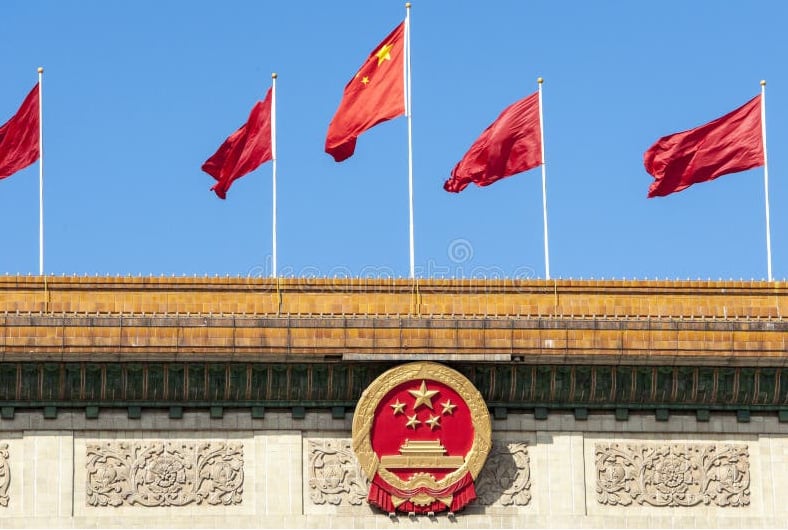
This maneuver had always irritated the Chinese authorities. But with Manus, it was the last straw. Meta completed the acquisition in December, after which China's Ministry of Commerce launched an investigation into whether the transaction had violated technology export control rules. In March came a drastic step: both founders, Xiao Hong and Ji Yichao, were banned from leaving the country. They remain in China while their colleagues work in Meta's Singapore offices.
In April, the National Development and Reform Commission (NDRC) issued its final verdict. The acquisition was prohibited. Both parties must unwind the transaction “in accordance with laws and regulations.” Meta issued a brief statement: “The transaction fully complied with applicable laws and regulations. We expect a reasonable resolution to the investigation.” It did not say what exactly Zuckerberg's team envisions by that.
The reality is complicated. More than a hundred Manus employees have already moved into Meta's Singapore offices. Xiao Hong began reporting directly to Chief Operating Officer Javier Olivan. The original investors, including Tencent, ZhenFund, and HongShan, have already cashed out their stakes. Meanwhile, Manus's technology has become intertwined with Meta's products. So far, no one can say how the deal can be “reversed.”
Beijing played the same card as Washington
China's ban on American investment in domestic technology companies is not merely a response to a single case. It is part of the ongoing technology war.
For years, Washington has systematically cut Chinese technology companies off from the U.S. market and capital. In 2019, it excluded Huawei and ZTE from U.S. networks. In 2022, it restricted chip exports to China. In 2024, it finalized rules banning U.S. investment in Chinese companies involved in artificial intelligence, semiconductors, and quantum technologies. Last year, it banned new drones from foreign manufacturers from the U.S. market.
Beijing has now turned this logic around: if Washington considers foreign capital in sensitive technologies a security risk, China will claim the same. In recent weeks, the NDRC and other authorities have begun instructing leading Chinese technology companies to reject U.S. capital in their funding rounds unless they have explicit government approval.
This directive targets the entire sector, but three names are making headlines: Moonshot AI, ByteDance, and StepFun. Moonshot AI is currently seeking a new billion-dollar funding round at an $18 billion valuation. StepFun had been considering a half-billion-dollar listing on the Hong Kong Stock Exchange. And ByteDance, the world's most valuable private company, was instructed not to include secondary share sales to U.S. investors without government approval.
The end of the Singapore shortcut
The Manus case sent a clear message to the world: Beijing will no longer accept relocating a company's headquarters to Singapore as a way to escape its oversight. Founders who are Chinese citizens and whose technology was developed in China remain within reach of the Chinese authorities, regardless of where the corporate registry stamp was issued. “Singapore-washing is over,” says Dylan Loh, an associate professor at Singapore's Nanyang Technological University. China is signaling that it will tighten oversight in strategically important areas to prevent the outflow of talent, technology, and data.
Investors and startup founders across Asia are now reconsidering whether to pursue a global path through Singapore or the Cayman Islands, or to bet directly on Chinese capital. That calculation looks different today than it did a year ago.
Sources: bloomberg.com and theedgesingapore.com