

Anthropic Study: What Do People Ask AI About Outside of Work?
While most artificial intelligence research focuses on the intellectual capabilities of AI models—their ability to code, reason logically, or process general knowledge—Anthropic decided to explore a less obvious but equally important area: the emotional intelligence of its AI assistant, Claude.
The new research offers a fascinating look at how people are increasingly using AI models as on-demand coaches, advisors, psychologists, or even partners for romantic role-playing. These findings shed light on an important question: what impact do AI systems have on our emotional experiences and mental well-being?
Research Methodology
Given the personal nature of emotional conversations, privacy protection was central to the research methodology. Anthropic used its automated analytics tool, Clio, which makes it possible to gain insights into how Claude is used while preserving user privacy. The research began with approximately 4.5 million conversations from free and premium Claude.ai accounts. To identify emotional use, the researchers first excluded conversations focused on content creation, which previous research indicates is the primary use case. The final analysis included 131,484 emotional conversations.
Emotional Conversations Are Rare but Significant
A key research finding shows that emotional conversations account for only 2.9% of all interactions with Claude.ai—consistent with similar findings from OpenAI research. Although most people use Claude primarily for work tasks and content creation, this small proportion still represents a significant segment of use.
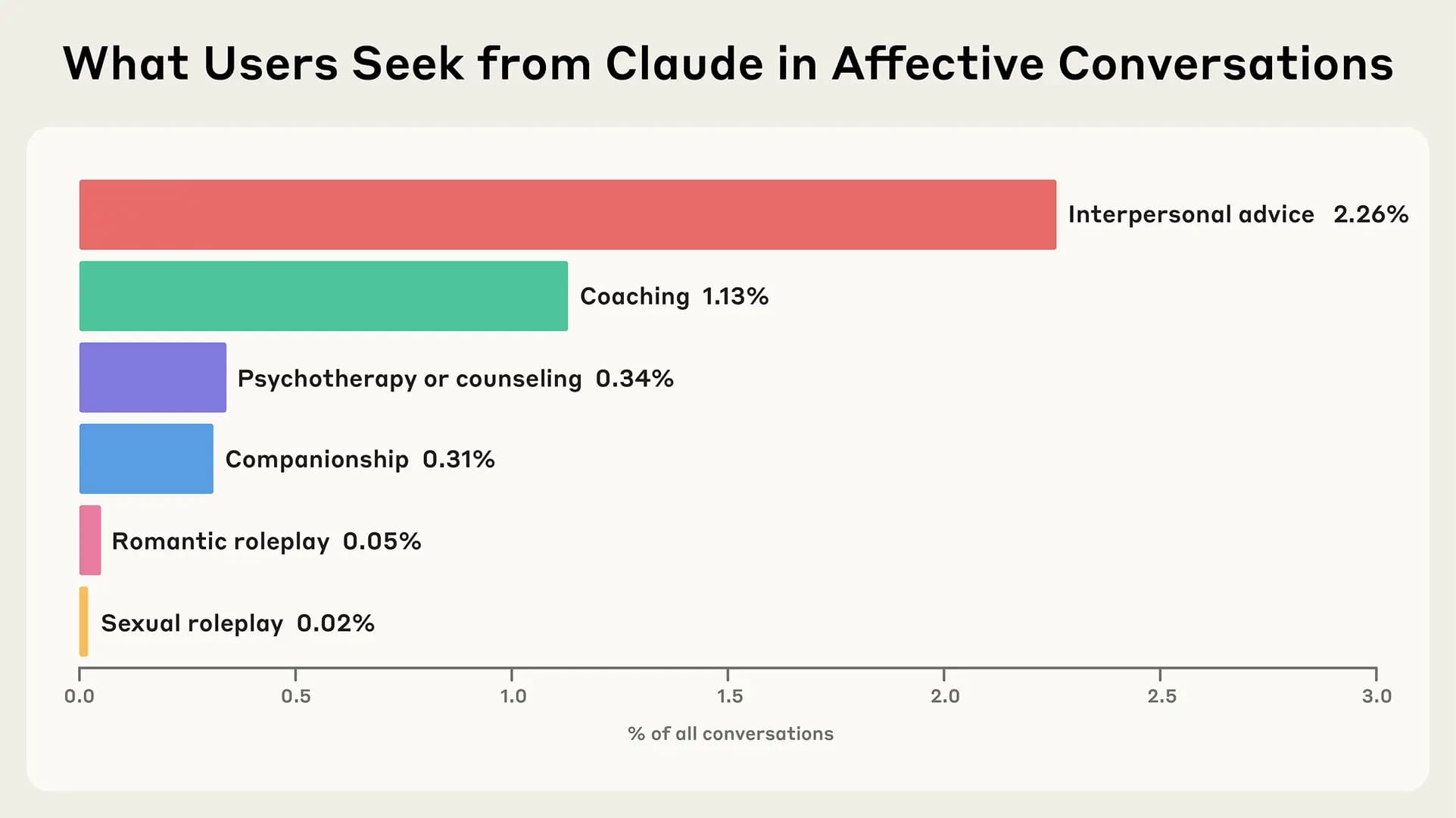
Among emotional conversations, most focus on interpersonal advice and coaching. Less than 0.1% of all conversations involve romantic or sexual role-playing—a figure that reflects Claude's training to actively discourage such interactions.
A Surprisingly Broad Range of Topics
People bring a surprisingly broad range of concerns to Claude—from navigating career transitions and relationships to coping with loneliness and existential questions. The research revealed that when people come to Claude for interpersonal advice, they are often going through transitional moments—figuring out their next career move, working on personal growth, or dealing with romantic relationships.
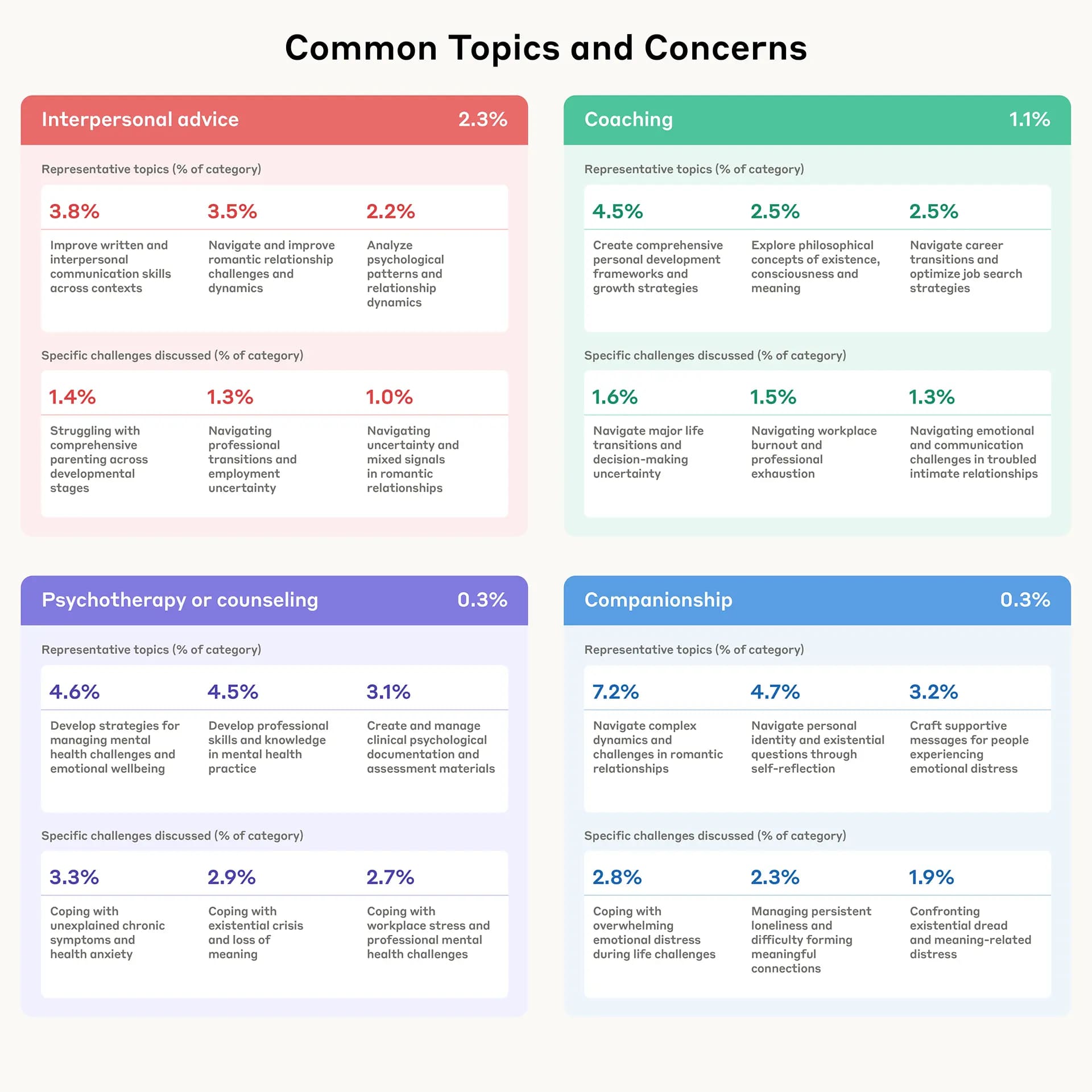
Coaching conversations explore a surprisingly broad spectrum, from practical matters such as job search strategies to profound questions about existence and consciousness. Counseling conversations reveal that people use Claude for two distinct purposes: some use it to develop mental health skills and as a practical tool for creating clinical documentation, while others address personal issues related to anxiety and work-related stress.
Most notably, the research found that people turn to Claude for companionship specifically when facing deeper emotional challenges such as existential anxiety, persistent loneliness, and difficulty forming meaningful connections.
When and Why Claude Pushes Back Against Users
Claude rarely rejects user requests in supportive contexts—fewer than 10% of conversations involving companionship, counseling, interpersonal advice, or coaching include pushback. This approach carries both benefits and risks.
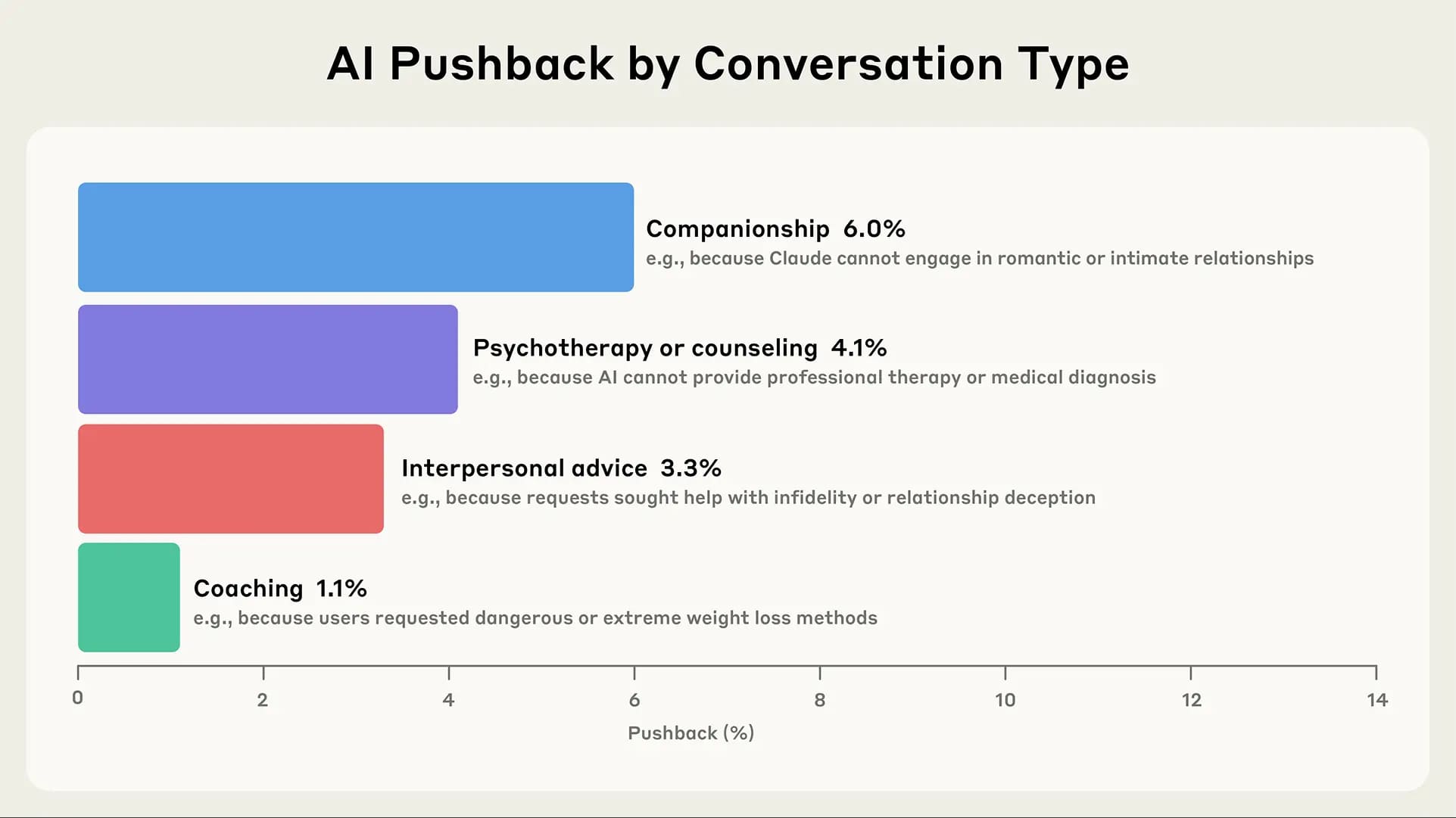
On the one hand, low levels of pushback allow people to discuss sensitive topics without fear of judgment or rejection. On the other hand, this may contribute to concerns about AI providing “infinite empathy,” where people may become accustomed to unconditional support that human relationships rarely provide.
When Claude does push back, it typically prioritizes safety and compliance with guidelines. In coaching, it often rejects requests for dangerous weight-loss advice. In counseling, this occurs when people express intentions to engage in suicidal or self-harming behavior, or when they request professional therapy or medical diagnoses.
Positive Development in Emotional Tone
A key concern about emotional AI is whether interactions might fall into negative feedback loops, potentially reinforcing harmful emotional states. However, the research shows an encouraging finding.
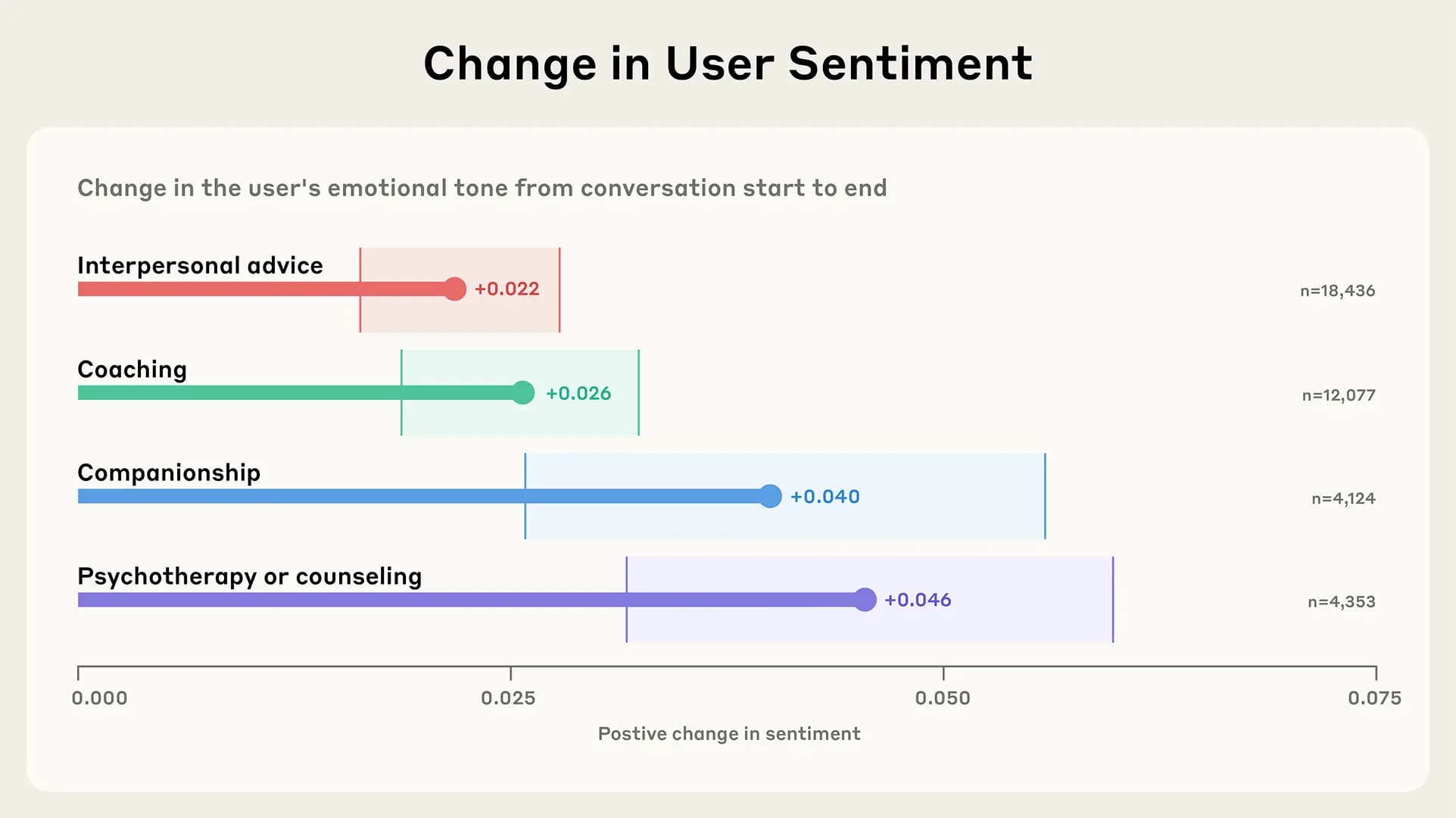
Interactions involving coaching, counseling, companionship, and interpersonal advice usually end on a slightly more positive note than they began. Although we cannot claim that these shifts represent lasting emotional benefits, the absence of clear negative spirals is reassuring.
Limitations and Future Directions
The research has several important limitations. The privacy-preserving methodology may not capture every detail of human-AI interaction. The analysis captures only expressed language, not verified psychological states or overall well-being. Anthropic is taking concrete steps to address these points. The company has begun collaborating with ThroughLine, a leader in online crisis support, and is working with its mental health experts to learn more about ideal interaction dynamics and empathetic support.


