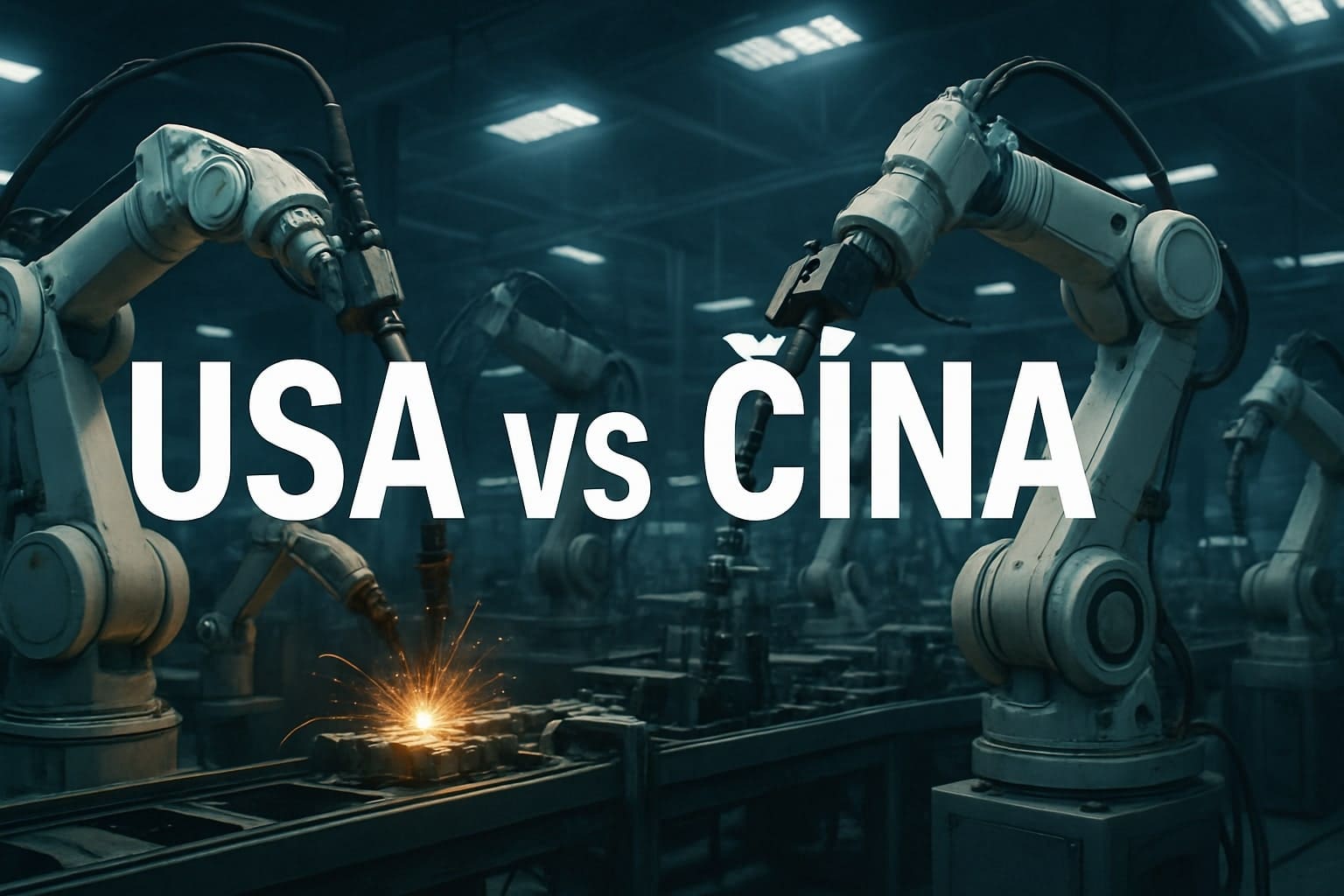
America Cannot Out-Innovate China Without Mechanical Engineers and Robots
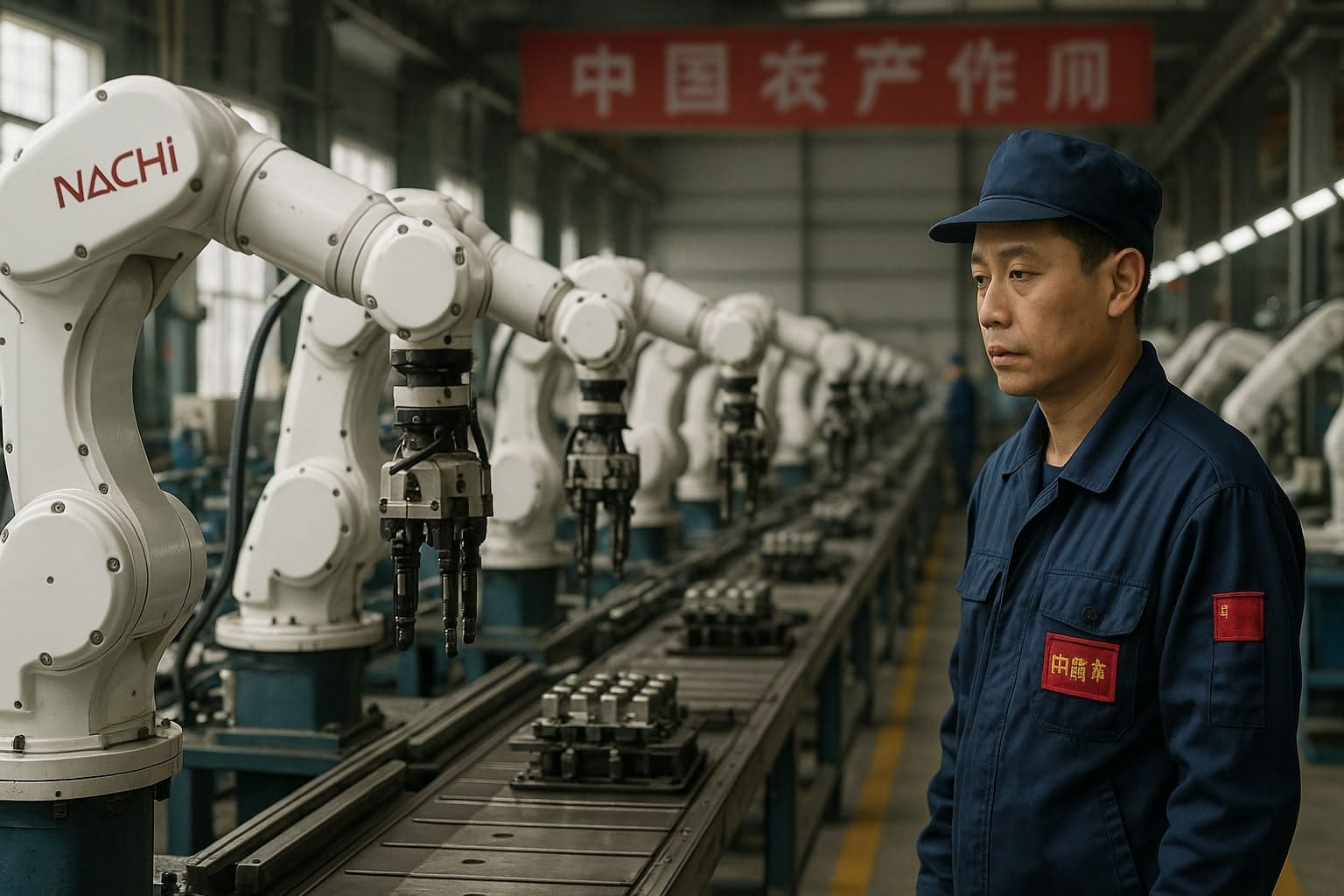
In today’s world, robots are no longer just science fiction but an everyday reality in factories. In 2023, China surpassed Germany and Japan in robot density, with 470 robots per 10,000 employees, according to the International Federation of Robotics. This is not just a number—it is a sign that the U.S. is falling behind in its efforts to bring manufacturing back home. The main obstacle is a shortage of mechanical engineers. While China produces more than 350,000 of these specialists every year, the U.S. trains fewer than 45,000. And that does not even include other key fields such as industrial, controls, or manufacturing engineering, which are equally important to the future of American manufacturing.
Shaun Edwards, co-founder and chief technology officer of Plus One Robotics, who has more than 20 years of experience in robotics and automation, warns of this imbalance. He has worked in national research laboratories, startups, and open-source projects, and he has always seen the same pattern: you need people and tools. Experienced engineers design and integrate solutions, while automation enables small teams to achieve major results. If we want to bring manufacturing back to the U.S., policy alone is not enough—we need a national strategy that invests in science, technology, engineering, and mathematics (STEM) education and practical robotic automation.
The Engineering Gap Is Preventing Manufacturing from Returning from China
Mechanical engineers are the foundation of manufacturing. They design systems, solve integration problems, and connect software with physical implementation. But in the U.S., the cost of education is rising and public perceptions of manufacturing remain outdated, discouraging students from pursuing these careers. Few people realize how much impact these roles have on global competitiveness.
By contrast, China takes engineering education seriously. Its investments cover universities, vocational schools, and government apprenticeship programs. This national system builds industrial capacity that can be easily scaled. The U.S. should follow a similar approach: engage children in STEM as early as possible, make engineering education more accessible, and show what modern manufacturing looks like—automated, precise, and software-driven.
Additional information from online sources shows that China leads in manufacturing scale and supply chain integration, with more than 350,000 mechanical engineering graduates annually compared with fewer than 45,000 in the U.S. This gives China a huge advantage in designing and manufacturing robots. Although the U.S. excels in artificial intelligence (AI) and robotics software, with companies such as Tesla and Boston Dynamics, the shortage of engineers prevents it from scaling up. Manufacturing a robotic arm in the U.S. is about 2.2 times more expensive than in China because of gaps in supply chains.
Robots Do Not Take Jobs—They Help Drive Growth
Automation is not about replacing people, but about enabling engineers and technicians to achieve more with less effort. This is especially true for small and medium-sized manufacturers that lack the resources for large teams or cutting-edge systems.
Shaun Edwards has seen how the right automation platform can multiply the productivity of a single engineer. But these tools are often inaccessible because of their cost, complexity, and technical requirements. That is why, more than a decade ago, he helped launch the ROS-Industrial project to make robotics open, modular, and scalable. But open-source code is not enough without education, training, and support. We need policies that connect all of these elements.
China is investing enormous sums in robotics—for example, a state fund worth about $138 billion over 20 years to dominate both robot manufacturing and deployment. The U.S. does not yet have such a centralized strategy, making it difficult to compete in smart robots and autonomous systems.
Why Now?
Despite years of discussion about bringing manufacturing back to the U.S., trade policy alone has not produced a genuine revival. Factory production remains uneven, supply chains are vulnerable, and many small manufacturers lack the workforce or technology needed to grow. Global competitors such as China are investing aggressively in automation, infrastructure, and technical education, building not only capacity but also resilience.
The U.S. is falling behind in preparing for the new economy of work. Automation is no longer the future—it is the present. Yet its adoption remains fragmented, and training is insufficient to meet industry needs. If the U.S. does not act now, while the momentum for reshoring manufacturing is real and bipartisan support exists, it will miss a narrow window of opportunity. China is already building the systems and workforce needed to dominate the next era of industrial innovation. This is not just about jobs—it is about maintaining strategic capacity, accelerating productivity, and ensuring long-term economic stability.
Investing in Both People and Tools
The future of American manufacturing depends on two things: people and the tools that empower them. The U.S. must rethink funding for STEM education (Science, Technology, Engineering, and Mathematics), expand access to engineering careers, and make automation accessible to those who need it most.
Bringing manufacturing back to the U.S. will not succeed if education, workforce development, and robotics are treated as separate areas. They are deeply interconnected. The U.S. needs mechanical engineers to design systems and automation to help them scale. Without both, it will fall short of its industrial goals.
Shaun Edwards, who holds a master’s degree in mechanical engineering from Case Western Reserve University, previously worked as a principal engineer at Southwest Research Institute (SWRI), where he led research and deployed automation in fields such as aerospace, food processing, and logistics. His experience underscores that the key is combining human talent with robotic support.