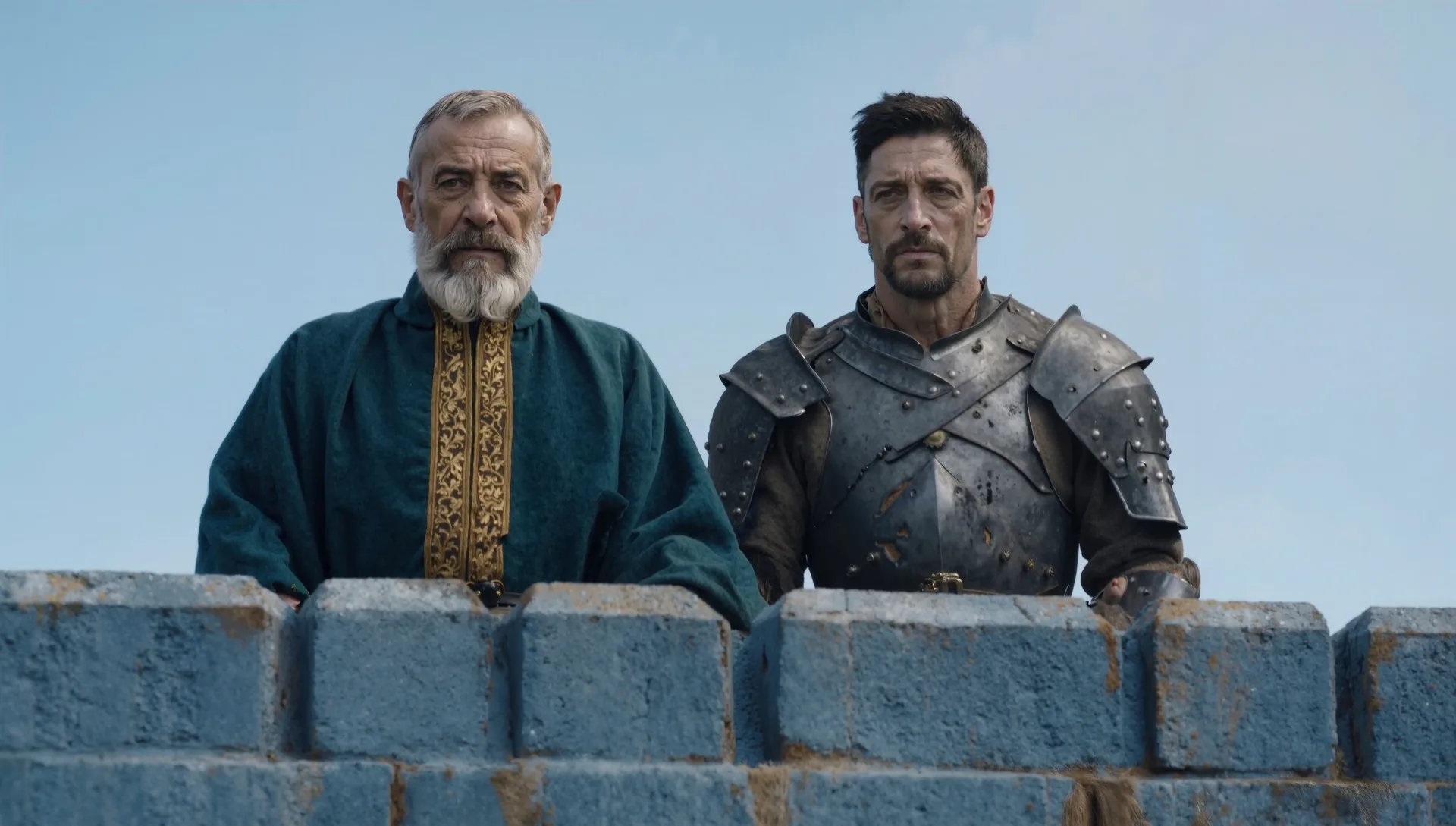
Amazon has done something that, until recently, no major streaming service would have dared to do. It has added a series whose visuals were created from start to finish by artificial intelligence. The historical drama Castle Walls (Surlar in Turkish) was produced by the Turkish studio Ay Yapım. According to its creators, it is the first show made entirely with AI to have a worldwide premiere on a major streaming platform. It has been available to watch since August 12, 2026, but the series only attracted significant attention after a scathing review by the British newspaper The Guardian.
Ay Yapım is no garage studio. It gained international recognition for series such as Endless Love, which won an International Emmy Award, as well as Fatmagul, Ezel and Forbidden Love. So when such an established company releases a series that no one filmed with a camera, the entertainment world takes notice.
A year of work with its own model
AI Yapım, a studio belonging to the parent company that specializes in creating content with artificial intelligence, spent a year working on the project. It is a new subsidiary based in Singapore.
The creators did not use commonly available tools. According to a statement from the studio, they used their own storyboard creation system and the AYDNA video model, trained exclusively on Ay Yapım’s licensed catalog. A decades-old archive of popular Turkish series was thus transformed into raw material for new productions. This move also has a practical aspect, as the studio avoided copyright disputes. These are currently the biggest threat hanging over AI video creation.
According to an analysis by Nova AI News, humans and machines divided the work clearly. Humans were responsible for the story, characters, dialogue, creative direction, editing, pacing and final approval. Artificial intelligence helped refine prompts, drew storyboards, converted scenes into moving images and maintained continuity between scenes.
Humans remained behind the script and the microphone
The description “entirely made by AI” is therefore somewhat misleading. The script was written by experienced Turkish writers Kerem Deren and Çisil Hazal Tenim, who were also behind the series El Turco. The series was dubbed into every language by real voice actors, and Kerem Çatay, the head of Ay Yapım, is credited as producer.
Viewers, however, may not realize what they are actually watching. On Prime Video, the episodes have no label or warning indicating that they are content created by artificial intelligence.
The running time reveals where the technology has its limits. Both episodes are 17 minutes long, so the entire series takes about half an hour to watch. A typical episode of a Turkish series, meanwhile, runs for 120 to 140 minutes. The greatest weakness of video models remains keeping a character’s face, costume, lighting and surroundings consistent across scenes.
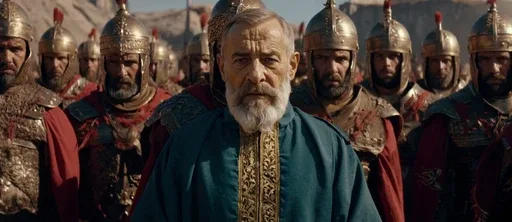
Hasan, Azazil and the fortress in the mountains
The story revolves around the legendary Alamut fortress in what is now Iran. Video game players may recognize it because it appeared in Ubisoft’s Assassin’s Creed Mirage. The choice was no coincidence from a technical standpoint either. An atmospheric story built around its setting and without a large cast plays precisely to the strengths of today’s video models.
In the 11th century, Hasan Sabbah seizes the Alamut fortress and establishes a mysterious movement that challenges the established order. His former friend Nizam al-Mulk tries to protect the empire, while Azazil, a warrior released from prison, becomes his most loyal fighter. In the first episode, Hasan Sabbah arrives at Alamut without an army, yet the fortress soon belongs to him. Meanwhile, Azazil, a man with a sinful past, sets out on a journey from which there is no return. The second episode brings old friends together in the shadow of Alamut, where one man believes he has been reunited with his family and the other believes he has started a war. But both become part of a much older plan.
Critics pull no punches
Guardian reviewer Luke Buckmaster did not go easy on the series. Right at the start, he compared it to Musk’s AI version of The Odyssey and described it as another batch of artificial sludge being dumped on viewers’ heads. According to him, although the story takes place in the 11th century around the historic Alamut fortress, it lacks any real sense of time and place. He was briefly intrigued by the opening shots with their bold blue, mustard-brown and yellow hues. But as soon as people appeared—looking, in his view, like Madame Tussauds wax figures smeared with petroleum jelly and slowly melting in the sun—everything fell apart.
Buckmaster also offered a more conciliatory view of the future. According to him, AI may end up like early silent films, which were groundbreaking in their day but were quickly overshadowed by more sophisticated uses of the same technology.
Criticism also came from elsewhere. The Danish magazine Soundvenue wrote that its reviewer did not really understand what was happening in the series. Paradoxically, he argued that it is primarily the human touch that sinks the series, showing that artificial intelligence has made it easier than ever to produce trash. Amazon viewers are not enthusiastic either. The series had a rating of one out of five stars there, albeit from only two people.
Amazon will not stop there
Prime Video is planning further collaboration with Ay Yapım. Amazon has also acquired a film spin-off of the popular crime series Çukur, which the studio likewise created using AI. According to Erik Barmack of The Ankler magazine, such a move would have been unthinkable until recently. Hollywood had an unspoken agreement with artificial intelligence that machines could help make a film, but should not be the film itself. AI could clean up a shot, create a background or save editors a night’s work.
According to Barmack, AI is now entering the film world through several routes at once. On Prime Video, it is moving from the toolset directly onto posters. Through the back door, taken by Ben Affleck with his company and Netflix, it is quietly becoming embedded in workflows. The third route is through money, as the upcoming blockbuster Cortés, starring Antonio Banderas, is counting on AI to make it look expensive at an affordable cost. This does not bode well for extras, costume designers and film crews. After all, the creators of Castle Walls did not need to hire the hundreds of people that conventional filming would have required.
Sources: theankler.com