

Albania Fights Corruption with AI and Proposes Running a Ministry with AI
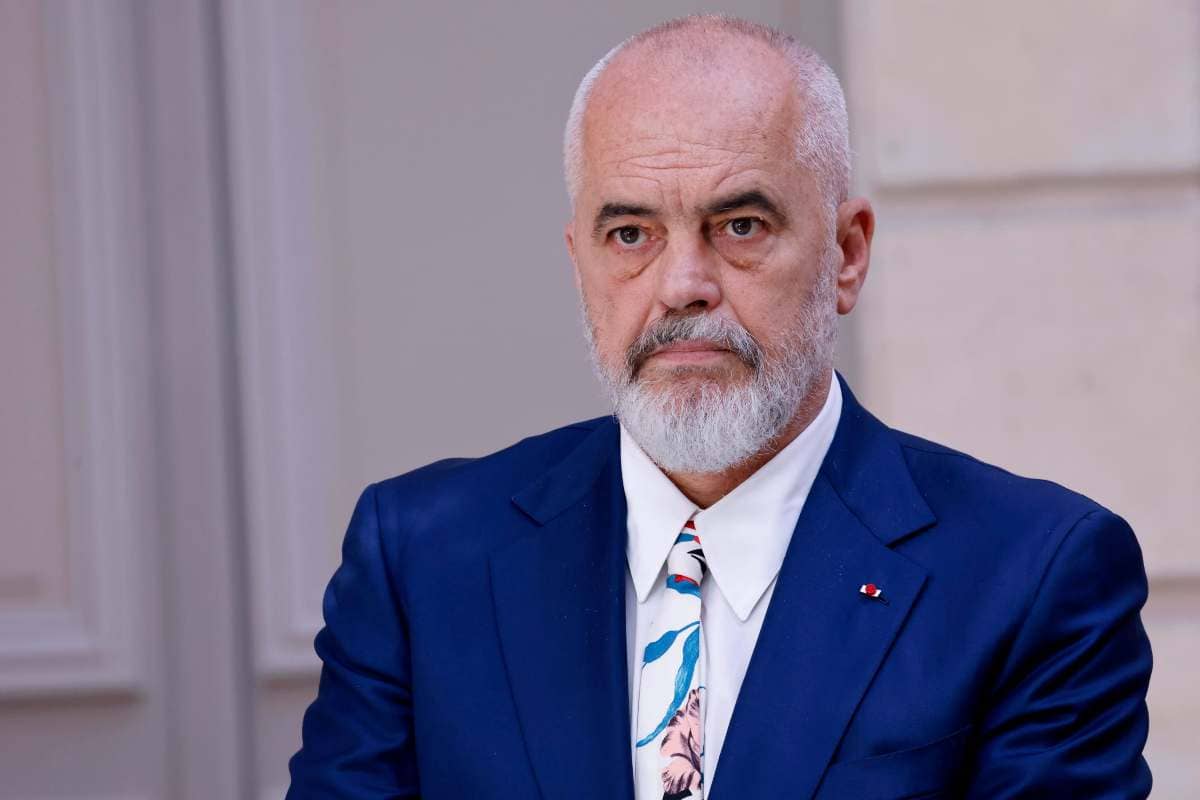
Albania has recently turned to artificial intelligence (AI) to strengthen transparency, curb corruption, and accelerate its accession to the European Union. While the rest of Europe debates the safety and scope of this technology, the Albanian government is actively deploying it in the day-to-day operation of the state. Prime Minister Edi Rama mentioned AI last month as a tool to fight corruption and increase transparency. According to him, the technology could become the most efficient component of the Albanian government.
Edi Rama said at a July press conference that one day there could be a ministry run entirely by AI. "This would eliminate nepotism and conflicts of interest," he argued. He even suggested that local developers could create an AI model that would select ministers, potentially making Albania the first country with an entire government composed of AI ministers and an AI prime minister. Although no formal steps have yet been taken, Rama stressed that the idea should be taken seriously.
Ben Blushi, a former politician from the ruling party and an author interested in AI, believes that this technology is no cause for concern. According to him, AI-run states could turn the concept of democracy on its head. "Why choose between human candidates when public services can be provided by AI?" Blushi said. He added that AI does not make mistakes, does not need a salary, cannot be corrupted, and works around the clock. Albania has long struggled with corruption in all spheres of society, including politics. The ruling party has faced allegations of corruption involving its officials, opposition leader Sali Berisha is standing trial for corruption, and former prime minister and president Ilir Meta is in prison.
AI Is Already Being Used for Everything from Public Procurement to Territorial Monitoring
AI is not just theoretical—in Albania, it is already being used in public administration to address complex problems. Jorida Tabaku, an MP from the opposition Democratic Party, describes AI as a tool that, in the right hands, can transform governance, but in the wrong hands becomes "digital camouflage for old dysfunctions." She supports digital innovation but stresses the need to reset the entire system before full deployment.
Specifically, AI is being used to manage public procurement, an area that the European Union has called on Albania to strengthen. The technology analyzes tax and customs transactions in real time and identifies irregularities. Albanian territory is monitored by smart drones and satellite systems that use AI to check for illegal construction at building sites and public beaches, as well as cannabis plantations in remote areas.
Plans also include using AI on roads, where facial recognition technology will send alerts to drivers' phones telling them to slow down or send them details of speeding fines by SMS or email. According to the state statistics agency, Albania has one of the highest rates of fatal road accidents in Europe, mainly due to speeding. AI is also planned for deployment in healthcare, education, and citizens' digital identification.
However, Jorida Tabaku warns of the risks. She is calling for public consultation and clarity regarding the technology's application, its costs, and, most importantly, who programs the algorithms. "If the same actors who profited from corrupt tenders are going to program the algorithms, we are not moving into the future; we are encoding the past," she said. In a country where 80% of the budget passes through public contracts and a third of them are awarded without genuine competition, she says AI will not erase corruption but merely conceal it more effectively.
Accelerating the Path to the EU and Cooperation with Mira Murati
In 2024, Albania attracted attention when Prime Minister Edi Rama announced that AI was helping the country on its path toward EU membership. After negotiations opened in 2022, Albania began adapting to EU requirements, which include a quarter of a million pages of laws, rules, and standards. Following Rama's landslide victory in this year's election under the slogan of joining the EU by 2030, the work intensified.
AI is handling the translation and identification of differences between national and EU laws—a first in the EU accession process. Albania is working with Mira Murati, the former chief technology officer of OpenAI and creator of ChatGPT, who was born in southern Albania. "We contacted her in the first week after ChatGPT was launched, when we learned about it," Rama said. Thanks to this cooperation, negotiations with the EU are being conducted with the help of artificial intelligence.

Rama noted that Croatia, which excelled in integration, completed the process in seven years, while Albania is aiming for five years, with the paperwork to be completed by 2027. Odeta Barbullushi, Rama's former adviser on EU integration and a professor at the College of Europe in Tirana, agrees that the volume of EU requirements is overwhelming and that traditional translation would require a massive workforce. According to her, AI can be "beneficial" and "genuinely accelerate" technical tasks, but it cannot replace political oversight.
Digital Transformation
This push for AI is part of a broader digitalization effort. In July, Rama announced the goal of achieving a cashless economy by 2030. The country has moved 95% of public services online through the e-Albania portal. Users are greeted by a cheerful AI-powered "virtual public employee" who helps them file tax documents, download birth certificates, or apply for licenses.
The portal processed 49 million transactions over five years and saved 2.4 million Albanians in the country and 2.8 million in the diaspora more than €600 million (approximately CZK 15 billion). Nevertheless, it has faced cyberattacks from Iran, and older citizens struggle to use it.
At the European Political Community summit in Tirana in May, the government welcomed 47 heads of state and government with a video featuring AI-generated "child versions" of the leaders speaking in their native languages. Some laughed, while others remained serious, but international media described it as an eccentric use of AI.
Gerond Taçi, a local AI expert, points to several shortcomings: a lack of expertise, people, know-how, data centers, and money. Deployment requires a step-by-step plan with oversight, legal changes, and a disaster recovery plan. "But there is no other way. Adaptation must continue, and Albanians must be prepared for the transition," he concluded.
Albania is also developing its AI strategy with international support, including pilot projects in institutions, infrastructure development, and ethical frameworks. In June 2025, it joined the EuroHPC Joint Undertaking, providing access to European supercomputers and supporting a competitive AI ecosystem aligned with EU objectives. This initiative includes cooperation among the government, academia, and technology companies to ensure best practices and accelerate digital transformation.


