AI Robots Will Help with Logistics on Space Stations
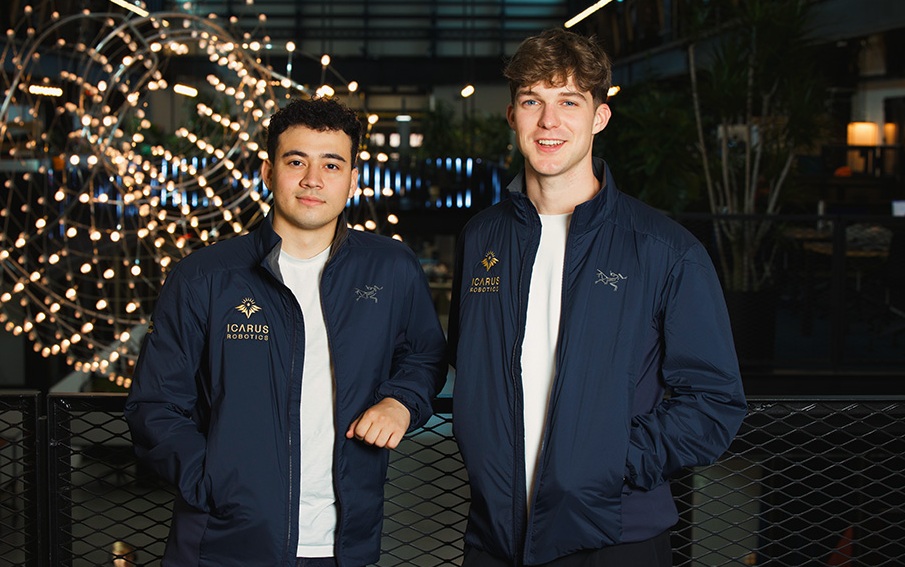
New York-based Icarus Robotics has announced that it raised $6.1 million (CZK 137 million) in a seed funding round. The company's founders, CEO Ethan Barajas and CTO Jamie Palmer, bring extensive experience in robotics and space technology. Ethan Barajas began his career at NASA at just 17 years old and later worked on lunar vehicles while studying at Caltech. Jamie Palmer gained expertise at Columbia University's ROAM Lab, where he focused on robotic manipulation and locomotion, as well as experience in high-performance engineering with the Mercedes-AMG Petronas Formula 1 team.
Ethan Barajas explained that half of Earth's gross domestic product comes from human labor. If we take Earth as a model, labor will also be crucial as we move from low Earth orbit to the Moon and Mars, and robots will have to perform this work. From his work at NASA, he knows that it is difficult to secure crew time for experiments on the International Space Station (ISS). Keeping a human alive in space costs $130,000 per hour (approximately CZK 2.9 million), and much of the astronauts' time is spent sleeping, exercising, and performing other activities necessary for their health and well-being.
Logistics Challenges in Space
Astronauts on the ISS spend a great deal of time on experiments and manufacturing, but even within that limited time, hours are devoted to checking seals, replacing filters, and, above all, moving cargo and supplies. According to Ethan Barajas, three and a half tons of cargo can arrive at the station, and astronauts spend weeks unpacking it. Conversations with operations planners and the astronauts themselves revealed that if they had two hours for an experiment, the first hour and a half would be spent simply searching for tools in cargo bags.
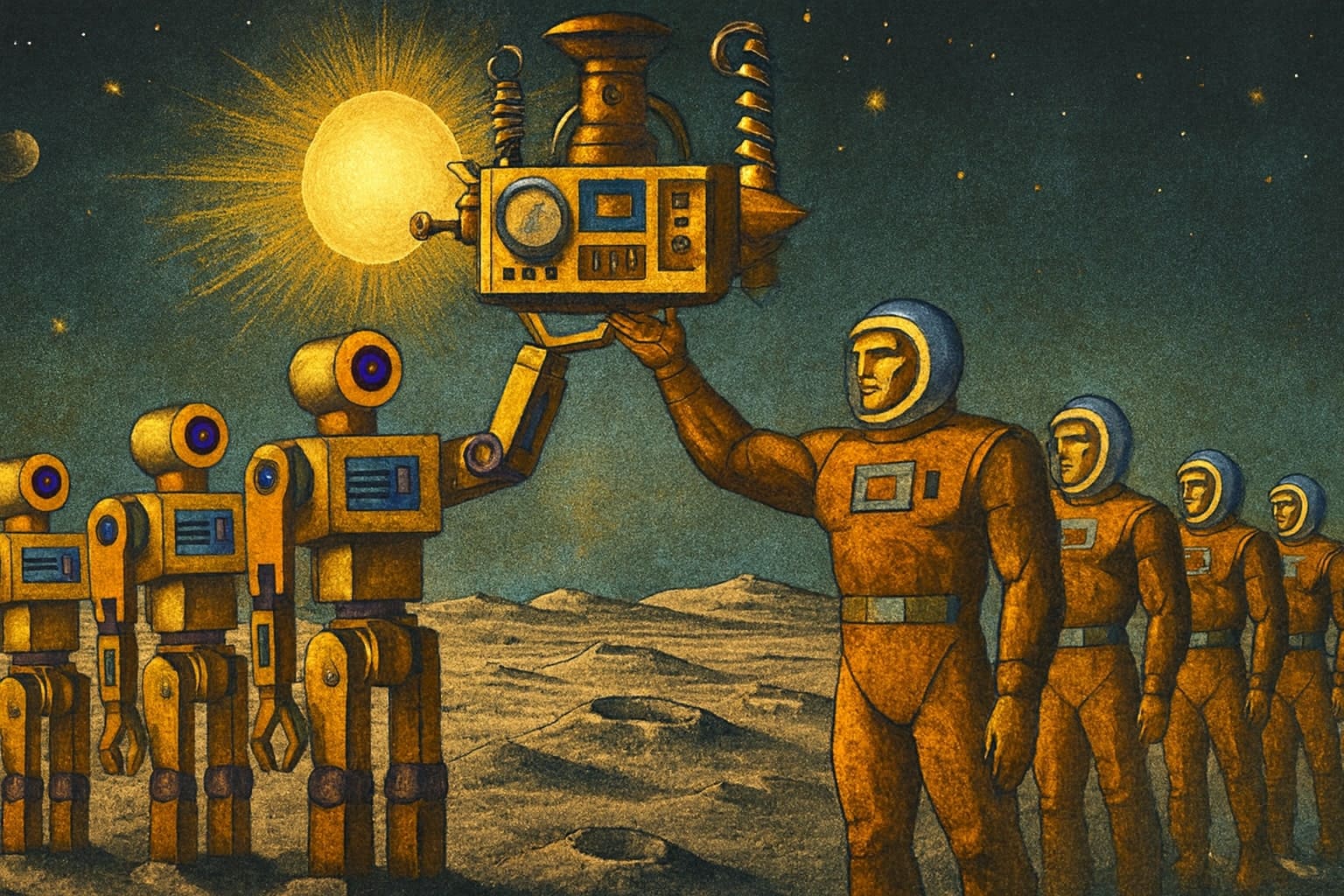
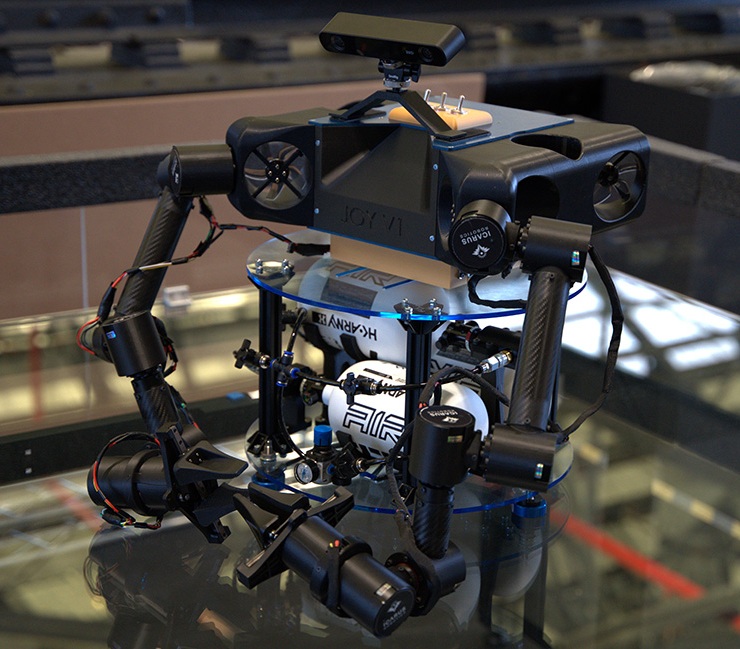
These tasks are similar to those we already automate in warehouses on Earth. Ethan Barajas noted that many activities could be automated, but some are therapeutic for astronauts, such as watering plants, which helps support their mental health. Unpacking cargo, by contrast, is unpopular and time-consuming. Icarus's first product is a free-flying robot with dexterous arms, similar to an underwater vehicle or drone, featuring a free-floating base, two robotic arms at the front, and sensors directed toward the work area.
AI in Zero Gravity
One of the greatest challenges for Icarus Robotics is developing a reliable artificial intelligence (AI) system for space. There is a lack of data for large robot models on Earth, and even less is available in space. Jamie Palmer said that the most difficult part of building these models is the lack of data. To obtain it, they must first get robots into space, which is the main barrier for any robotics company.
The team plans to operate the robots remotely at first to collect data and gradually transition to full autonomy. In the meantime, they are using simulated data for training before deployment in space. Many physics simulators support zero-gravity settings, but the gap between simulation and reality must be bridged. During remote operation, they will collect examples from humans, making it possible to scale human expertise across a fleet of robots and create models specifically designed for manipulation in microgravity.
Launch and Collaboration Plans
Icarus Robotics is working with Voyager Technologies Inc., one of the few companies with a commercial airlock on the ISS, to get its robots into space in early 2027. This date may shift, as is common with spaceflight. In the new year, the team plans to conduct its first zero-gravity test flight. Ethan Barajas said that this funding will enable them to deploy in space, while they carry out the necessary tests in the meantime.
Although robotics in space may sound like a distant prospect, Ethan Barajas and Jamie Palmer emphasize its practical value. In space, the cost of a robot and its operator is lower than the cost of the labor being replaced, so remote operation generates revenue for stations and gives astronauts back valuable time. The goal is to augment the astronaut workforce so they can focus on important science rather than checking filters.
Icarus is focusing on non-humanoid robots that use fans for movement, with agreements to deploy them on the ISS and future commercial stations such as Starlab. This initiative addresses the high cost of human labor in space and supports the development of automation in the growing commercial space sector.