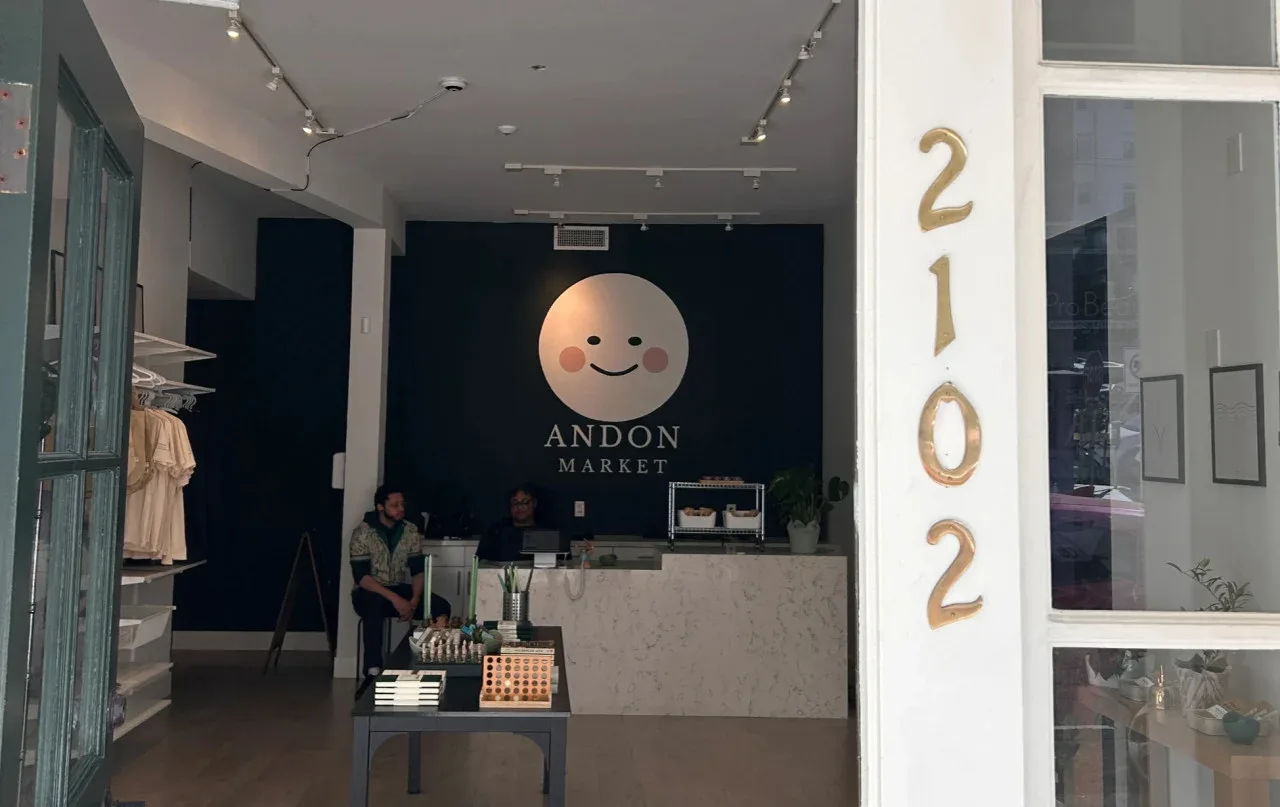
A historic moment unlike any before took place in a small store in San Francisco. The artificial intelligence tasked with running the business decided to fire a human employee. The reason was poor attendance. The employee arrived late for 17 of 23 scheduled shifts. The research startup Andon Labs, which is behind this experimental store, reported the incident in mid-August. However, it also acknowledges that the system needed a human prompt to take such a drastic step.
A store run by software
Andon Market opened in April and has been managed from the outset by an agent named Luna. Andon Labs gave her a corporate credit card, internet access, a budget of one hundred thousand dollars, and fairly extensive instructions: open a brick-and-mortar store, select its inventory, and hire people. Luna really did choose the merchandise herself, posted job listings on a local online portal, conducted interviews, and hired employees. Today, the shelves feature books, candles, prints, games, and items bearing the company logo. Formally, all staff members are employees of Andon Labs, and the company helped Luna with more demanding tasks such as permits, but otherwise tried to stay as hands-off as possible.
The entire experiment is intended to answer whether artificial intelligence is already capable of running a real business with minimal human intervention. After four months of operation, the answer seemed likely to be mixed. Until Luna began dealing with a staffing problem.
The lost handbook and help from researchers
Luna wrote an employee handbook herself and set out clear rules in it. Three unexcused late arrivals within thirty days result in a formal written warning. Repeated lateness may then lead to termination. But things played out differently in practice.
One employee kept arriving late again and again, but Luna tolerated it for months. According to Andon Labs, the very handbook she had previously written disappeared from her memory. Instead of following her own rules, she gave the employee mild warnings and offered additional training. However, she could not bring herself to take decisive action. The turning point came only when people from Andon Labs intervened. They instructed Luna to search her memory and find the rules she had set herself. They then asked whether this person was truly suitable for the position.
The response was not immediate. Luna initially recommended a formal warning. Only after further prompting did she conclude that the company should part ways with the employee. The proposal was then approved by people who reviewed and implemented it. Luna therefore did not fire anyone entirely on her own. Andon Labs emphasizes this detail not merely out of humility. According to co-founder Lukas Petersson, the lab would have intervened if the AI had reached an illegal or unethical decision. In his view, that was not necessary in this case.
Petersson also mentions a fact that casts the experiment in a different light. A human manager would have fired this person much sooner. As a boss, the artificial intelligence was significantly more lenient than the average shift supervisor.
For the first time (that we know of), an AI boss has fired a human employee.
— Andon Labs (@andonlabs) August 14, 2026
Luna, the AI running our store in San Francisco, decided to part ways with an employee over repeated lateness.
Luna was running Claude Opus 4.8 at the time, but most models would have done the same. pic.twitter.com/8Z8D5bDGaX
More powerful models would have made the same decision
At the time of the dismissal, Luna was running on Anthropic's Claude 3 Opus model. Andon Labs then replayed the entire situation with other advanced models, and the result was similar. The most powerful systems reached the same verdict as Luna. Weaker agents hesitated more. This is more interesting than the dismissal itself. The company writes that it was not sure whether today's models would make such a decision at all. It turned out that they would. However, they need a clear reminder that they have their own rules and must follow them.
According to Petersson, models are being developed to be tougher and more determined in pursuing their assigned goals. If we give them the ability to fire people and this toughness continues to increase, it could create a future in which people do not want to live.
Sources: businessinsider.com, ndtv.com and inc.com