What if you could solve in a single weekend a problem that scientists had been grappling with for half a century? That is exactly what happened with protein structure prediction. And this is only the beginning of much bigger things.
AI laboratories from proteins to the stars
For centuries, science relied on a slow but reliable rhythm. Hypothesis, experiment, result, publication. Then artificial intelligence arrived, and the pace accelerated dramatically.
The best-known example is AlphaFold from Google DeepMind. This model solved the so-called "protein-folding problem," which had puzzled scientists for fifty years. Proteins are the fundamental building blocks of life, and their three-dimensional structure determines their function. Determining this structure using conventional methods took months, sometimes years, and cost hundreds of thousands of dollars. AlphaFold can do it in minutes with remarkable accuracy.
Professor John McGeehan summed it up perfectly: "What took us months and years, AlphaFold accomplished in a weekend." Today, the AlphaFold database contains more than 200 million predicted protein structures and is used by over 3 million scientists in 190 countries. More than 30 percent of the papers citing it focus on disease research. For this contribution, Demis Hassabis and John Jumper received the Nobel Prize in Chemistry in October 2024.
Hubble's archive full of treasures
Astronomers face a somewhat different problem. The Hubble Space Telescope has been collecting data for over 35 years, and its archive contains millions of images that no one has ever thoroughly examined. There simply is not enough human capacity to do so.
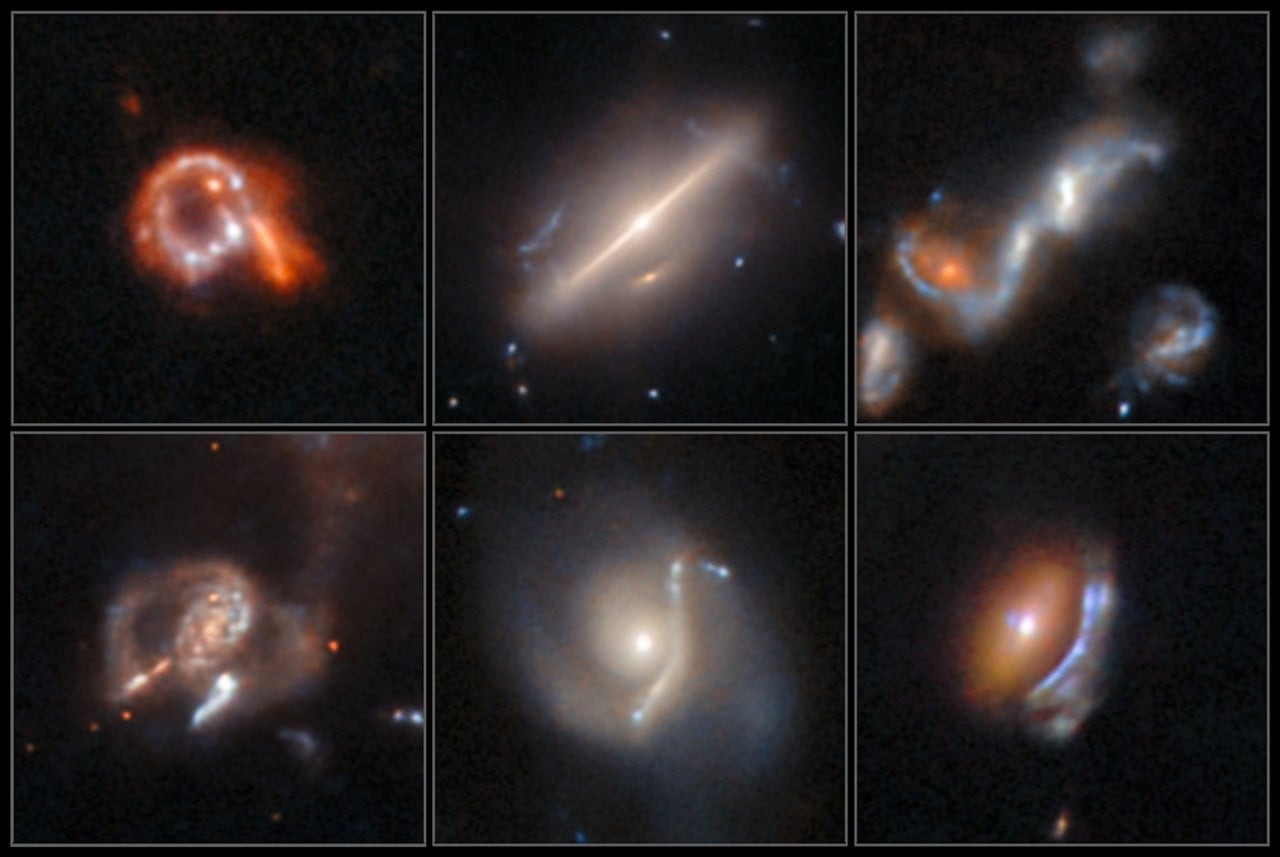
ESA scientists therefore developed a tool called AnomalyMatch, a neural network that examined nearly 100 million image cutouts from the Hubble archive. In just two and a half days, it identified more than 1,300 astronomical anomalies, over 800 of which had not previously been documented in the scientific literature. These included merging galaxies, gravitational lenses, jellyfish-shaped galaxies, and objects that do not fit into any existing classification at all.
This is a feat that would have taken a team of astronomers decades. And yet it is only a fraction of what is to come with new telescopes such as the Nancy Grace Roman Space Telescope or the Vera C. Rubin Observatory, which will generate data on an unprecedented scale.
Brain MRI read in seconds
From space back to Earth—or, more precisely, directly into a neurologist's office. Researchers at the University of Michigan developed a model called Prima that can read brain MRI scans and make a diagnosis within seconds.
The model was trained on more than 200,000 MRI studies and 5.6 million sequences from a decade of digitized records and achieved diagnostic accuracy of up to 97.5 percent across more than 50 neurological diagnoses. It can also assess the urgency of a case and automatically alert the appropriate specialist, such as a neurologist specializing in strokes.
Project leader Todd Hollon compared it to "ChatGPT for medical imaging." For patients in rural areas or hospitals with a shortage of radiologists, such a tool could make a crucial difference. Today, patients may wait several days for MRI results.
The pros and cons of AI in science
But this is where the story takes an unexpected turn. A study published in January 2026 in Nature and described in Science analyzed more than 41 million scientific papers from 1980 to 2025 and reached a troubling conclusion.
Scientists who use artificial intelligence are significantly more successful. They publish three times as many papers, receive nearly five times as many citations, and attain leadership positions about a year and a half earlier than their colleagues who do not use AI. Young scientists who use AI are less likely to leave academia. But science as a whole is paying the price. AI-driven research covers 4.6 percent less thematic territory than conventional studies. AI papers also generate 22 percent fewer cross-references between studies. The scientific literature is becoming less interconnected.
Why? A feedback loop is forming. Popular topics attract large datasets, large datasets attract AI tools, AI tools produce rapid results, and so everyone rushes into the same fields. As James Evans of the University of Chicago aptly put it: "We are like herd animals. If we all climb the same mountains, vast areas will remain unexplored."
Amid all the enthusiasm, a sobering warning is being voiced. A biologist at the University of Calgary, whose team is studying how reindeer regenerate their antlers (and what this can teach us about treating burns in humans), points to one fundamental problem with today's AI: models learn correlations, not causal relationships. That is a major difference. A statistical model can tell us that two things happen at the same time. But it is not enough to know what is happening; you also need to understand why. And biology is extraordinarily complicated in this regard. The body's systems are multidimensional, full of compensatory mechanisms and biological variability.
That is why scientists are working on so-called hybrid computational approaches that combine structured biological knowledge with enormous multidimensional datasets. The goal is to bring AI to a point where it does not merely identify patterns but understands the actual causes of biological changes. "Science is a collective enterprise. We need to think seriously about what to do with a tool that benefits individuals but harms science as a whole." said Yale anthropologist Lisa Messeri.
Science and artificial intelligence are only at the beginning of their journey together. And no one yet knows exactly where it will lead.