

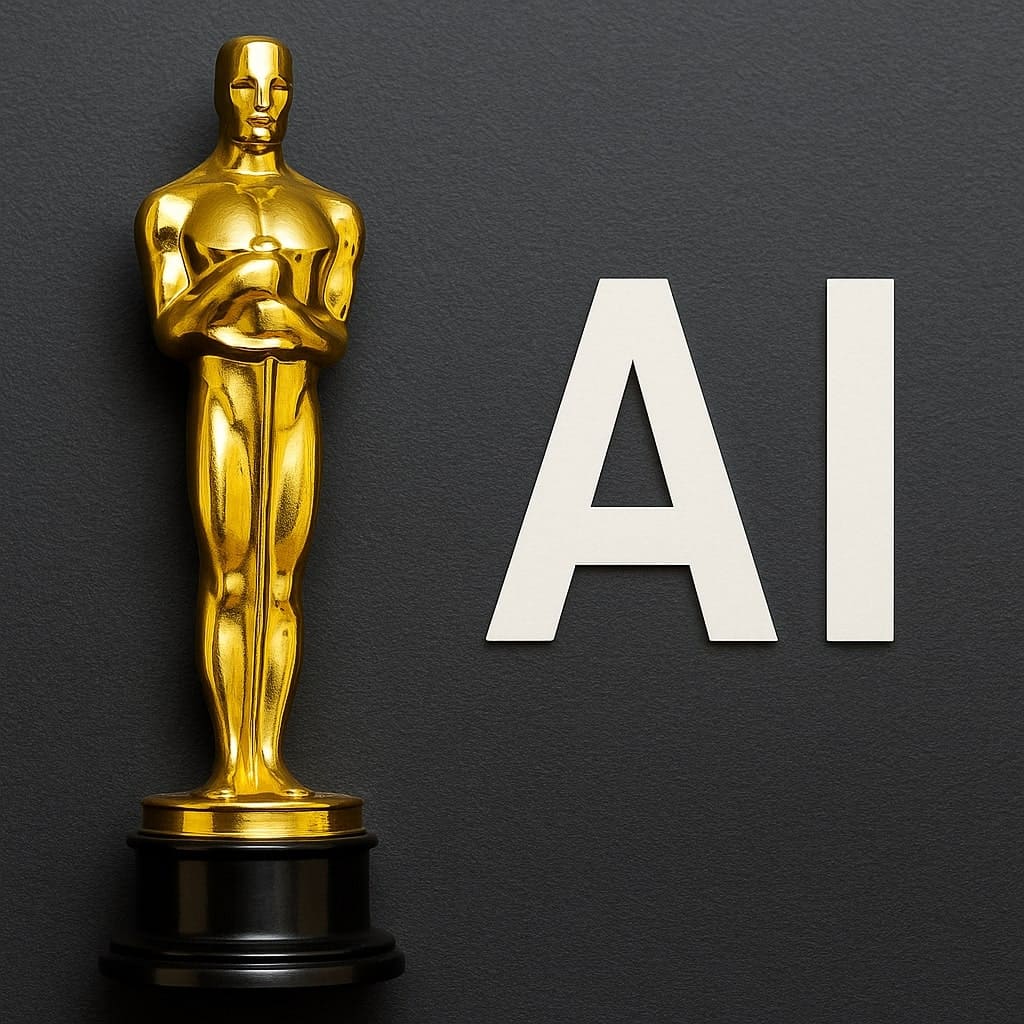
AI in Films: A New Era at the 2025 Oscars
This year's Oscar ceremony was not only a celebration of cinematic art, but also a turning point in recognizing the role of artificial intelligence in the film industry. The Academy of Motion Picture Arts and Sciences officially confirmed that films using AI technologies can be fully nominated for and receive awards – sparking both enthusiasm and controversy throughout the film world.
New Academy Rules: Humans Still Come First
According to the latest rules published by the Academy, films using generative AI (whether for creating images, sound, video or screenplays) may fully compete for the prestigious statuettes. However, the key criterion remains the presence of a "human at the core of creative authorship". "The human element remains absolutely essential in assessing a film's artistic value," an Academy spokesperson said in an official statement. "The use of AI in itself means neither an advantage nor an obstacle when evaluating nominations." The Academy is also considering introducing a requirement for filmmakers to state the exact extent and manner in which AI technologies were used when submitting their works – a step that should strengthen transparency at a time when the boundaries between human and machine-generated work are becoming less distinct.
Oscar Films Embracing Artificial Intelligence
This year's edition brought several striking examples of how AI can push the boundaries of cinematic storytelling:
- The Brutalist
The drama "The Brutalist" by director Brady Corbet, which received ten nominations and turned three of them into wins, including the award for Best Actor for Adrien Brody, used Respeecher software to enhance the Hungarian accent of the main characters. The technology enabled Brody and Felicity Jones to achieve more authentic performances without the need for months of intensive pronunciation practice. "It was a tool that allowed me to focus on the emotional core of the character, while AI took care of maintaining a consistent accent," Brody commented on his performance while accepting the award. - Emilia Pérez
The musical thriller with a record thirteen nominations used the same technology to expand the vocal range of transgender actress Karla Sofía Gascón. In this case, AI was able to blend her voice with the vocals of French pop star Camille, creating a unique musical experience that would have been difficult to achieve using conventional methods. The film ultimately took home the award for Best Musical Film, sparking a debate over how much of this success was the work of human performers and how much was the work of advanced algorithms. - Other Pioneers
Denis Villeneuve's "Dune: Part Two" and the biographical film "A Complete Unknown" also experimented with various forms of AI – from generating complex environments on the desert planet Arrakis to subtle adjustments to the characters' facial expressions to heighten the dramatic impact of key scenes.
Voices from Both Sides of the Debate
The film community is deeply divided over the use of AI. Legendary director James Cameron, known for his pioneering work in film technology, is among the advocates of innovation: "Every generation of filmmakers has had its new tools. Once it was the color camera, then CGI, and now it's AI. It's just another way to tell stories more convincingly," Cameron told the New York Times. "What matters is that a human artist is always behind the decisions. AI is merely a paintbrush in the hands of a painter."
On the other side is director Ava DuVernay, who has expressed concerns about the authenticity of artistic expression: "When we start modifying performances with an algorithm, where does the actor end and the machine begin? The Oscars should honor human creativity, not the ability to manipulate reality with code," she said in an interview with Variety. Unions representing actors, screenwriters and other film professionals have also expressed concern about the possible displacement of human labor. "We respect technological progress, but we must ensure that AI serves as a tool for artists, not as their replacement," said a representative of the Screen Actors Guild.
Technology in the Service of Art or Art in the Service of Technology?
This year's Oscars opened a new chapter in the discussion about the relationship between art and technology. While "The Brutalist" and "Emilia Pérez" demonstrate how AI can subtly enhance human performance, critics point to the risk of gradually blurring the line between authentic artistic expression and a technologically enhanced illusion. "We may reach a point where viewers will be unable to distinguish between a genuine acting performance and the result of AI's work," warns film critic Anthony Lane. "That could fundamentally change our relationship with cinematic art." For now, the Academy is maintaining a middle-ground position – recognizing AI's potential as a creative tool while insisting on the fundamental role of human authorship. The requirement for transparency regarding the use of AI technologies could be the first step toward establishing new standards in an era when the boundaries between human and machine creativity are becoming increasingly permeable.
Where Is the Future Headed?
The 2025 Oscars will likely be regarded as a landmark moment when the film industry officially accepted AI as a legitimate part of the creative process. It is not the first technological revolution that film has experienced – from the transition from silent film to sound, through color film, to digital effects – but it may be the most profound in terms of redefining the very nature of the creative process. As Steven Spielberg remarked in a recent interview with the BBC: "At the heart of every great film is a human story and human emotion. Technology changes, but the desire to share stories remains constant. AI may change the way we tell these stories, but it can never replace the reason why we tell them." As the debate continues, one thing is certain: the 2025 Oscars will be remembered as the moment when Hollywood officially entered an era of coexistence between human creativity and artificial intelligence – with all the opportunities and challenges that this new partnership brings.


