

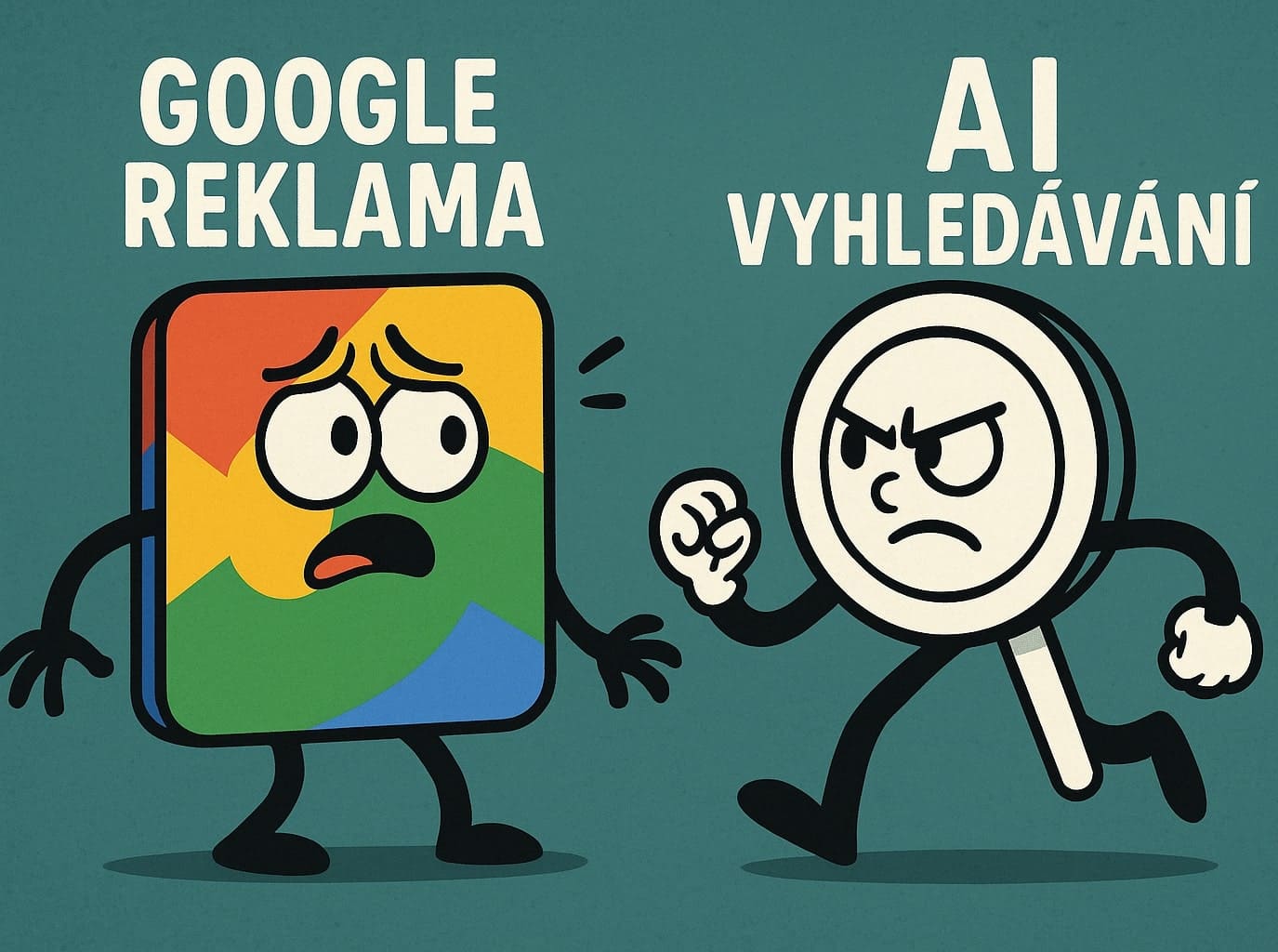
AI Is Eating the Internet: The End of the Web's Advertising Paradise
Imagine an internet where advertising was so perfect that it seemed creepy. My girlfriend asked me, "See? Another ad. We were just talking about this yesterday! How can you be sure they aren't listening to us?" This system gave us free content and services and an open web, but now it is all falling apart. At the center of it all is Google, which, with a net profit of over $100 billion, may be the most successful company in history. It controls nearly 70 percent of the browser market and 89 percent of the search engine market. How did it achieve this? By creating a balance in which everyone got what they wanted: consumers got free access to information, content creators got visitors they could monetize through advertising, and advertisers got precise targeting.
Google crawled the entire internet, and website owners not only allowed it but optimized their sites for it. Users found what they were looking for, often for free, and advertisers paid because they were finally solving John Wanamaker's old problem: "Half the money I spend on advertising is wasted; the trouble is, I don't know which half." Later came Meta, then Facebook, with even better targeting thanks to the social graph. Google saw the threat, but Zuck (Mark Zuckerberg) went all in. By the end of the 2010s, Google and Facebook dominated internet advertising: Google captured intent—"I'm looking for it"—while Meta created desire—"I want it"—and both printed money.
Advertising Utopia
In this era, the balance was perfect. Consumers had unlimited access to free information and services. Content creators received a steady stream of visitors from search engines, which they turned into money through ads or conversions. Advertisers paid reasonable prices for precise targeting. Google managed it all by crawling the web, while website owners tried to make themselves visible. Meta took it further with cross-device data, making advertising even creepier but more effective.
The Transformer Revolution
But even the most powerful empires fall. In 2017, Google researchers published the paper "Attention Is All You Need," which introduced the transformer architecture. It was originally intended to improve translation, but it also helped search with models such as BERT. Then OpenAI's ChatGPT arrived in 2022 as a free demo. It spread like wildfire, reaching 100 million users in two months—the fastest adoption in history. People suddenly began replacing the search box with a chat window. Why type a query and browse through ten links (including 2–5 ads) when AI can summarize it for you?
Today, the situation is full of change and fear. Content has become not just bait for visitors, but training data for AI. Data is like fossil fuel for AI. New players crawl the web, take content, and give nothing back. Just as Google News once took snippets and angered publishers, AI now serves answers directly without sending users to the original website. This is destroying the old bargain.
Content creators are now building paywalls and anti-bot measures. People often suffer because of CAPTCHAs, logins, or broken RSS feeds. The open web is turning into a collection of walled medieval cities. Even Google, seeing the risk to its business, is introducing AI answers in search, reducing clicks on organic results by 50 percent. Yet its advertising revenue is still growing by 10 percent.
Meta is fighting Apple over App Tracking Transparency, which reduced click-through rates by 37 percent. Zuckerberg bet on the metaverse, but it did not work out. Now he is fighting with open-source AI, but Chinese labs are catching up. Cloudflare offers protection: it blocks AI crawlers unless they pay. This is "Pay to Crawl"—people enter for free, bots pay. Sites such as Reddit and Stack Overflow, as well as major publishers, are already signing data licensing agreements.
People are retreating to the "cozy web"—private chats and closed forums. When AI content is everywhere, people want authentic spaces with real people, such as email newsletters, Substacks, or small Discord communities.
The Internet to Come
Eventually, the situation will stabilize. The old model is collapsing, but a new balance will emerge. The future could consist of three interconnected markets.
The first is ad-supported consumer AI: The winner will become a super-aggregator, replacing both search engines and browsers. It will be monetized through ads, because in 2024 Google earned $265 billion from advertising—that would require 13 billion $20 subscriptions, which is impossible.
The second is the open cozy web: Trust in anonymous content will decline, and people will turn to influencers, experts, and communities. We need "fingerprints" to verify that content originated from humans, which will bring back the decentralized web.
The third is Pay for Crawl: High-quality data will become scarce because AI is training on AI-generated content, leading to degeneration. This model will allow people free access, while bots will pay, perhaps using a "human token" in browsers.
Who will win? OpenAI has a strong brand; ChatGPT is synonymous with AI. It is integrating browsing with citations, but it needs ads. Its partnership with Microsoft (Bing) suggests as much. Google has the advantage: experience with advertising and control over Android, Chrome, Gmail, and YouTube. In 2025, it launched models such as Gemini, Imagen, and Veo. The author is betting on Google.
The old system is ending. "Software is eating the world," Marc Andreessen said in 2011. Now "AI is eating the internet." The question is, who will capture the value, and how will it be distributed? What do you think? Winter is here, but spring may come.
Source: https://fika.bar/


