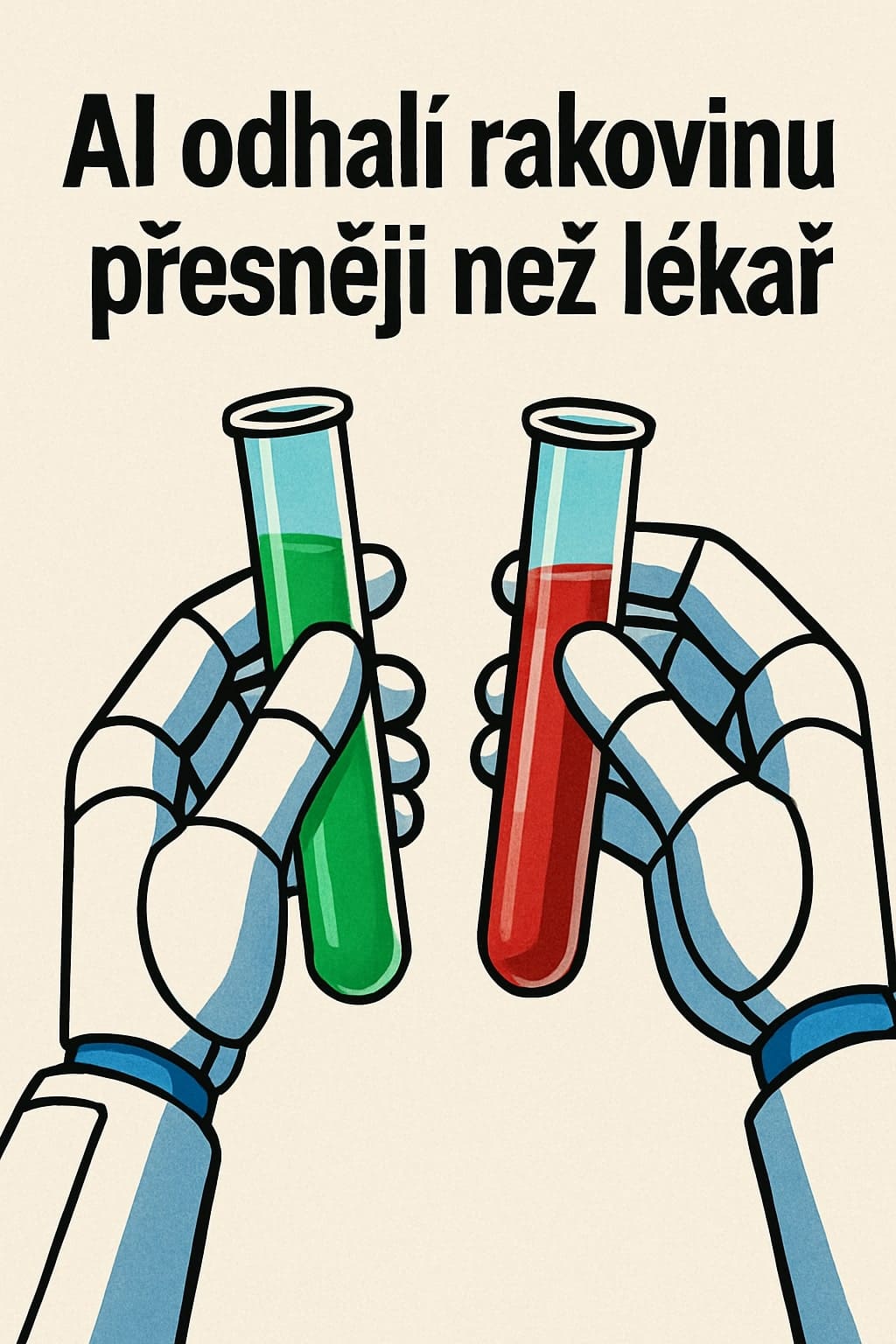
AI Detects Cancer Earlier Than Doctors: A Revolution in Diagnosis
Cancer is one of the most serious health threats of our time. According to statistics from the American National Cancer Institute, cancer is the second most common cause of death in the United States, and in 2020 approximately 1.8 million new cases and 606,520 cancer-related deaths were recorded. The number of new cancer cases is expected to rise to 28.4 million annually by 2050, while the number of cancer-related deaths is expected to reach 15.3 million. Early detection is crucial for successful treatment, and this is where artificial intelligence (AI) comes into play, changing the rules of the game in diagnosing this insidious disease.
AI in Cancer Diagnosis: Faster and More Accurate Results
Traditional diagnostic methods, such as biopsies, imaging examinations, or blood tests, are often invasive and time-consuming, and sometimes fail to detect cancer at an early stage. However, new technologies based on artificial intelligence offer hope for how quickly and accurately cancer can be detected. In Japan, a system has been developed that can diagnose cancer faster than doctors. All it requires is a simple urine test, which is not only non-invasive but also very fast. Results are available within a few hours, whereas traditional methods can take days or even weeks. Artificial intelligence analyzes urine samples and looks for specific biomarkers that signal the presence of cancer. This method is not only faster but also gentler for patients, as it does not require painful procedures.
Craif: A Japanese Platform for Early Cancer Detection
One of the most significant examples of using AI in cancer diagnosis is the Japanese company Craif. Craif has developed a non-invasive platform for the early detection of cancer that uses urine analysis. This technology is based on detecting small molecules called microRNAs, which are associated with various types of cancer. The seven types of cancer that this technology can detect include lung cancer, one of the most common and most dangerous forms of malignant disease. Another is breast cancer, which primarily affects women, and early detection significantly increases the chances of successful treatment. The Craif method can also detect colorectal cancer, which is often diagnosed only at an advanced stage. Another type is bladder cancer, for which early detection is crucial for effective treatment. The technology can also identify pancreatic cancer, which is known for its rapid progression and difficult detection. Other detectable types include ovarian cancer, which is often asymptomatic until advanced stages, and stomach cancer, which is discovered late in many cases. Artificial intelligence analyzes enormous amounts of data and can identify patterns that would escape the human eye. In April 2025, Craif received an investment of $22 million, demonstrating the strong investor interest in this technology. The Craif platform is capable of detecting several types of cancer at an early stage, significantly increasing the chances of successful treatment. Another advantage is that the test is non-invasive and can be repeated without placing a burden on the patient.
Avantect: Multi-cancer detection test
Another significant project in the field of AI diagnostics is the Avantect Multi-Cancer Detection Test from ClearNote Health. The Avantect method represents an innovative approach to the early detection of cancer through the analysis of circulating cell-free DNA (cfDNA) from a standard blood sample. The Avantect test is designed primarily for people at high risk of developing cancer, such as individuals over 50 with newly diagnosed type 2 diabetes or with a genetic predisposition or family history of pancreatic or ovarian cancer. This modification is associated with the regulation of gene expression, and its changes may signal the presence of tumor processes. Using whole-genome sequencing and machine learning, the test can identify abnormal signals that are typical of certain types of cancer, such as pancreatic or ovarian cancer. The test requires only a standard blood draw, making it a non-invasive and easy-to-perform method. The collected sample is sent to ClearNote Health’s certified laboratory, where a detailed analysis of the cfDNA is performed. The result is a qualitative report indicating whether or not an abnormal signal associated with cancer was detected in the blood. The test result is designated as “abnormal signal detected” or “abnormal signal not detected.” In the event of a positive finding, further testing is recommended, such as imaging methods or a biopsy, in accordance with applicable clinical guidelines (e.g., AGA/NCCN). The Avantect test is not intended to serve as a definitive diagnostic tool, but rather as an aid for the early detection of risk and for directing the patient toward further examination.
Benefits and the Future of AI in Cancer Diagnosis
The use of artificial intelligence in cancer diagnosis offers several major benefits:
- Speed: AI can analyze samples within a few hours, whereas traditional methods can take days or even weeks.
- Accuracy: Thanks to its ability to analyze enormous amounts of data and identify subtle patterns, AI is often more accurate than a human doctor.
- Non-invasiveness: Urine- or blood-based tests are gentle on patients and can be performed repeatedly.
- Early detection: AI can detect cancer at early stages, when the chances of a cure are highest.
According to data from the National Cancer Institute, early detection is crucial for reducing cancer mortality. New technologies such as the Craif and Avantect platforms have the potential to fundamentally change the approach to cancer diagnosis and treatment around the world. Artificial intelligence is becoming an indispensable tool in the fight against cancer. Thanks to fast, accurate, and non-invasive methods, AI can detect cancer earlier than doctors, which could save millions of lives. Investment in these technologies and their implementation in practice are crucial for the future of medicine and for improving patients’ chances of recovery.