Self-Learning AI: The Absolute Zero Method – A Detailed Look at Current Developments
The Absolute Zero method represents a fundamental shift in the field of artificial intelligence, particularly in the area of self-learning systems. This approach focuses on developing AI agents that begin with zero knowledge and learn solely through interaction with their environment.
Definition and Principles of Absolute Zero
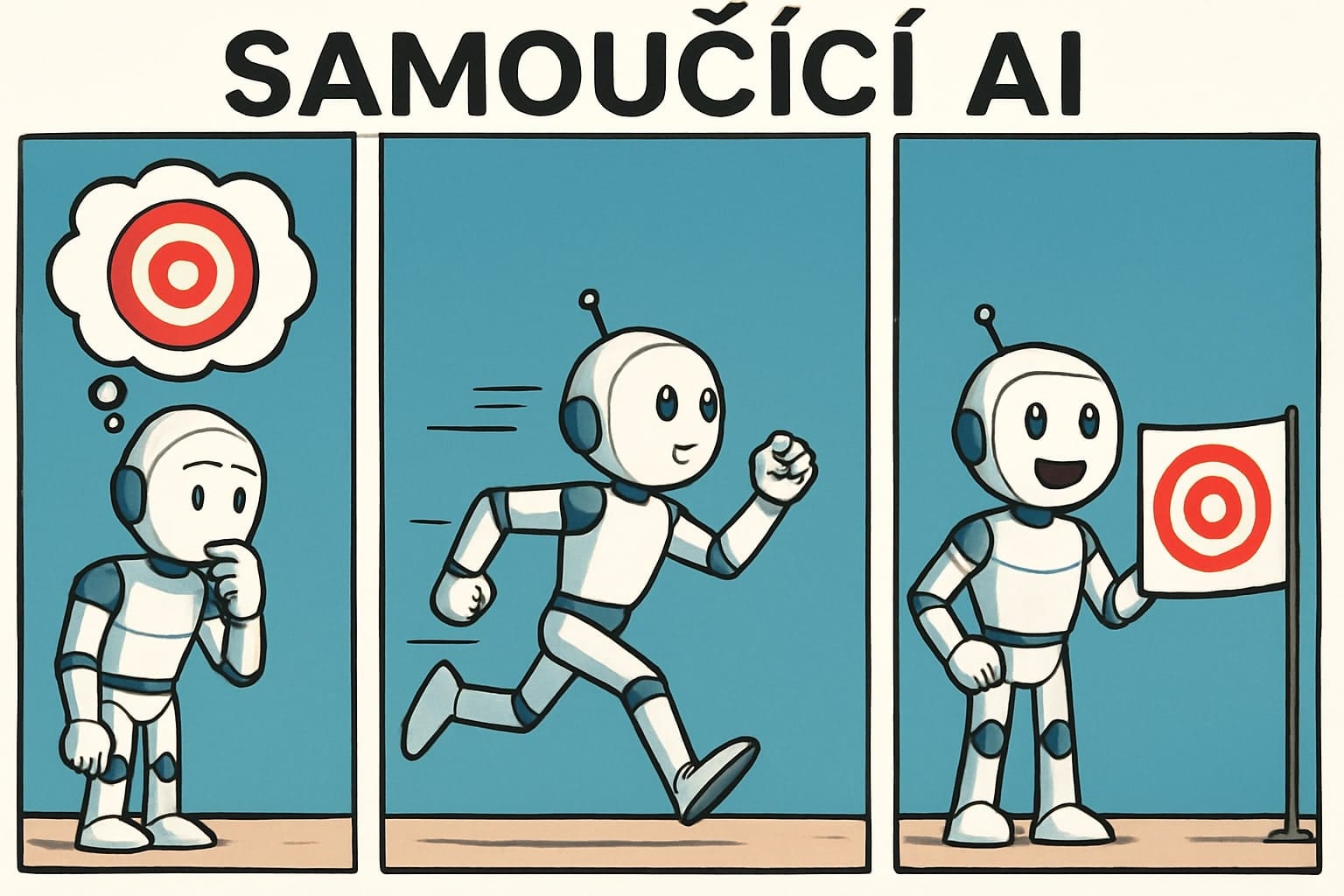
The Absolute Zero method is based on the tabula rasa concept – that is, a “blank slate.” AI agents have no predefined knowledge, rules, or datasets. Everything they learn is acquired solely through their own trial and error and feedback from the environment. This approach stands in stark contrast to traditional machine learning methods, which often rely on extensive datasets, human annotations, or predefined heuristics. According to an article on Medium, the main idea behind Absolute Zero is to enable AI systems to discover optimal strategies and solutions on their own, without being influenced by human biases or limitations. This means that AI can arrive at solutions that would never occur to a human and, in some cases, even surpass human experts.
Mechanisms and Architecture
According to arXiv: Absolute Zero Reasoner: Towards General-Purpose Self-Learning AI, a key element of this method is self-play (self-play) and reinforcement learning (reinforcement learning). The agent repeatedly interacts with the environment, receives rewards or penalties based on its actions, and gradually builds its own model of the world. The Absolute Zero Reasoner article describes a specific system called Absolute Zero Reasoner (AZR). This system is designed as a generally applicable framework that can be applied to various tasks – from logical reasoning to complex decision-making processes. AZR uses a combination of deep neural networks and reinforcement learning algorithms, with the ability to adapt to new tasks without any prior knowledge being crucial. Another important aspect is the ability to exhibit emergent behavior – that is, the emergence of new strategies and solutions that were not explicitly programmed. This is possible because the agent is not constrained by any predefined rules and can experiment freely.
Research Teams and Authors
According to the arXiv article, the lead author of the research is Zhihao Zhang (Andrew ZH), who works at the University of Cambridge. His team focuses on developing generally applicable AI agents capable of learning independently and solving a wide range of tasks. The Medium article further mentions that similar principles were also used in projects such as DeepMind’s AlphaZero, but Absolute Zero Reasoner goes even further in eliminating any predefined knowledge.
The Absolute Zero method has the potential to fundamentally change the way AI systems are developed and applied. If this technology can be further advanced, it could mean that AI will be able to independently solve tasks that currently require human programmers or experts. This could lead to the automation of software development, the optimization of complex systems, or even the discovery of new scientific knowledge. The arXiv article emphasizes that the main challenges remain scalability and generalization – that is, the ability of AI to learn effectively even in extremely complex and unknown environments. However, research in this area is highly active, and initial results show that Absolute Zero Reasoner can achieve results in some tasks that are comparable to or better than those of traditional methods.