

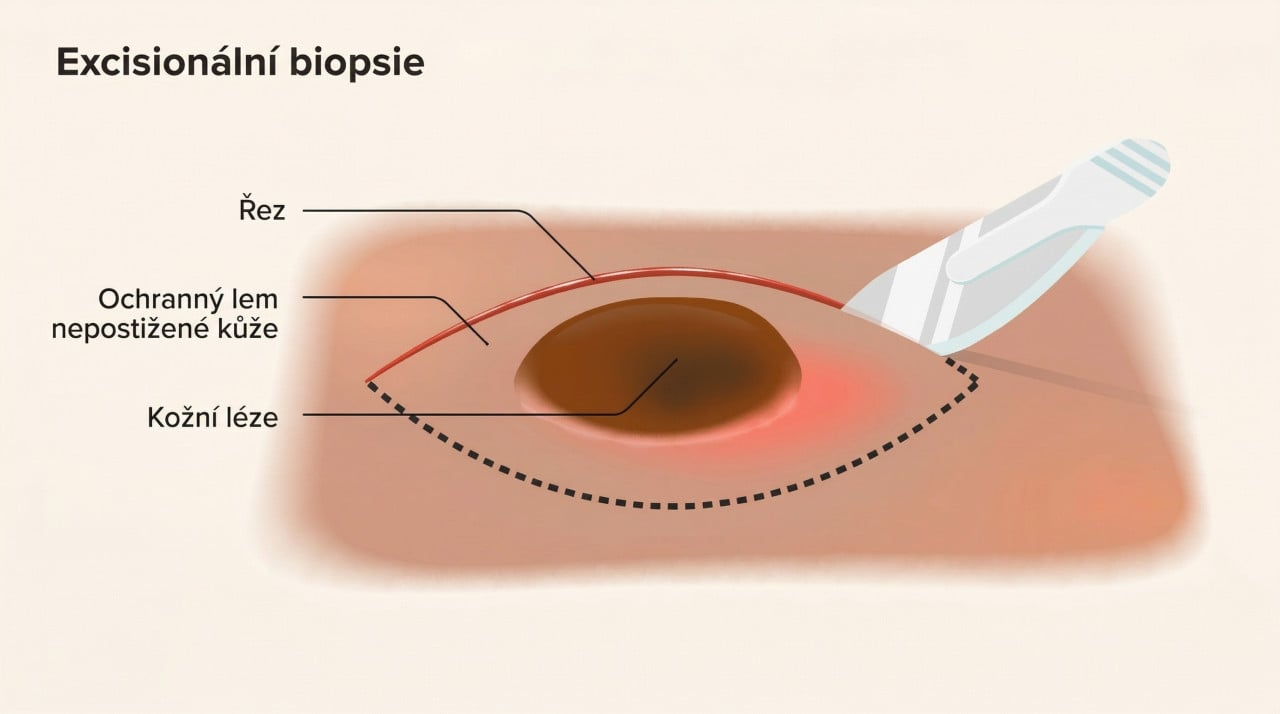
When we cut a finger or suffer a more serious injury, we only see what is happening on the surface. The skin gradually closes and the scar fades. But what is happening deep beneath it? Until recently, doctors could only find out by removing tissue and sending it to a laboratory. A biopsy is painful, invasive, and disrupts the very site that needs to remain undisturbed.
And this is precisely the problem that a team from Duke University, working with researchers from Nokia Bell Labs, set out to solve.
An Eye That Sees Through the Skin
The technology behind the entire project is called OCT, or optical coherence tomography. Most people have never heard of it, even though ophthalmologists have routinely used it for years. They send a beam of light into the eye and receive detailed 3D images of the retina. It is essentially like ultrasound, except that it uses light instead of sound.
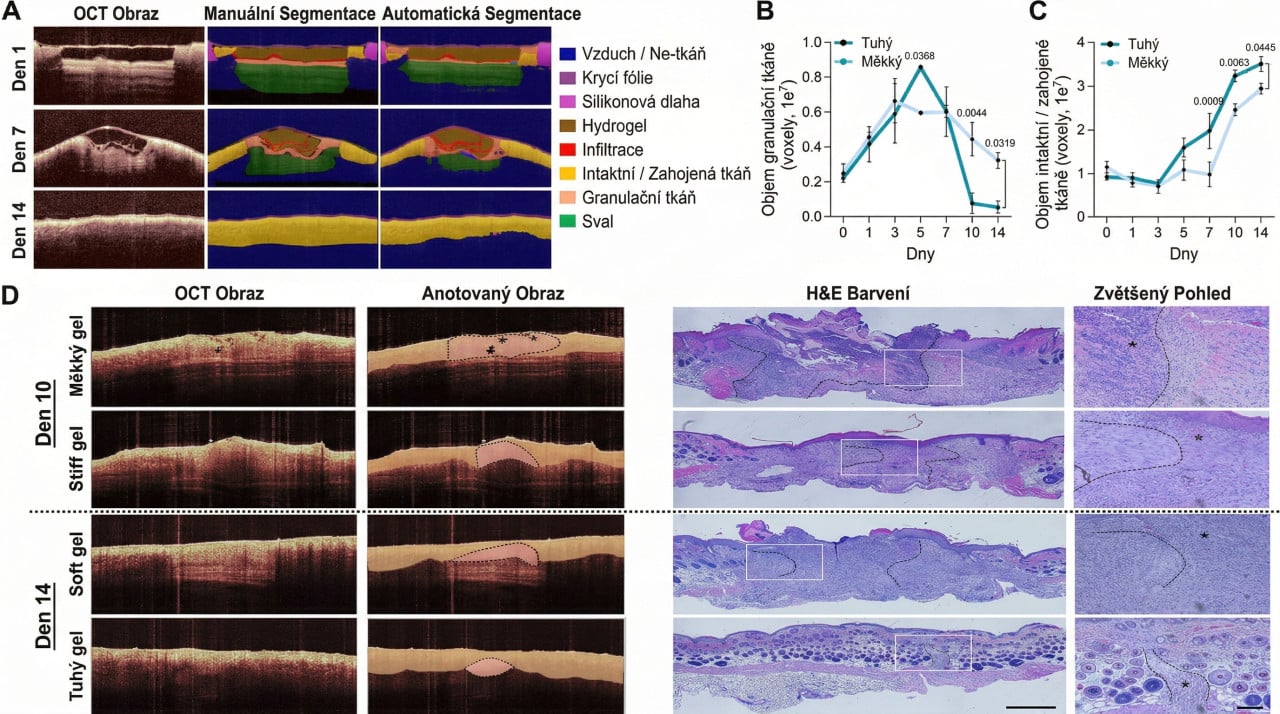
The Duke scientists asked: why not do the same thing with skin wounds? They took the principle of OCT, built their own device, and aimed it at healing tissue in mice. Without an incision, without a needle, and without disrupting the healing process. The result? For the first time in history, they were able to observe new tissue forming beneath the skin, blood vessels growing, and blood flow changing. And they could do so repeatedly over two weeks, at the same site.
Where Artificial Intelligence Comes In
But the images alone are not enough. OCT produces enormous amounts of complex data, and the human brain simply cannot evaluate what it is seeing quickly and objectively. This is where Nokia Bell Labs stepped in with its AI models.
The researchers trained the artificial intelligence using data directly from the laboratory of Professor Sharon Gerecht, who has been studying tissue healing for more than ten years. The AI learned to recognize structures in the tissue, track changes in blood flow, and automatically measure how quickly and how well a wound is healing. “AI helped us track changes effectively and achieve more objective results, instead of trying to analyze the images manually,” says Jiyeon Song, a postdoctoral researcher in Gerecht’s laboratory and co-author of the study.
It makes a major difference. Instead of impressions and subjective assessments, you get hard numbers. That is invaluable in both research and clinical practice.
Stiffer Hydrogel Promotes Better Healing
But the team also had a second goal: to test a hydrogel that Gerecht’s laboratory is developing as a new treatment method. A hydrogel is a gel-like substance applied to a wound to guide the healing process. The scientists compared two versions: a softer and a stiffer formulation.
And the results were surprising. The stiffer hydrogel helped granulation tissue form more quickly—the initial, temporary material that fills the wound—and also transformed it into fully regenerated tissue more quickly. The softer version also worked, but its blood vessels remodeled more slowly, suggesting slower healing.
Without the combination of OCT and AI, these differences would have been extremely difficult to detect. Standard methods would have required regular biopsies, each of which would have disrupted healing, and the data still would not have been as accurate.
The Research Is Just Beginning
The study was published in the scientific journal Cell Biomaterials and immediately attracted attention. And it is easy to see why.
Chronic wounds, such as diabetic foot ulcers, are a nightmare for modern medicine. They heal poorly, slowly, or not at all. Doctors monitor them primarily by visual inspection and by measuring their circumference. No depth information, no insight into what is happening inside the tissue. Gerecht and her team now plan to expand their research in precisely this direction. They want to teach the system not only to track how a wound is healing, but also to predict how it will heal. For patients with diabetes, this could mean detecting problems early, before the wound begins to deteriorate.
So far, the platform has been tested in a mouse model, and the path to clinical use in humans will still be a long one. But the foundation has been laid. Together, light, algorithms, and a smart hydrogel have shown that we do not have to simply wait for wounds to heal. We can see, measure, and control the process. And that is something doctors could not even have dreamed of just a few years ago.


