

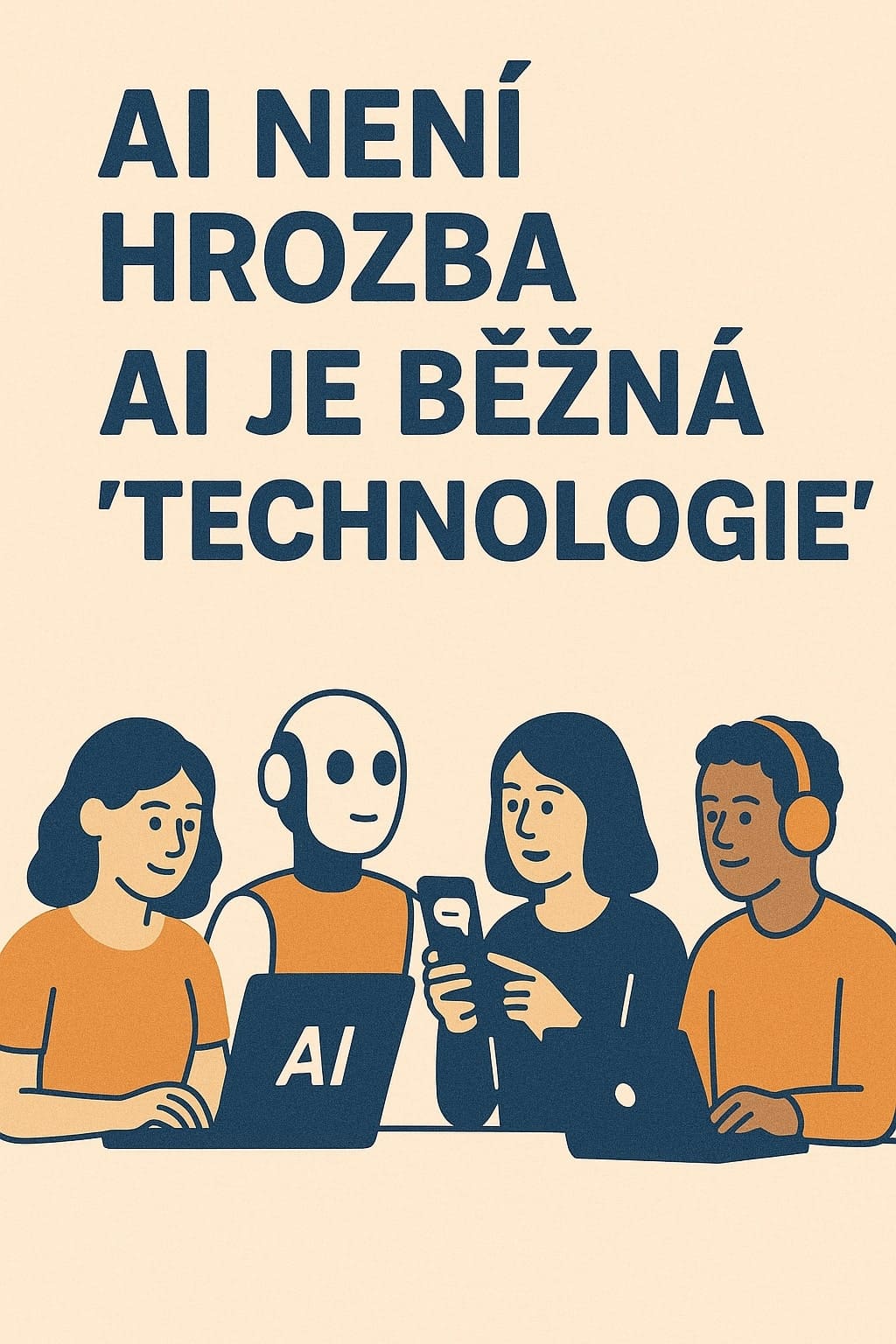
AI as a Normal Technology: Why We Should Stop Thinking of Artificial Intelligence as Magic
Discussions about artificial intelligence (AI) often oscillate between utopian visions of omniscient assistants and dystopian scenarios of humanity’s demise, but a pair of researchers offers a refreshing perspective. In their study for the Knight First Amendment Institute, Arvind Narayanan and Sayash Kapoor of Princeton University propose that we begin thinking of AI as a "normal technology" – not as something fundamentally different from anything humanity has created so far.
What Does "AI as a Normal Technology" Mean?
The claim that "AI is a normal technology" may seem provocative at first glance. At a time when generative models such as ChatGPT and DALL-E are astonishing the public and machines appear to be starting to think similarly to humans, such a statement may sound like an understatement of artificial intelligence’s revolutionary potential. However, the study’s authors explain that their framework has three meanings: "First, it describes the current state – today’s AI systems are sophisticated tools, not independent agents with their own intentions," the researchers write. "Second, it is a prediction of future development – even in the foreseeable future, we do not expect AI systems to become something fundamentally different from normal technologies. And third, it is a recommendation – society should approach AI regulation in the same way as it approaches other significant technologies, through proven institutional processes and policies."
Lessons from the History of Technology
One of the study’s key arguments is that we should learn from the history of introducing other groundbreaking technologies. Electricity, automobiles, the internet – all of these inventions dramatically changed society, but none of them led to the immediate transformation of every aspect of human life. "Technological revolutions typically unfold over many decades, not within a few years," the authors point out. "There is a fundamental difference between the speed at which new methods are developed and the speed at which society adopts and adapts to new applications." Narayanan and Kapoor point out that while progress in foundational AI models may be rapid, their actual impact on society will be gradual and will depend on many factors, including economic conditions, the regulatory environment and social acceptance.
People Remain at the Center
Another important aspect of this framework is that people – and human organizations – retain primary control over how AI is used. Even the most advanced current AI systems are ultimately tools that cannot function without human direction, maintenance and oversight. "The role of people will change and shift toward directing and managing these tools, but people will not be replaced," the researchers argue. "Even in the case of highly autonomous systems, people and organizations will still decide when, where and how these systems are deployed." This view contrasts with the idea that AI systems will become independent agents with their own goals that could conflict with human interests – a scenario that some experts on AI existential risks consider a real threat.
Rejecting Technological Determinism
The concept of "AI as a normal technology" also explicitly rejects technological determinism – the idea that technology itself determines its social impacts. Instead, it emphasizes the role of institutions in shaping the risks and benefits associated with new technologies. "Technology itself does not determine social outcomes," the authors explain. "Institutions and political decisions fundamentally shape how technology affects society." For example, with the internet we have seen how different approaches to managing this technology have led to different outcomes in different countries – from an open and free internet in some democratic countries to a censored and controlled internet in authoritarian regimes. Similarly, the impact of AI will be determined to a large extent by how society approaches its regulation and governance.
Implications for Risk Assessment
This framework leads to a different view of the risks associated with AI. Instead of fearing uncontrollable superintelligence that could pose an existential threat to humanity, it focuses on managing risks similar to those we know from other powerful technologies – accidents, misuse, arms races or misalignment in the deployment of AI systems. "Risks associated with AI accidents or misuse should be managed similarly to those of other advanced technologies – through robust institutions focused on resilience," the researchers propose. "Drastic policy measures based on fears of uncontrollable superintelligence may be counterproductive if current trends do not change." The authors warn that such drastic measures could unintentionally intensify problems typical of the introduction of technologies in capitalist societies, such as inequality.
Recommendations for Policy and Regulation
So what does this framework specifically recommend for policymakers? Narayanan and Kapoor propose three main directions:
- Reducing uncertainty about social impacts through research and transparency.
- Building the resilience of social systems to catastrophic risks without resorting to extreme regulatory measures unless they are justified by clear evidence of unprecedented dangers.
- Recognizing continuity with the past – most of the harms and benefits of the widespread deployment of AI will reflect those we have seen with previous general-purpose technologies: economic changes (including inequality), transformations in labor markets, but not necessarily existential threats unique to machine intelligence.
The authors also emphasize the key role of institutional mechanisms that have proven effective in managing technological progress in the past – from transparent risk research to international cooperation in regulation.
Rethinking the Current Discourse on AI
One consequence of adopting the "AI as a normal technology" framework is the need to rethink the current discourse on artificial intelligence, which is often full of exaggerated expectations or catastrophic predictions. "Exaggerated expectations about AI can lead to poor investment decisions, disappointment and, ultimately, another 'AI boom and bust'," the authors warn. "Similarly, exaggerated fears can lead to paralysis or overly drastic regulatory interventions that could hinder potential benefits." Instead, they propose a more balanced approach that recognizes both the potential benefits and risks of AI, but places them in a historical context and focuses on pragmatic, evidence-based solutions.
Pragmatic Optimism
The "AI as a normal technology" framework offers a refreshing alternative to the dominant narratives about artificial intelligence. It is neither utopian nor dystopian – it is pragmatic. It recognizes AI’s transformative potential, but places it in the context of previous technological revolutions. "Our goal is not to downplay the impact of artificial intelligence," Narayanan and Kapoor conclude. "AI truly represents a powerful, general-purpose technology with the potential to significantly reshape the economy and society. But the same was true of electricity, the automobile and the internet. The approach to AI should be informed by lessons from the past, not by visions of an unprecedented technological singularity." This approach encourages policymakers, researchers and the public to approach artificial intelligence pragmatically: to focus on proven governance structures and remain vigilant – but not alarmist – about its unique challenges. In this way, we can avoid both excessive optimism and paralyzing fear, and instead focus on how to make the best use of AI for the benefit of society.


