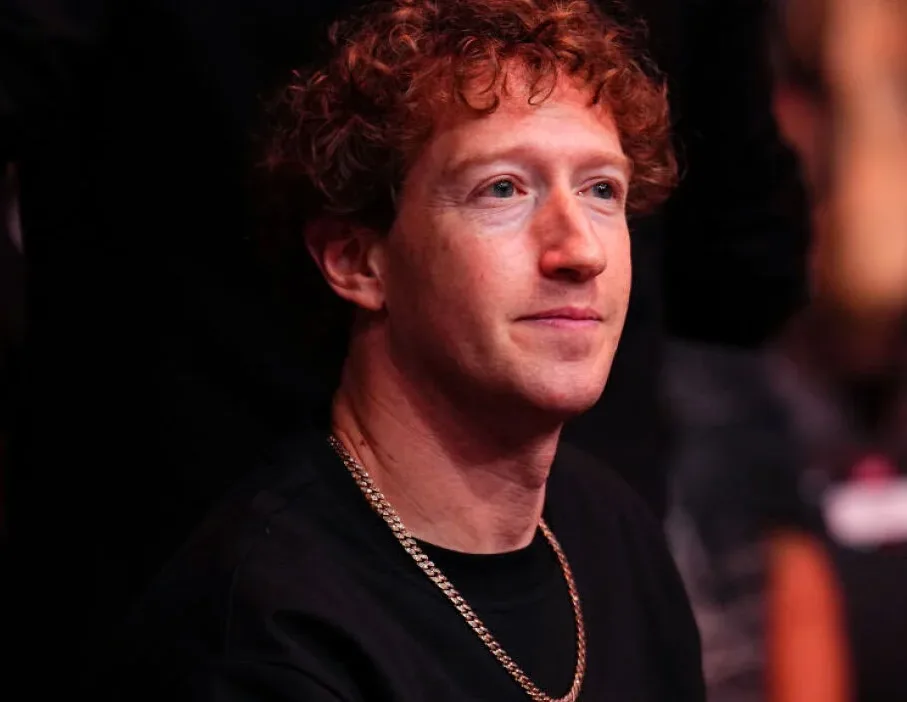
Mark Zuckerberg published a six-and-a-half-thousand-word essay titled “The Future Is for Everyone.” In it, he describes a world where every person has their own AI agent that manages their calendar, monitors their health, and helps them start a business. Six days later, TechCrunch’s editorial team revisited the text on its Equity podcast and agreed that few people believe in Zuckerberg’s vision of the future.
The three pillars of Zuckerberg’s vision
Zuckerberg built the entire text around a single question: Who will have access to superintelligence, and what will we direct it toward? According to him, the answer will determine whether this technology ends up in the hands of a few select institutions or becomes available to the general public.
From this, he derives three principles: prosperity arises when people gain greater agency; the main purpose of superintelligence is not mere automation but innovation; and safety will not be ensured by a single benevolent, perfectly aligned model, but by a balance of power.
This is precisely where Zuckerberg sets himself apart from the rest of the industry. He writes that he does not understand why anyone who believes artificial intelligence will eliminate most jobs and deprive humanity of its purpose would be in such a hurry to develop such a technology. He also considers the idea that the only safe path requires an extreme concentration of power in one place to be fundamentally flawed. According to him, history offers no example of absolute power taking good care of humanity simply because it was sufficiently enlightened.
An agent that works for you 24/7
Part of the essay reads like a catalog of promises. According to Zuckerberg, everyone should get an exceptionally capable personal agent that knows their goals and works tirelessly. This assistant is supposed to improve relationships, health, careers, finances, and household management, freeing up people’s time for the things they truly enjoy. User data will be protected by a fully private mode that even Meta itself cannot access. The tech giant’s CEO compares it to encryption in WhatsApp. The system will be controllable from any device, including smart glasses.
Zuckerberg illustrates these possibilities with the example of his own family. His agent filters interesting information for him, helps him test new ideas, monitors his sleep, and corrects him during training. His daughter enjoys baking, so every weekend the assistant prepares recipes for her, orders the necessary ingredients, and advises her throughout the baking process. According to Zuckerberg, his eight-year-old daughter can already program her own idea and create a video in a single evening that would previously have taken him months to produce.
He also promises teachers and coaches with doctorates in any field and infinite patience. He further mentions tools for launching companies without having to seek investors or build large teams, as well as the scientific benefits he expects from the open biological models developed by the Biohub project. Basic versions of these tools are to be free for billions of people. Those who require greater computing capacity will then be able to purchase it through a dynamic auction.
A lawyer for one person, or for everyone
Zuckerberg also discusses the risks. He rejects the common notion that, given enough time, we can fine-tune the technology into a single benevolent model. Humanity is not a monoculture, he writes; people have conflicting values, and no technical solution can align them all at once. Any single superintelligence would therefore have to prioritize some values over others.
Instead, he offers a thought experiment. If one person has a superintelligent lawyer, they will gain an unfair advantage in court even if the facts are against them. If everyone has one, Zuckerberg argues, courts will reach fairer and faster decisions than they do today. He applies the same logic to cybersecurity. A single person possessing such a capability could break into almost any system, whereas distributing that capability widely would strengthen systems instead.
As far as work is concerned, he is betting that the development of human capabilities can keep pace with automation, and he lists professions that no one performs today. One-person studios designing furniture or toys, creators of worlds and experiences, and personal biologists mixing customized treatments. According to him, companies will become smaller, but there will be more of them.
He also addresses data centers, since they represent Meta’s biggest political problem at home. In Richland Parish, Louisiana, teachers reportedly received a fifty-thousand-dollar bonus this year thanks to higher tax revenues, and according to the superintendent, people from across the country are moving to the district. Meta also promises to provide its own energy sources so that electricity does not become more expensive for local residents, and by 2030 it aims to return more water to the environment than it consumes.
According to Zuckerberg, China is bringing a gigawatt of nuclear capacity online every other week, and America’s advantage in chips will not last unless the United States can build faster. He says chip export controls are working and should continue. He considers anything that slows American laboratories down by even a month to be a risk. He therefore proposes a solution. Laboratories should provide the government with in-progress training versions of models and personnel who can help secure critical infrastructure, without delaying the release of models to the public.
The criticism targets the storyteller, not the story
On the Equity podcast, Kirsten Korosec, Rebecca Bellan, and Anthony Ha discussed why the text provoked such hostility. They cited their colleague Russell Brandom, who described the manifesto as a textbook example of why people dislike AI.
Bellan interprets it as an attempt to succeed on a different battlefield. In her view, Meta failed to establish itself among leading closed models and does not dominate open ones either, so it has embraced the theme of empowering individuals. Its Glimmer model is supposed to manage users’ schedules, write messages, and sort files. It runs continuously and locally, even without an internet connection. By contrast, the technology giant is keeping the more advanced Muse Spark model closed as a source of revenue to fund larger projects.
According to Bellan, however, the main problem lies in Zuckerberg’s past. During the rise of social media, he promised that everyone would have a space to communicate with friends. Instead of the promised connection, however, users got frustration and ubiquitous advertising. In this context, the journalist also recalls leaked internal rules that allowed Meta’s chatbots to engage in romantic conversations with underage users.
Ha adds that Meta is investing enormous sums in artificial intelligence and flooded the media last year with offers for the scientific community, yet no one ranks it among the top research laboratories. The company is not succeeding in the field of assistants that users would actively seek out, either. According to him, the manifesto therefore primarily serves as an attempt to claim strategic territory where the company has so far failed.
In this context, Korosec describes the tone of the entire text as excessively optimistic, even naive. According to her, Zuckerberg portrays artificial intelligence as an unqualified gift to humanity while remaining completely silent about the financial costs. That, she says, is precisely why the manifesto was met with such a strong wave of criticism and rejection.
Ha nevertheless concedes one point: Zuckerberg’s question about why creators who expect catastrophe nevertheless continue development is entirely legitimate. However, he draws a different conclusion from it than the author himself. In his view, it is not evidence of a wonderful future, but rather a manifestation of the contradictory behavior of people who warn about the risks while constantly accelerating development. In Ha’s opinion, the rest of the text will not overcome public skepticism because half of its promises remain in the abstract realm of creativity and innovation.
According to the editorial team, OpenAI CEO Sam Altman also provokes similar waves of discontent. He recently presented a vision in which parents would have ChatGPT generate personalized podcasts about their children’s interests for the morning trip to school. The public’s reaction, however, was unequivocal: “How about simply talking to your own child instead?
Bellan ultimately wanted to try the Glimmer model herself. However, she could not install it on her MacBook because the model requires specific hardware that an ordinary user does not have at home. Korosec commented: “It’s not for everyone. Not yet.”