

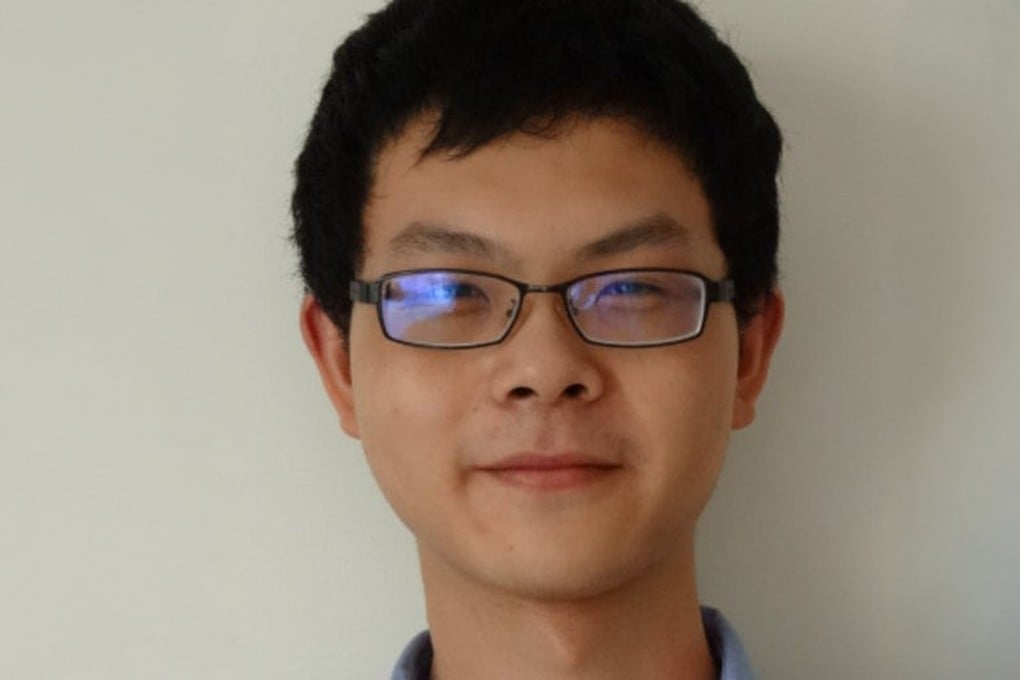
Yao Shunyu, originally a physicist, left his postdoctoral position at Berkeley and joined Anthropic. He decided to change fields because, in his view, theoretical physics has lacked sufficient experimentation for many years. Without experiments, it is difficult to objectively assess the importance of theoretical work or resolve disagreements systematically. Yao Shunyu saw better opportunities for young people in artificial intelligence (AI) because the field is developing rapidly and offers more chances for progress. He compared AI to quantum computing but chose AI because he believes its main obstacles do not lie in experimental platforms.
Working in AI felt similar to conducting thermodynamics research in the 17th century. At the time, people did not yet know what heat was and believed in the phlogiston theory. Nevertheless, they conducted systematic experiments, such as those leading to Boyle's law, which describes the relationship between pressure and volume at a constant temperature. These experiments led to inventions such as the heat engine, which changed the world. Yao Shunyu sees a parallel in today's large AI models: we do not yet have reliable theories explaining the behavior of large neural networks, but systematic research is revealing valuable patterns, such as scaling laws. These insights are crucial for continued progress at scale.
Why Anthropic and What Led to His Departure
Yao Shunyu joined Anthropic on October 1, 2024, just as the team was beginning work on the model later named Claude 3.7 Sonnet. After years devoted to physics, he was excited by how his research immediately influenced the capabilities of state-of-the-art models and changed the way people use AI through new features. He contributed to the development of Claude 3.7 Sonnet and Claude 4 and watched the models improve through Claude 4.5. Despite these achievements, he considers Anthropic one of the best places for physicists or graduates of other natural science disciplines who want to start working in AI.
Nevertheless, Yao Shunyu resigned on September 19, 2025, after less than a year. The main reason, accounting for about 40% of his decision, was his strong disagreement with Anthropic's anti-China statements. Specifically, these concerned a recent public announcement in which China was designated an "adversarial nation." Anthropic also prohibited subsidiaries from countries designated in this way, including China, from accessing its services. Yao Shunyu believes that most Anthropic employees disagree with this designation, but for him, it meant that he could not stay. The remaining 60% of his reasons involve complex internal matters that he cannot disclose because they concern Anthropic's confidential information.
A New Chapter at Google DeepMind
After resigning, Yao Shunyu quickly moved into a new role. He joined Google DeepMind on September 29, 2025, as a senior research scientist on the Gemini team, where he will work on developing the company's flagship foundation models. This move underscores how rapidly the AI field is evolving—so much happened in just one year that Yao Shunyu was surprised. He values the time he spent at Anthropic, where he learned a great deal, but decided to leave so that his experience would not be shaped by just one lab. This is especially important because core AI research is currently often not published in papers.
Yao Shunyu described his departure by saying that it was good with Anthropic, but better without them. His decision reflects growing tensions in AI development, where geopolitical factors influence not only countries and laboratories but also individual researchers' career choices. While this year's battle for AI talent has focused mainly on compensation and computing resources, companies' attitudes toward international collaboration are proving equally important. Yao Shunyu's case highlights how such attitudes can affect talent mobility on a global scale.
Source: alfredyao.github.io


