

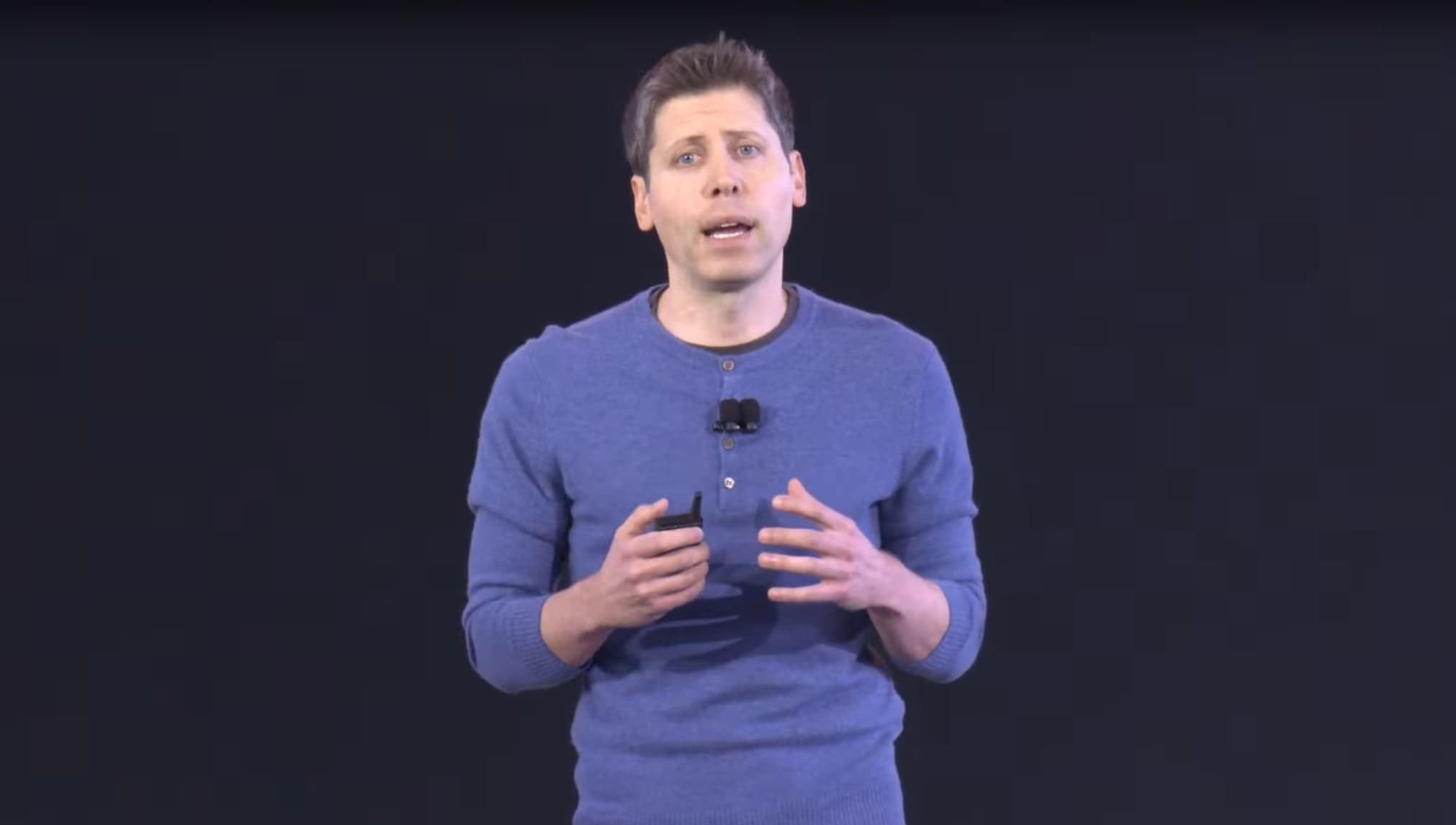
This article is based directly on an interview conducted by Ben Thompson with Sam Altman, co-founder and CEO of OpenAI. The interview focused on the recent announcements from the DevDay event and the enormous investments in infrastructure. Altman described how OpenAI is working to create highly capable artificial intelligence that could reach the level of AGI (artificial general intelligence) or superintelligence, and how to deploy it so that it truly helps people in various areas of life. This requires a great deal of work on infrastructure, products, and research.
OpenAI's Unified Vision
Altman explained that OpenAI is trying to create a single AI service that people will use throughout their lives. For example, ChatGPT should be integrated with other services so that users have continuity in their experiences—the AI will know what to share and what not to share. Altman mentioned that most people will want one such AI service to help them in both their personal and professional lives. Altman now spends most of his time on infrastructure because it is difficult to secure enough capacity for growing demand. On the research side, Altman is more optimistic than ever, which is why they are making big bets on product development.
Ben Thompson compared OpenAI to Windows in the AI era, with OpenAI providing the user interface or API (application programming interface) for interactions with end users while also being the primary customer for massive infrastructure buildouts. Altman agreed that historical analogies have their limits but emphasized that OpenAI is building an AI assistant that integrates into various parts of life.
Infrastructure Deals
Altman described how unusual it is that announcements of OpenAI deals can increase its partners' market value by 20% or more. Three years ago, OpenAI was more of a research lab, but now it has to consider its impact on markets. Altman rejected the idea that OpenAI is the only player—it has strong competitors such as Google and Meta. Nevertheless, he sees AI as a transistor that will permeate all consumer and enterprise products.
When asked whether the worst mistake would be not spending as much money as possible, Altman said that OpenAI will invest heavily in infrastructure because it sees this as the right time to make such a bet. Electricity must be generated, physical facilities built, chips and racks secured, and demand from consumers and businesses ensured. Altman mentioned the deal with AMD and hopes that TSMC (Taiwan Semiconductor Manufacturing Company) will expand its capacity.
The deals are worth up to one trillion dollars, according to a Financial Times calculation. Altman expects OpenAI's revenue to pay for them, but they will help partners with upfront financing. Altman, who was previously known as an excellent fundraiser in Silicon Valley, said that this skill is useful now. His investment experience helps him allocate capital in an exponential world where OpenAI is betting on internal projects such as Sora.
Altman also mentioned plans for hardware with Jony Ive but emphasized that AI must work everywhere—in browsers and on mobile devices. The deal with Samsung and SK hynix concerns memory for chips, and Altman promised to explain the entire plan in a few months.
Apps in ChatGPT
Altman described how ChatGPT was a surprise—he expected it to succeed, but not to this extent. Major tech companies then hesitated, giving OpenAI a head start. They are now executing the strategy they planned two and a half years ago, including apps in ChatGPT. These make it possible to integrate services such as Zillow directly into ChatGPT, where users invoke apps by name, connect their accounts, and the apps take over the UI (user interface).
Altman wanted this to benefit partners—he did not want OpenAI to control everything, but rather for new startups to be able to grow quickly. According to him, the consumer and enterprise sides are converging, much like with Google—people use the same tool at home and at work, only with different features such as security or data access.
Instant Checkout
Instant Checkout enables immediate purchases directly within ChatGPT, which Altman sees as beneficial to both users and merchants, provided the merchant maintains a direct relationship with the customer. Altman emphasized that OpenAI will not prioritize results because of money—trust in ChatGPT is crucial because users know that the AI is trying to help.
Altman admitted that Instagram ads convinced him that advertising does not have to be merely a tax but can add value. OpenAI is considering affiliate models in which it would take a small share of transactions, but it does not yet have a specific advertising plan.
Sora and Its Success
Sora, an app for creating AI videos, was successful, according to Altman, thanks to talented teams and the new leader, Fidji Simo, who is exceptional at product development. Altman handed the product side over to her so that he could focus on other things. Sora is not part of ChatGPT because it is a different type of experience—more entertaining and social, where people share memes.
Altman said that Sora demonstrated latent demand for creativity—30% of active users created content in the first few days. People want to create for themselves and others, which is connected to the human need to be useful. When asked about monetization, he said that users will have to pay for generations used to create memes among friends because advertising will not support it.
Altman said that OpenAI spoke with rights holders before launching Sora, but video evokes stronger emotions than images. Rights holders want more restrictions, but many are excited and want their content in AI so they can connect with fans. Altman predicts that attitudes will shift toward wanting more content in AI.
Feedback and the Future
Altman admitted that OpenAI sometimes gets carried away on Twitter out of excitement, but it has delivered more than was expected five years ago—for example, it has passed the Turing test in the popular sense. They listen to users and data and change things quickly, as with GPT-5, where they discovered differences between advanced and ordinary users.
Altman sees potential in subscriptions—ChatGPT has shown that people are willing to pay. When asked about electricity, he promised to explain how everything fits together in a few months. The interview concluded with congratulations on a successful month and DevDay.
Sources: stratechery.com and youtube.com


