

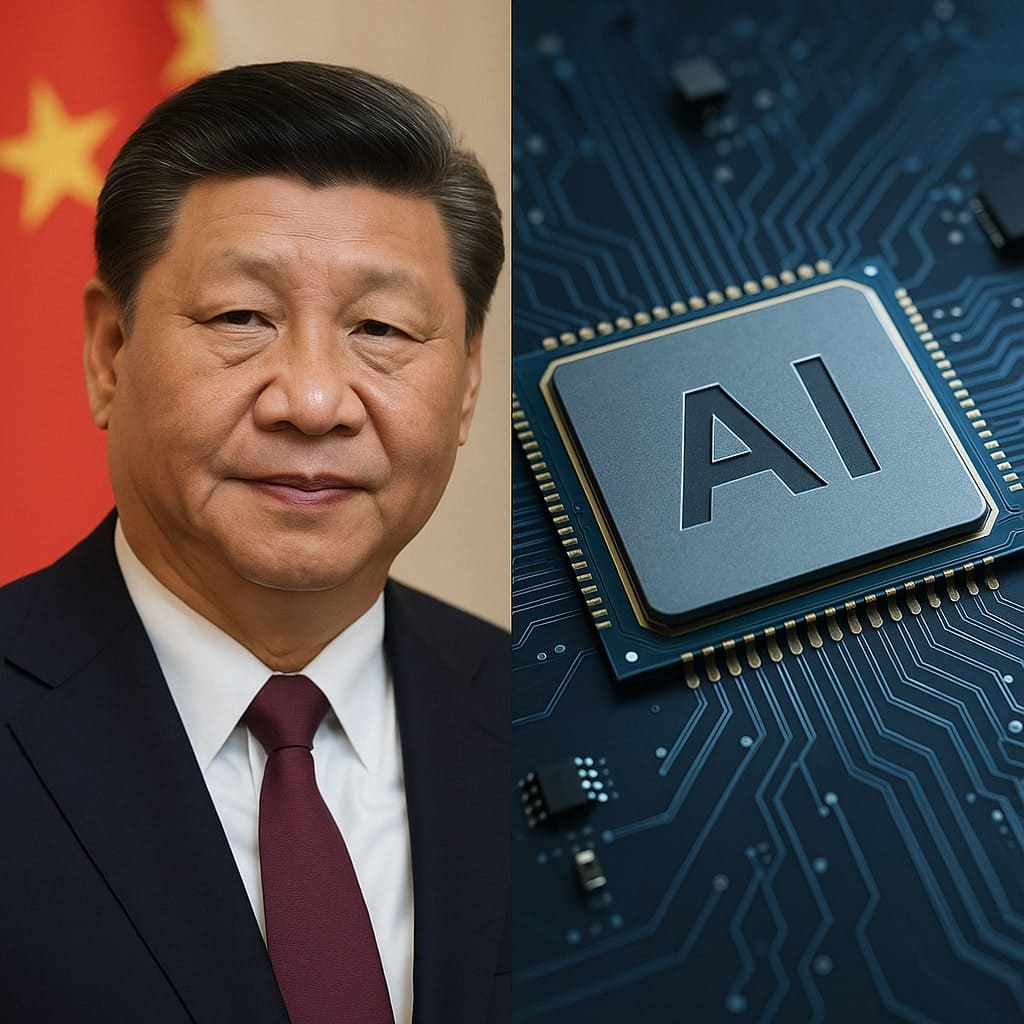
Chinese President Xi Calls for AI Self-Sufficiency Amid Competition with the US
At a time of growing technological tensions between the world's superpowers, Chinese President Xi Jinping has taken a decisive step toward strengthening his country's technological independence. During a recent speech, he emphasized China's critical need to achieve self-sufficiency in artificial intelligence (AI), clearly highlighting Beijing's strategic priorities in the global technology race.
Mobilizing National Resources for Technological Independence
Xi called for the use of China's "new nationwide system," which would coordinate the efforts of the government, industry and academia to achieve breakthroughs in key artificial intelligence technologies. According to state media, Xi stressed: "We must identify the gaps and double our efforts... to advance technological innovation across the board... and build an independent... foundational AI software and hardware system." This initiative comes at a time when the United States has imposed strict export restrictions on advanced semiconductors and artificial intelligence technologies destined for China. Washington is deliberately limiting Beijing's access to critical components needed for the most advanced AI models.
Targeting the Technological Bottleneck
China's strategy focuses on overcoming critical obstacles, particularly in the areas of cutting-edge semiconductor chips and foundational software. These sectors represent precisely the areas where US export restrictions have created significant problems for Chinese companies. Growing government support includes increased research funding, intellectual property protection, talent development initiatives and favorable public procurement policies. The goal is to accelerate domestic innovation and build an independent and controllable AI ecosystem – including both hardware (chips) and software platforms.
Progress Despite Sanctions
Chinese companies are responding to US pressure at a remarkable pace. For example, Huawei is reportedly developing advanced domestic chips as alternatives to restricted NVIDIA processors. Even more impressive is the case of startups such as DeepSeek, which demonstrated significant progress in March 2025. DeepSeek launched competitive large language models that were trained using less advanced chips and at lower costs than those of Western competitors. According to Lee Kai-fu, founder of 01AI and a prominent artificial intelligence expert, DeepSeek significantly narrowed the gap between Chinese and American artificial intelligence in just three months. "DeepSeek was able to train its models with chips that are one generation behind those used by American companies, but at a fraction of the cost," Lee told Reuters in March. This progress signals that China is narrowing the technological gap despite sanctions.
China's drive toward AI self-sufficiency is not merely technological progress, but also a means of ensuring strategic autonomy. Although China has made significant progress – especially in applied fields such as facial recognition – it still faces obstacles in fundamental theories and in attracting top talent. Xi therefore also emphasized the need to accelerate the development of regulatory frameworks to ensure that AI remains safe, reliable and aligned with national interests. This includes building early warning systems for risks and emergency response mechanisms related to emerging technologies.
Massive Investment and Support for Chinese AI Companies
Over the past 18 months, the Chinese government has dramatically increased its support for domestic AI companies. In March 2025, Beijing announced the establishment of a massive state-backed fund worth approximately $138 billion (1 trillion yuan) aimed at supporting artificial intelligence and other strategic technologies. This move complements an existing network of more than 2,100 so-called "guidance funds" (public-private investment vehicles), whose target allocation reaches $1.86 trillion. At the local level, provincial authorities provide companies with "computing vouchers" worth up to $300,000 to offset cloud computing costs amid chip shortages caused by US export restrictions. Beijing has also invested more than $6 billion in building new data centers in western provinces, ensuring sufficient computing resources for the development of advanced models despite hardware constraints. The government is also actively promoting promising domestic startups, such as Manus (a developer of multipurpose AI agents), through state media, signaling official support. This comprehensive approach clearly shows that China is fully committed to overcoming technological obstacles and achieving a leading position in artificial intelligence in line with Xi's vision of technological independence.


