

Artificial Intelligence Reveals a New Cause of Alzheimer's Disease
Scientists from the University of California, San Diego, have made a groundbreaking discovery in Alzheimer's disease research through the use of artificial intelligence (AI). The research published in the prestigious scientific journal Cell has revealed a previously unrecognized cause of this devastating neurodegenerative disorder and identified a potential therapeutic molecule.
The Key PHGDH Gene and Its Unexpected Role
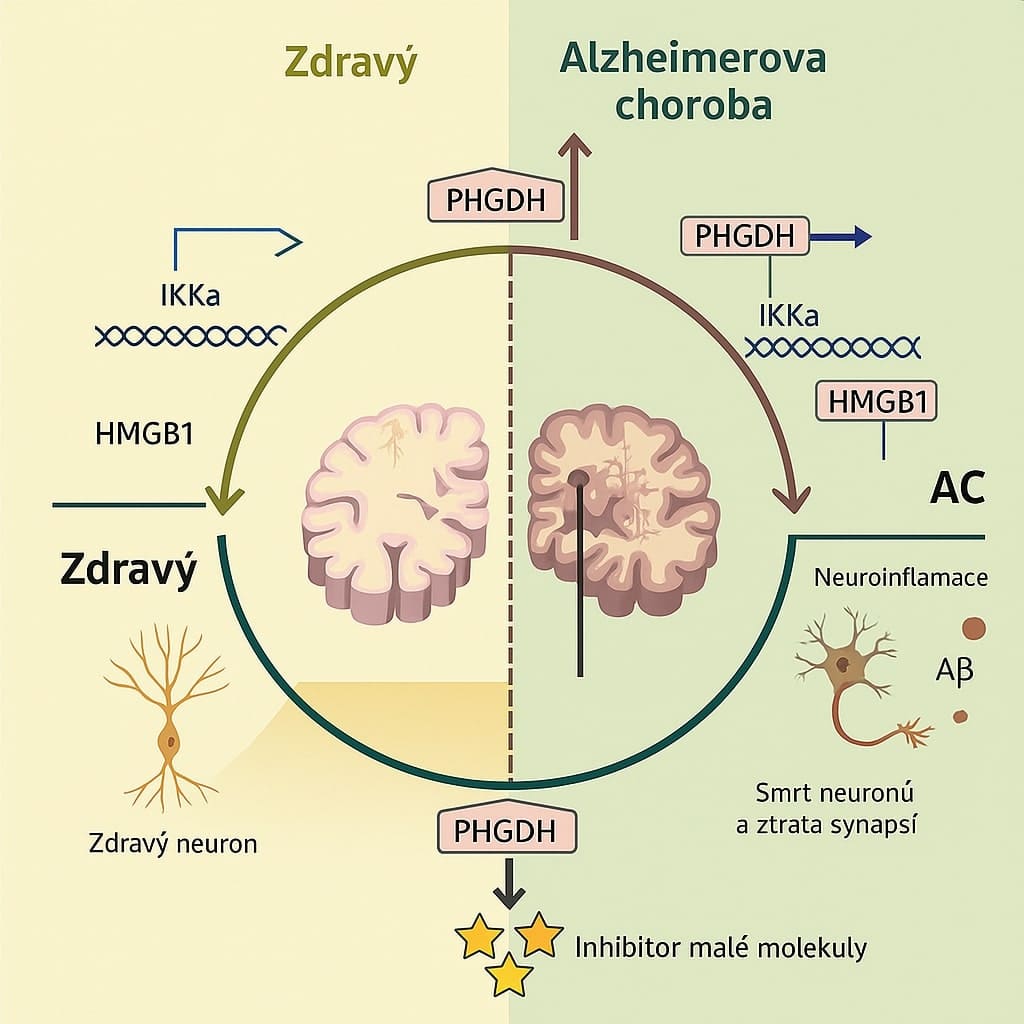
The research team led by Professor Sheng Zhong focused on the phosphoglycerate dehydrogenase (PHGDH) gene, which had previously been considered merely a biomarker of Alzheimer's disease. However, the new study surprisingly demonstrated that this gene plays a direct causal role in the development of the disease. "PHGDH was previously known only as an early biomarker of Alzheimer's disease, but our research revealed that elevated levels of this protein directly accelerate pathological processes," explains Professor Zhong. "We found that higher PHGDH expression correlates with more advanced stages of the disease." The researchers conducted experiments on mouse models and human brain organoids, which convincingly demonstrated that increasing PHGDH levels accelerates disease progression, while reducing its expression slows the development of the disease.
A Surprising "Side Function" Revealed by Artificial Intelligence
A major breakthrough of the study was the discovery of an unexpected "side function" (moonlighting function) of the PHGDH protein, which was identified through AI-guided structural analysis. The scientists found that part of the PHGDH protein structurally mimics transcription factors – proteins that regulate gene activity. "Modern artificial intelligence was absolutely essential for formulating the precise three-dimensional structure and making this discovery," Zhong emphasized. "Without these advanced tools, we would not have uncovered this hidden function." Thanks to this unusual property, PHGDH can bind to DNA and disrupt normal gene regulation in astrocytes, which are support cells in nervous tissue. This disruption impairs cellular processes such as autophagy (the cellular "recycling" mechanism), leading to increased accumulation of beta-amyloid plaques – a characteristic hallmark of Alzheimer's disease.
Identification of a Therapeutic Candidate
After uncovering this mechanism, the scientists used artificial intelligence tools to identify the molecule NCT-503, which is capable of blocking the newly discovered DNA-binding function of PHGDH without disrupting its primary metabolic activity. "This is crucial because it makes it possible to target only the harmful 'side function' without interfering with important metabolic processes," explains study co-author Dr. Bing Ren. In mouse models treated with NCT-503, the scientists observed significantly fewer amyloid plaques and improved performance in memory tests. This provides promising proof of concept for a potential therapeutic approach based on these findings.
A Revolution in Understanding Sporadic Alzheimer's Disease
Particularly significant is that this discovery offers a new mechanistic perspective on most cases of sporadic (non-inherited) Alzheimer's disease, which account for approximately 95% of all cases. "While the genetic mutations responsible for the familial (hereditary) form of Alzheimer's disease have been well studied, the causes of the sporadic form have remained largely a mystery," explains another study co-author, Dr. Kun Zhang. "Our findings provide new insight into the molecular mechanisms that may underlie most cases of Alzheimer's disease."
Implications for Diagnosis and Treatment
This breakthrough opens up several promising avenues for future research and drug development:
- Early detection: Monitoring PHGDH levels could make it possible to identify patients at risk of developing Alzheimer's disease before the onset of symptoms.
- Targeted therapy: NCT-503 or similar molecules could form the basis of new drugs aimed at blocking the "side function" of PHGDH.
- Personalized medicine: Understanding the role of PHGDH could help stratify patients and tailor treatment approaches to the specific molecular mechanisms of their disease.
"We are excited to have identified this new mechanism and potential therapeutic target," says Zhong. "Our findings could represent a significant shift in how we approach the diagnosis and treatment of Alzheimer's disease."
The Power of Artificial Intelligence in Biomedical Research
The study also demonstrates the growing importance of artificial intelligence in uncovering complex biological mechanisms. Advanced AI algorithms were able to analyze complex structural data and reveal an unusual function of the protein that had remained hidden for years. "This research shows how artificial intelligence can help uncover previously unrecognized biological mechanisms that are critical to understanding complex diseases such as Alzheimer's disease," Zhong adds. "It is an example of how an interdisciplinary approach combining biology, medicine, and computer science can lead to groundbreaking discoveries."
Further Research
The research team is now planning further studies to gain a deeper understanding of the mechanism by which PHGDH contributes to Alzheimer's disease pathology and to optimize potential therapeutic strategies. Research is also underway to identify additional molecules that could be more effective than NCT-503. "We are only at the beginning of the journey," Zhong concludes. "But we believe this discovery could be a key step toward new, effective therapies for the millions of people suffering from Alzheimer's disease around the world."


