Scientists from around the world have embarked on one of the boldest projects in modern biology. They aim to create artificial intelligence capable of accurately predicting how a human cell will behave when affected by a drug, genetic change, or disease. The project, called the Virtual Biology Initiative, is backed by the Biohub research institute, the U.S. Department of Energy, the National Institutes of Health, and technology companies Google DeepMind, Isomorphic Labs, and Meta. This week, they announced a major expansion of the initiative.
Experiments on a Computer
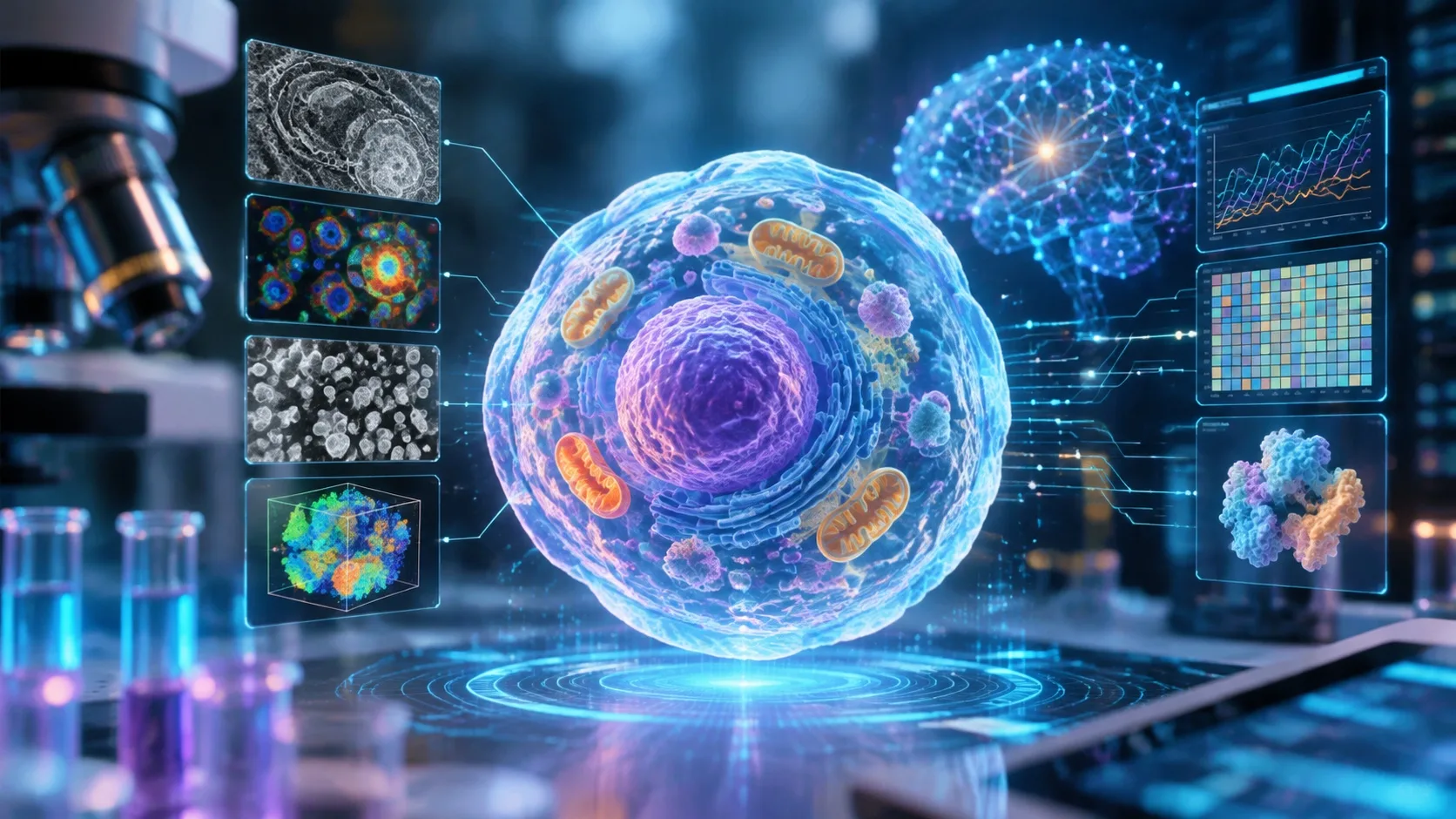
The goal is a so-called virtual cell. This would be a computer model that scientists could use to conduct experiments digitally instead of spending months testing each hypothesis in a laboratory. Biohub Chief Science Officer Alex Rives says an accurate model could dramatically accelerate discoveries, open entirely new avenues of treatment for doctors, and help scientists understand diseases in much greater depth. He therefore considers the creation of a virtual cell to be one of science's greatest challenges in the coming years.
Nicole Kleinstreuer of the National Institutes of Health shares this view. According to her, universal cell models could predict how any cell would respond to any intervention. The path to new drugs would then be significantly shorter than if scientists relied solely on laboratory experiments.
Models Lack Data
However, artificial intelligence is only as good as the data on which it is trained. And biology currently has too little of it. Scientists today know how only a limited number of cell types respond under a limited range of conditions. The new project aims to change this by collecting data on how cells respond to changes across a far broader range of cells and situations than anyone has ever studied before.
Pushmeet Kohli of Google DeepMind puts it bluntly: in his view, no one can build a virtual cell without open experimental data on an unprecedented scale. Max Jaderberg of Isomorphic Labs adds that no single organization can produce such a vast amount of information on its own.
Microscopes, Supercomputers, and People-Free Laboratories
Scientists will use a wide range of technologies to measure cells. Cryo-electron tomography can capture what is happening inside a cell at a level of detail approaching individual atoms. New microscopes will image millions to billions of cells directly in living tissue. Scientists also want to develop tools that will allow them to precisely alter biological systems, from individual molecules through cells and tissues to entire organisms.
The U.S. Department of Energy will involve its network of national laboratories in the project. These offer the world's most powerful supercomputers, X-ray and neutron measurements, as well as automated laboratories that conduct experiments independently. The National Institutes of Health will contribute extensive databases created over years of funded research, while Biohub will work with them to adapt the data so that it can be used to train artificial intelligence models.
Open to the Entire World
All data will be publicly available to the scientific community. Biohub is therefore developing common standards, consistent labeling, and a single place from which researchers can access the data. Information from different laboratories will thus fit together, allowing scientists to combine it easily.
Renowned institutions with extensive experience in major international projects, such as the Human Genome Project, have also joined the initiative. These include the Allen Institute, the Broad Institute, the Gladstone Institutes, the Wellcome Sanger Institute, and the Human Cell Atlas and Human Protein Atlas consortia. Nvidia will provide computing technology and software.
Biohub already has experience with open data. Over the past ten years, it has led projects such as Tabula Sapiens, which maps the cells of the human body, OpenCell, and Zebrahub, which focuses on zebrafish development. Following the newly announced expansion, it is now inviting scientists from around the world to join the work on the virtual cell.
Source: biohub.org