

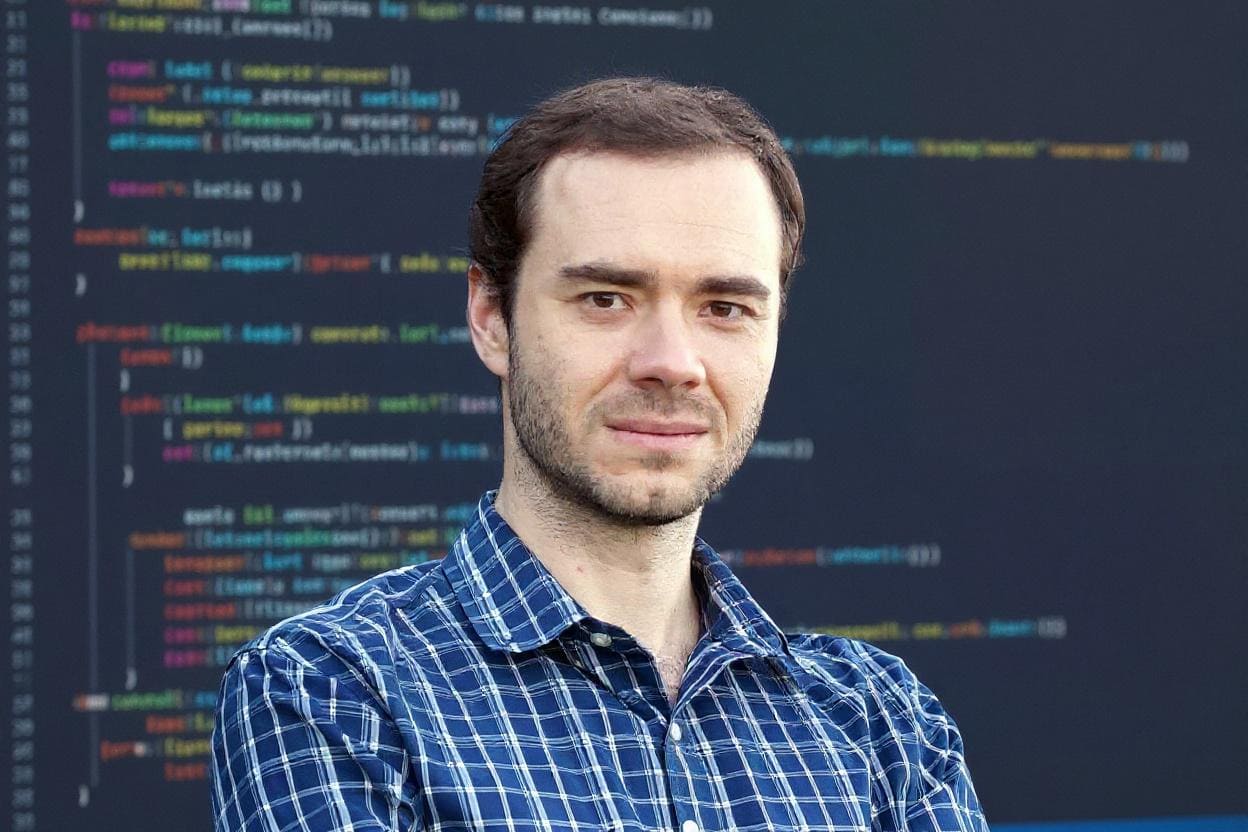
Andrej Karpathy, a former OpenAI executive, coined the term "vibe coding" at the beginning of the year, meaning the rapid creation of software using natural-language instructions for artificial intelligence. This approach was intended to make development easier, but serious shortcomings gradually emerged. For example, major security issues led to leaks of sensitive personal data, while artificial intelligence hallucinations (errors in generated code) turn projects into a chaotic mess that human programmers must fix.
Karpathy himself appears to have lost confidence in his own idea. His latest project is called Nanochat, a simple interface that emulates a basic version of ChatGPT. "You spin up a cloud box with a GPU, run a single script, and in four hours you can talk to your own large language model in a ChatGPT-like web interface," Karpathy boasted in a recent post on X.
Yet this project was not created using vibe coding. "It's basically entirely hand-written," Karpathy admitted in a follow-up comment. "I tried to use Claude and Codex agents a few times, but they just didn't work well enough and were more of a hindrance, possibly because the repository is too far outside the data distribution." This means that even the creator himself does not trust the technology enough to use it on his own work.
Good question, it's basically entirely hand-written (with tab autocomplete). I tried to use claude/codex agents a few times but they just didn't work well enough at all and net unhelpful, possibly the repo is too far off the data distribution.
— Andrej Karpathy (@karpathy) October 13, 2025
The Original Intent and Reality of Vibe Coding
Karpathy never intended vibe coding to permanently replace human programmers. In the February post in which he first used the term, he wrote: "Sometimes LLMs (large language models) can't fix a bug, so I just work around it or ask for random changes until it goes away. It's not bad for throwaway weekend projects, but still quite entertaining." This approach was meant only for quick experiments, not serious development.
However, companies often overuse this method in an effort to cut costs and invest in artificial intelligence. According to a report by 404 Media, more and more programmers are being tasked with fixing code that artificial intelligence generated with errors. At best, projects fail to reach the required quality. At worst, such code can delete entire databases.
Good question, it's basically entirely hand-written (with tab autocomplete). I tried to use claude/codex agents a few times but they just didn't work well enough at all and net unhelpful, possibly the repo is too far off the data distribution.
— Andrej Karpathy (@karpathy) October 13, 2025
Further Problems Revealed by Research
Researchers have found that coding with the help of artificial intelligence actually slows down human developers instead of increasing their productivity. A recent report by consulting firm Bain & Company states that although programming was one of the first fields in which generative artificial intelligence was deployed, the savings were underwhelming. "Generative artificial intelligence arrived with enormous expectations, and many companies rushed into pilot projects. But the results fell short of expectations," the report states.
The Fastly platform surveyed 800 developers and found that at least 95% of them had to spend extra time fixing code generated by artificial intelligence. Experts warn that excessive reliance on this approach prevents young programmers from learning the fundamentals. Daniel Jackson of MIT told Wired that it could lead to "masses of broken code riddled with security holes" and a new generation of programmers who will be unable to fix those holes.
Developers' Experiences with Vibe Coding
Developers who have tried vibe coding describe a mix of emotions: joy, disappointment, frustration, and stress. Common difficulties include misinterpreted output, failure to understand clear instructions despite the use of natural language, and rapidly burning through credits while fixing errors. One developer gave their first experience a D+ and added that it has uses for concepts or toys, but "isn't ready for prime time."
There is also the phenomenon of "Dory loops" (forgetfulness loops), in which artificial intelligence confidently claims to have fixed a bug that persists, while consuming credits without making progress or even breaking working code.
Where Vibe Coding Can Be Useful
Nevertheless, vibe coding has its place. It is suitable for small, rapid prototypes to validate ideas, simple debugging of common errors, and automating repetitive tasks such as generating boilerplate code or converting legacy code to modern frameworks. However, experts emphasize that the output must always be reviewed because artificial intelligence often overlooks project-specific details.


