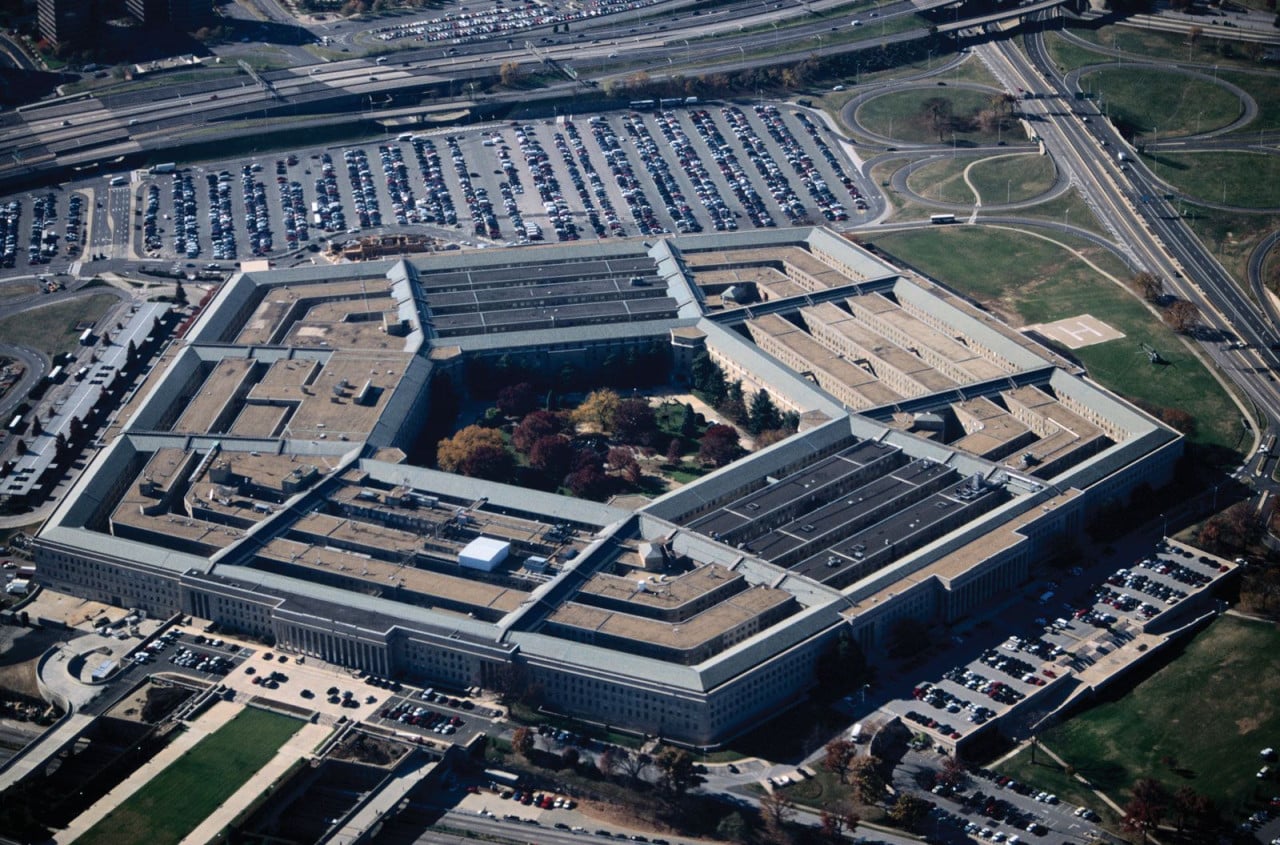
The U.S. Department of Defense on Monday published an updated list of companies it says are assisting the Chinese military. New additions include e-commerce giant Alibaba, search engine Baidu, the world’s largest electric vehicle seller BYD, and humanoid robot manufacturer Unitree. The list, known as 1260H or CMC, now includes nearly two hundred companies and represents one of the most extensive updates in its history.
The list was published less than a month after U.S. President Donald Trump met Chinese leader Xi Jinping in Beijing, with the two leaders maintaining a fragile truce in the trade war.
The list appeared in February but disappeared after a few minutes
The story of the current version has an unusual prelude. The Pentagon briefly published the updated list in February, but withdrew it without explanation after a few minutes. The Bloomberg news agency later discovered why. Two leading Chinese memory chip manufacturers, CXMT and YMTC, had disappeared from the February version, angering security hawks in Washington. White House officials feared that removing them ahead of a planned meeting with the Chinese side would send a signal that the United States no longer considered them a threat. They also worried that it would strengthen Chinese companies at the expense of U.S.-based Micron and South Korean companies Samsung and SK Hynix.
The June version is therefore virtually identical to the February one, with just one difference. Both chip manufacturers have returned to the list. YMTC reacted sharply. The company told Reuters that it was deeply disappointed by its inclusion and that, despite years of cooperation with U.S. authorities, it was facing further penalties driven, in its view, more by an effort to suppress competition than by national security concerns.
What does being on the list mean?
Being listed does not in itself constitute formal sanctions. However, under a recently enacted U.S. law, the Department of Defense will no longer be allowed to enter into direct contracts with the listed companies starting at the end of this month. From 2027, it will also be unable to purchase their products and services through intermediaries. This could cost Chinese companies and their partners substantial sums of money.
Being listed also serves as a warning to U.S. investors and Pentagon suppliers. In the past, it has often preceded tougher trade restrictions. Indeed, the market reacted immediately. Alibaba’s U.S.-listed shares were down one percent at around $120 on Monday afternoon, Baidu lost more than two percent, and BYD fell just under one percent.
Companies call the allegations unfounded
The companies concerned strongly objected to the designation. BYD told Reuters that it firmly rejected being labeled a military company and would use all available administrative and legal means to protect its interests. Alibaba said there was no basis for its inclusion. "Alibaba is not a Chinese military company, nor is it part of any military-civil fusion strategy. We will take all available legal action against attempts to misrepresent our company," the conglomerate said.
Baidu responded similarly, categorically rejecting the designation and promising that it would not hesitate to pursue every option to be removed from the list. Biotechnology company WuXi AppTec called the designation erroneous and said it intended to challenge it immediately. Genetics company Novogene said it was already working with U.S. authorities to secure its removal.
Chinese diplomats also spoke out. On Tuesday, the Foreign Ministry called the list a discriminatory tool that unfairly suppresses Chinese companies and urged Washington to correct its misguided actions.
Robots, batteries, and solar panels
Alongside the technology giants, a number of other names have also been newly added to the list. They include robotic sensor manufacturer RoboSense, automaker NIO, display manufacturers BOE and Tianma, battery companies CALB and EVE Energy, and solar companies JA Solar and Trina Solar. The case of Unitree, a leading Chinese manufacturer of humanoid and quadruped robots, is particularly notable. Just one week before the list was published, U.S. chipmaker Nvidia announced that it planned to collaborate with the company on robots for researchers.
The inclusion of China’s TP-Link Technologies, which sells routers mainly to customers in China, caused confusion. U.S.-based TP-Link Systems, headquartered in California, whose dominance of the wireless router market has long attracted the attention of U.S. authorities, is not on the list. A spokesperson for the U.S. company emphasized that the restrictions did not apply to it and that its founder and CEO, Jeffrey Chao, lives in California and has never been a member of the Chinese Communist Party.
A cold shower after a friendly summit
Why is Washington taking a tougher stance now? The list dates back to 1999, when Congress first ordered the Department of Defense to compile an overview of Chinese military companies operating in the United States. However, the Pentagon did not act on the order until more than two decades later. Given China’s military-civil fusion policy, which requires private companies to cooperate with the military, the Pentagon could theoretically designate almost any Chinese company with a U.S. presence.
"Washington no longer treats these companies as isolated entities. It considers the entire technology chain strategically contested territory," said Craig Singleton, a China expert at the Washington-based Foundation for Defense of Democracies. According to him, the publication of the list serves as a reality check after the summit. The meeting between Trump and Xi Jinping did not pause the rivalry; it merely showed where it would continue.
However, criticism has also come from the other side. John McEntee, a former senior Trump White House official who now lobbies for Tencent (which has been on the list since 2025), took a jab: "By expanding the list to include automakers such as BYD and NIO, they are showing just how absurd the rationale is. By the same logic, Ford and GM should be classified as U.S. military companies."
By contrast, John Moolenaar, chairman of the House Select Committee on China, defended the list. According to him, it serves as a warning to U.S. companies, government agencies, and the public because the listed Chinese companies cooperate with the Chinese military against U.S. national interests. The companies have the option to request removal, and some have already sued the United States over their inclusion.
Sources: fortune.com and wsj.com