Taiwanese chipmaker TSMC has released its results for the first quarter of 2026. Net profit rose 58 percent to a record US$18.2 billion. This marks the eighth consecutive quarter in which the company achieved double-digit growth. CEO C.C. Wei followed up by raising the company’s outlook for the full year 2026.
Demand for AI chips continues to grow
First-quarter revenue reached 1.134 trillion New Taiwan dollars, while analysts had expected approximately 1.127 trillion. Earnings per share came in at 22.08 New Taiwan dollars, compared with a market consensus of 20.88. Gross margin climbed to 66.2 percent, its highest level in twenty years. The company estimates second-quarter revenue at $39 billion to $40.2 billion. In the same period last year, it was just $30.1 billion. A sequential increase of ten percent, quarter over quarter. TSMC’s factories are simply running at full capacity and still cannot keep up with demand.
According to CEO C. C. Wei, demand for artificial intelligence chips is “exceptionally robust” and production capacity is being utilized to the maximum. “Our conviction in the multiyear AI trend remains strong,” Wei said, “and we believe semiconductor demand will continue to be absolutely critical.” This is a strong signal for the entire market. TSMC manufactures chips for Nvidia, Apple, AMD, Broadcom, and others. Whenever this company talks about demand, everyone else listens.
Particularly remarkable is how quickly the share of chips manufactured using the 3-nanometer process is growing. In the first quarter of 2026, 3nm chips accounted for a quarter of the company’s total revenue. As recently as the third quarter of 2023, the figure was just six percent. In less than three years, the share has tripled.
Specific names are driving demand for 3nm chips. Nvidia, Apple, AMD, Qualcomm. And behind them are others: Alphabet, Amazon, Meta, and Microsoft, which together plan to spend more than $650 billion this year on developing artificial intelligence infrastructure. Every one of these servers, every accelerator, every high-performance chip in a data center passes through a manufacturing process in which TSMC plays a central role.
Higher outlook and greater investment
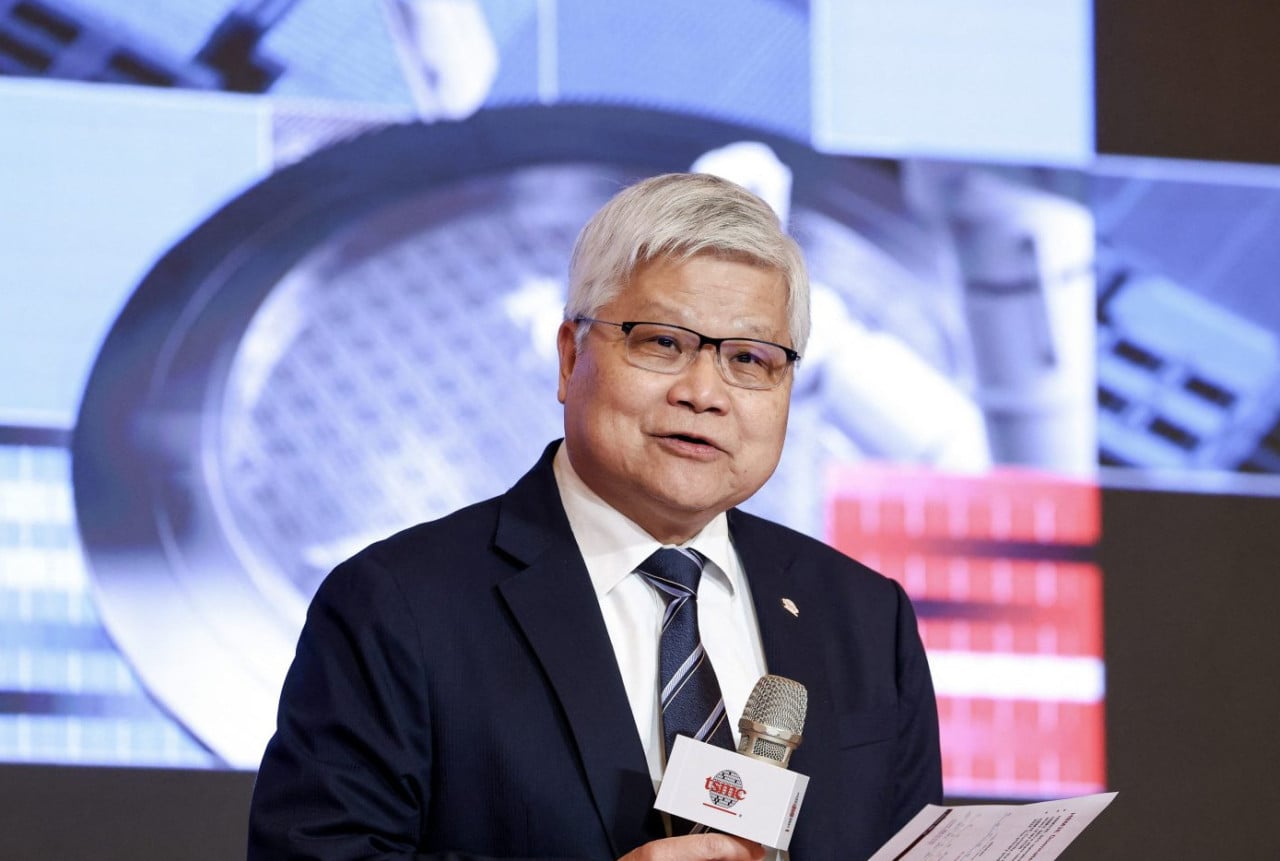
Based on the strong results, Wei raised the full-year revenue outlook. The company now expects growth to exceed 30 percent while the previous forecast called for growth “close to 30 percent.” Capital expenditure is expected to reach the upper end of the previous range, or as much as $56 billion. The original range was $52 billion to $56 billion. This is a massive bet on the future. TSMC’s spending on new capacity in 2026 will exceed what Intel or GlobalFoundries earns in an entire year.
A large portion of this investment is heading to the United States. TSMC has committed $165 billion to building new plants in Arizona. Larger-scale 3nm production at its US facilities is expected to begin in 2027 and 2028, alongside expansion in Taiwan and Japan.
Wei also made sure to remind his potential competitors of one thing. Elon Musk announced plans to build a so-called Terafab in Austin, and Intel joined the project. Wei responded calmly but firmly: “There are no shortcuts in this industry. Building a new plant takes two to three years.” He added that both companies remain TSMC customers.
The situation in the Middle East
Wei acknowledged that geopolitical uncertainty associated with the conflict in the Middle East is affecting his planning. The war threatens supplies of strategic manufacturing materials, particularly helium and hydrogen, which are essential for chip production.
TSMC, however, says it is managing the situation. The company has safety stocks of these materials and sources them from multiple suppliers in different regions. So far, it has not experienced any direct impact on production. Nevertheless, Wei warned that potential price fluctuations could slightly reduce gross margin by 2 to 4 percentage points in the coming years as the company ramps up overseas production.
Shares fell, but the market remains strong
TSMC’s US-listed shares fell by approximately three percent on the day the results were released. A paradox that markets occasionally produce. But this year’s performance tells a clearer story: since January 2026, TSMC shares have gained roughly 35 percent and the company’s market capitalization has approached $1.7 trillion. This value is nearly twice the market capitalization of South Korea’s Samsung.
Sources: theinformation.com, reuters.com, qz.com and seekingalpha.com