

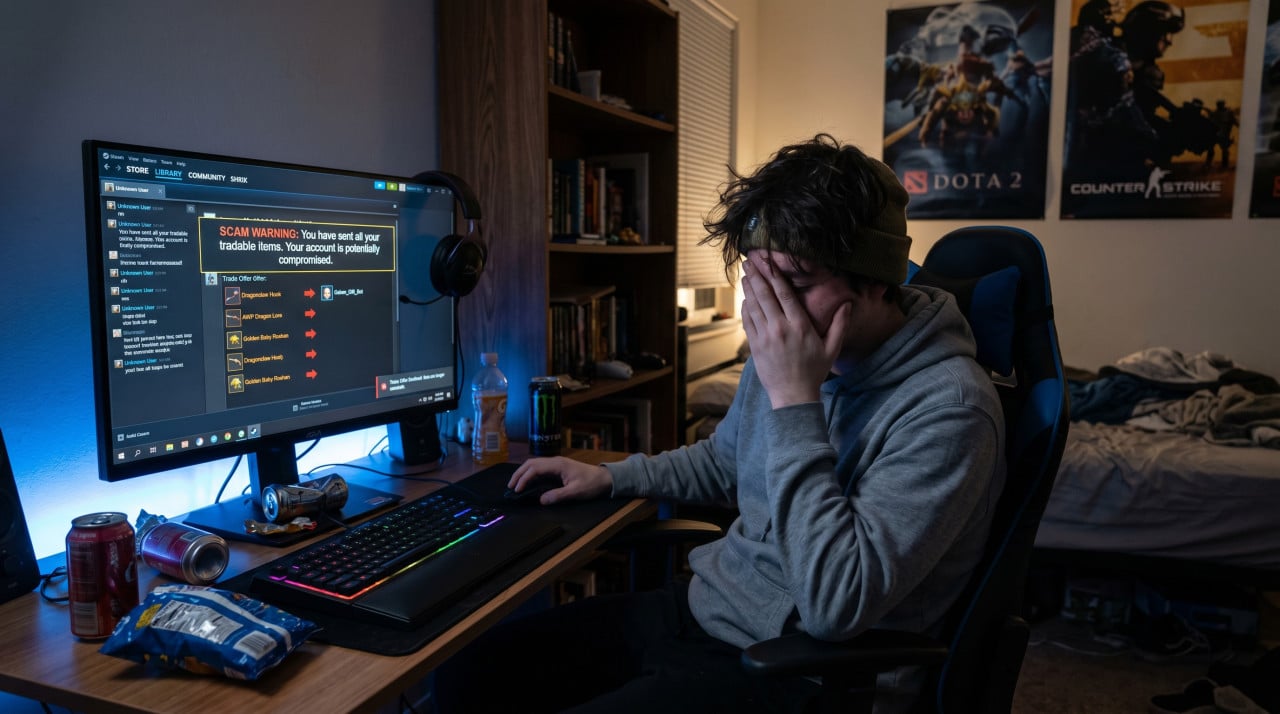
Something curious happened to me that I'd like to share. Even though I work in IT, know about these things, and am quite cautious about them, I almost got scammed. And I admit that even now, when I think about it, I keep wondering how convincing it was and how close I came to falling for it.
What exactly is Rust, the game in which all this happened?
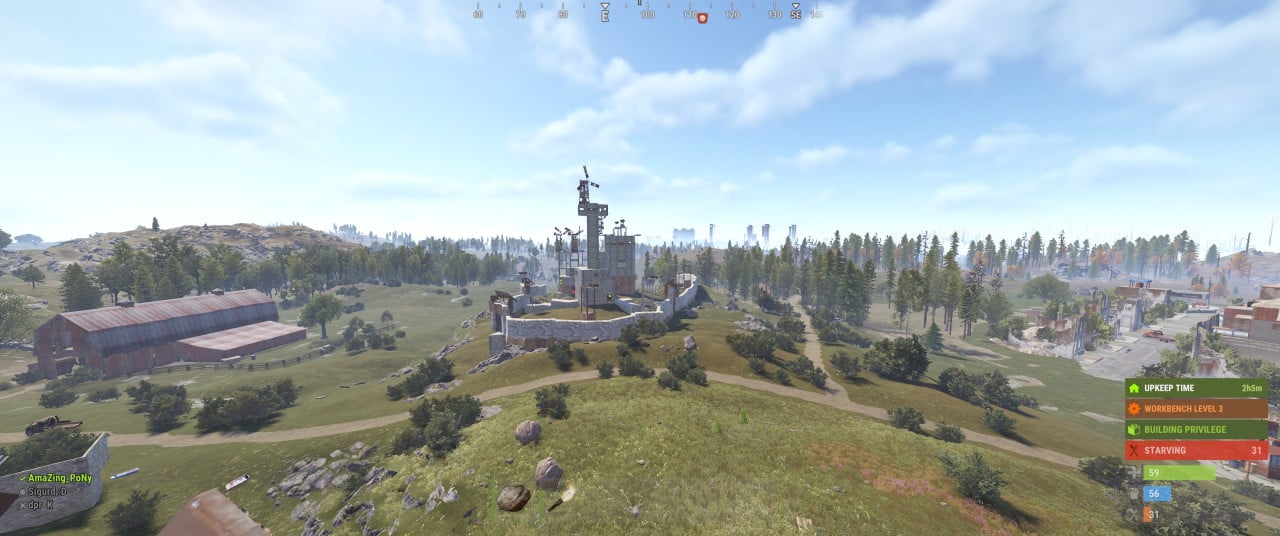
Before I get into the story itself, I'll briefly explain what the game is about. Rust is a multiplayer survival game by the British studio Facepunch, which is also behind the popular Garry's Mod. The game was first released in Early Access in December 2013 and did not receive its full release until February 2018 – so for five whole years, it remained in a stage where players could buy it as a work in progress and actively help with its development.
Interestingly, Rust began as a DayZ clone (a survival mod for ARMA 2), but the developers gradually decided to go their own way – first they removed zombies, then added animals, armor, weapons, bunkers, and a building system. Today, the game has sold over 12 million copies and regularly ranks among the most-played titles on Steam.
The concept is simple but addictive:
-
You spawn on an island with a rock and a torch
-
You have to farm resources (wood, stone, metal)
-
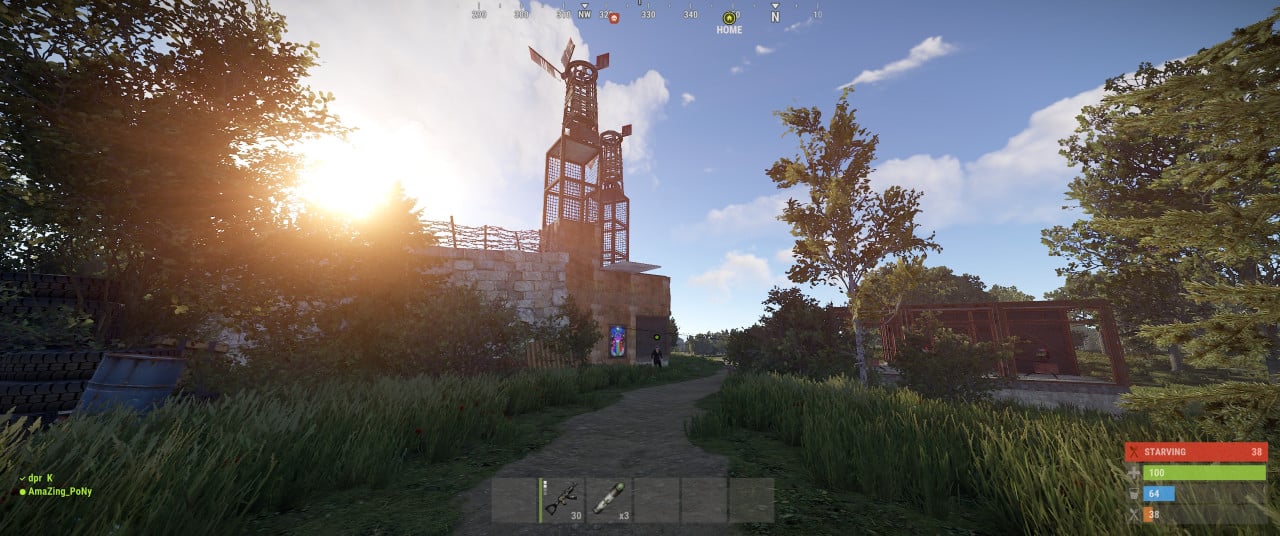
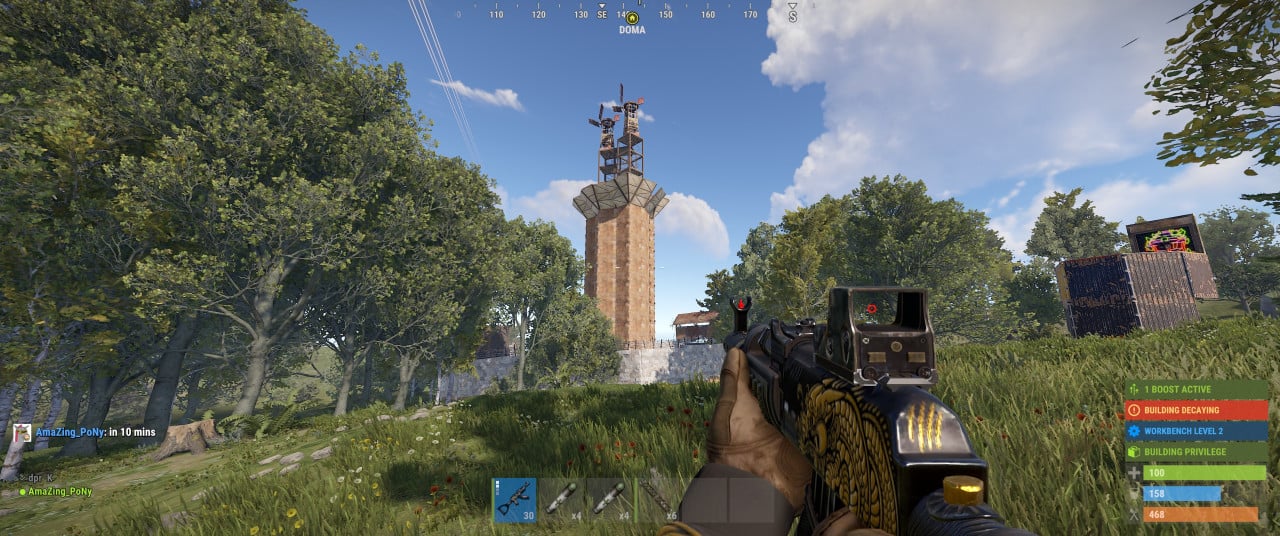
You build a base (house/shelter/bunker) and protect it from other players
-
You collect loot from so-called monuments (map locations such as Launch Site, Oil Rig, etc.)
-
You raid other players' bases or defend against raids yourself
Raiding is at the heart of the entire game – players try to break into other players' bunkers using explosives (so-called booms, rockets, C4, gunpowder) and steal their loot. Large clan bases are naturally more valuable because more people have worked on them. And this plays an important role in my story.
The server also performs what is known as a wipe – usually once a week or once a month (the so-called Force Wipe on the first Thursday of every month), everything is deleted and everyone starts from scratch. So getting a completed clan base for free would genuinely be a huge jackpot.
How it all started – "You won a free base!"
My friends and I regularly play on Warbandits servers (a popular network of English-speaking Rust servers). One day, while we were busy raiding our neighbors, a player posted in the server's text chat that he was giving away an entire clan base for free – whoever was first to guess a number from 0 to 50 would get it.
I thought, "Why not, just for fun," and jokingly typed one. And lo and behold – I received a private message (Warbandits has its own plugin for sending in-game PMs) saying that I had guessed correctly and won.
I immediately became cautious. That was the first point at which I noticed a warning sign.
He wanted me to connect with him on Discord and join a call. Normally, I would have shut it down immediately – calling some random stranger on Discord is not something I enjoy doing. But he argued that he only wanted to hand the base over to me, set up authorization, and so on.
And this is where I made an error in judgment: free loot always comes in handy in Rust. A few booms, rockets, some gunpowder, or even just a look at their bunker design – clan bases tend to be quite large, and I thought it would be interesting to at least see how they built theirs. So I gave him my Discord.
The Discord call – and this is where things got really strange
He sent me a link, I joined the call, and they added me to their Discord group. It looked completely legitimate – they had threads, channels, simply a typical clan Discord. The guy who had messaged me was in the call, along with five other people.
And this was the second strange thing, which did cross my mind at the time, but I did not pay enough attention to it: the server we play on has a team limit of 3 players. So there should not have been six people in the clan call, but no more than three. That was another warning sign I failed to consider in the heat of the conversation.
He started asking me how long I had been playing Rust, where I was from, what roles I usually played, and a lot of other questions. So we chatted for a while. I told him that I did not actually need the base because we had a large one of our own and plenty of loot, but that I enjoyed and was interested in seeing how other players built things such as their bunker designs.
I asked him where on the map the base was actually located. He replied that it was near Launch Site (one of the main monuments on the map). So I said, "Oh, near Launch Site, where those two shops are?" And he had absolutely no idea which shops I was talking about – which is really strange if it was supposed to be his base, his clan's base, and on the same server.
That was already the third obvious red flag. But he immediately and smoothly moved on – apparently, he could not connect to the game right then because he was on a plane. Yet only a short while earlier, he had messaged me directly in the game. That was absurd in itself.
A classic tactic – overwhelm the victim and do not let them think
And this is exactly the most important moment in the entire story, which I would like everyone to be aware of:
He did not let me think for even a second. He kept bombarding me with questions and comments – the classic "keep busy" technique, so the victim has no time to put the individual oddities together.
He said he wanted to give me a sleeping bag (spawn point) so he could assign it to me inside the base. He also wanted to deauthorize the turrets for me. But he supposedly could not do it and needed to handle it through Rust+ (the official companion app for Rust).
So I told him to try it. He said he could not because he was on a plane (!), and asked whether I could share my screen with him so he could "set everything up" through me.
Technically, that makes absolutely no sense – I was not on his team or authorized in his base, so nothing could have been configured from my screen. But everything was happening so quickly that I did not have time to analyze it logically. I thought, "I have nothing to lose, so I'll try it."
The moment it clicked
I shared my screen. He also wanted control of my mouse and keyboard. I approved it.
And then came the turning point. Instead of opening Rust+ or the game itself, he started:
-
digging around in my Steam inventory
-
looking at which items, skins, and games I had on my account
-
doing something involving a Steam gift card
It was immediately clear to me that he wanted to send himself something through Steam and charge it to my account – typically, this is a scam in which the scammer uses your account to purchase skins that they then transfer to their own account, or they have a gift card sent to themselves.
Meanwhile, the scammer kept talking nonstop, asking more and more questions and trying to overwhelm me with words so that I would not have time to react or think about anything. But when I realized what was happening, I immediately ended the call.
He messaged me right away: "Why did you hang up?"
I simply replied: "I'm not interested in your scam."
And within a second, he blocked me, removed me from the group, and disappeared. As if he had never existed.
What made it so dangerous? A real-world account
This is exactly the type of scam that Facepunch officially warns about on the Rust website, as does Valve in the Steam Scam FAQ. These so-called screen-share scams are relatively widespread and, unfortunately, effective in communities surrounding Rust, CS2, and other games with Steam inventories. According to community guides on Steam Community, scammers often also resort to tools such as Chrome extensions that can create a fake inventory with expensive skins and a fake trade history – making them appear credible.
In my case, it was sophisticated in several ways:
-
A realistic initial hook – "you won a clan base" on a server where something like that really can happen. Players commonly give away bases and loot before a wipe – I do the same.
-
A functioning Discord group – it looked active and had channels, multiple members, and a clan logo. At first glance, there was nothing suspicious about it.
-
The player's "credentials" – he was articulate, knew the terminology, and asked questions like an experienced player.
-
Constant overload – that is the main weapon. He gave me no chance to think.
-
Excuses involving technical problems – "I'm on a plane," "I can't connect," "let's do it through my Rust+." None of it holds up logically, but in the moment, it sounds plausible.
Why Steam accounts?
Few people realize how much money is effectively sitting in Steam. CS2 skins commonly trade for thousands of euros, with some rare pieces easily selling for tens of thousands. Rust has its own skins worth several hundred dollars each, and I personally own more than 2,000 of them. Then there are gift cards, Steam Wallet funds, and tradable items from games such as Team Fortress 2, Dota 2, and others. An experienced player's Steam account can easily contain an inventory worth tens or even hundreds of thousands of Czech crowns without the owner being fully aware of it.
That is why Steam accounts are such an attractive target.
What to take away from this – practical recommendations
If you are an active Steam player, remember the following:
-
Never share your screen with someone you do not know personally. And under no circumstances give them remote control access.
-
Never join a Discord call with strangers from a server because of in-game prizes, gifts, or trades.
-
Official Steam Support and Facepunch will never contact you proactively. The Rust website explicitly states: "Facepunch will never contact you."
-
If a "prize" depends on you leaving the official platform (Discord, an external link, remote desktop), it is 99% certain to be a scam.
-
If someone deliberately overwhelms you with conversation and does not let you think, it is intentional. Hang up and reconsider the situation calmly five minutes later.
-
No stranger ever needs to "verify" the value of your inventory – there is no "item checker," no "verification tool," and no "Steam employee." These are all lies.
-
Be careful with Steam Guard codes as well – never send them to anyone, and never confirm a trade or login that you did not initiate yourself.
Final thoughts
I admit that I was quite surprised by how far I let it go. I work in IT, I know about these kinds of things, and I am naturally cautious – yet I came very close to falling for it. If the scammer had not been so blatant with the Steam gift card and inventory, but had played it a little smarter for a while longer, I might have missed the moment when I realized what was happening.
Scams are becoming increasingly sophisticated. Whether they involve fake police officers calling elderly people in the Czech Republic, phishing emails, or these gaming scams, they all have one thing in common: they exploit speed, emotions, and your feeling that you will miss out on something if you do not act immediately.
So be careful. Most importantly, if you have even the slightest doubt, hang up, disconnect, and close the window. You can always come back to it later, but the scammer will not wait for you – because a scammer cannot afford to lose time. And that is precisely why speed is their main weapon.
Stay vigilant, because there is a lot of money sitting in Steam – and scammers are everywhere.