

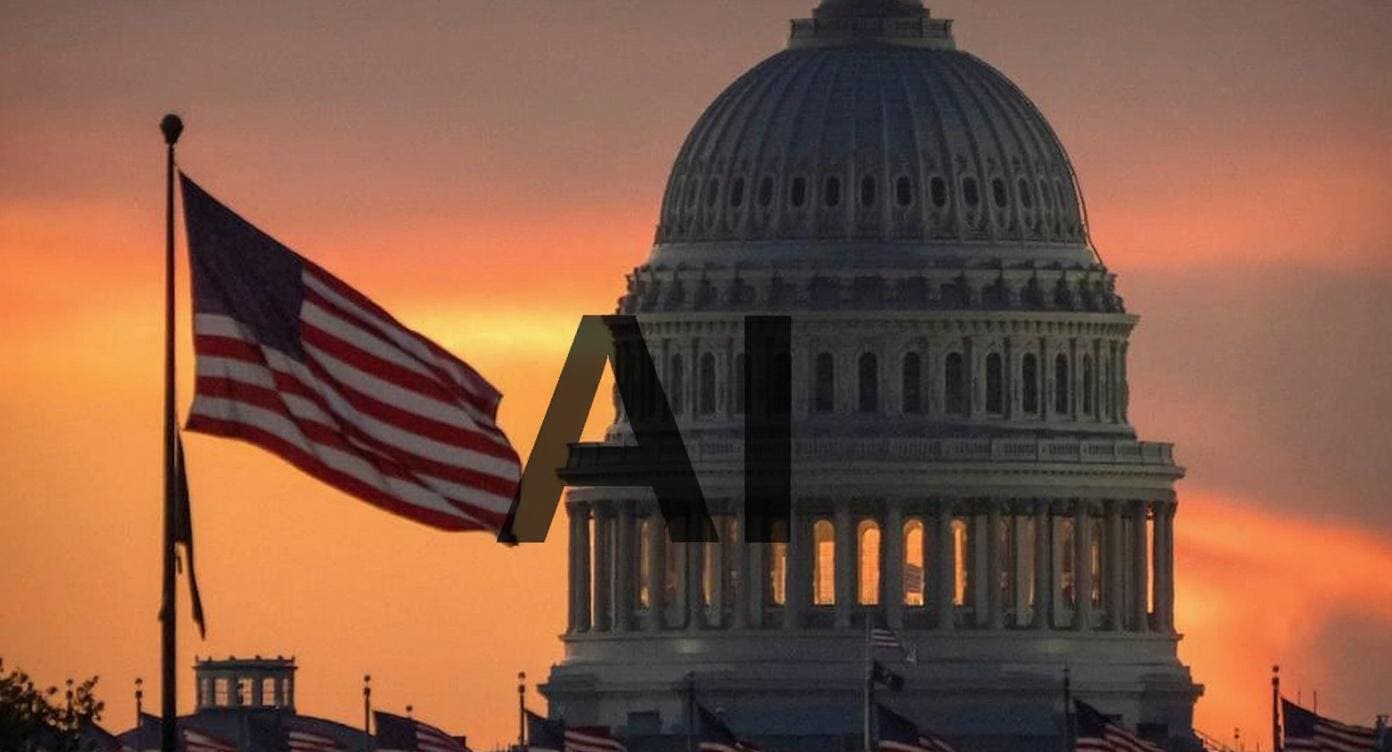
The U.S. government under President Donald J. Trump has just launched an ambitious project called the Genesis Mission. This executive order, signed on November 24, 2025, aims to accelerate scientific discoveries using artificial intelligence. It is being compared to the historic Manhattan Project, which led to the development of the atomic bomb, but this time it involves AI intended to double the productivity and impact of U.S. research within ten years. The federal government owns the world's largest collection of scientific data, gathered over decades by agencies such as NASA, the NIH, and the Department of Defense, along with enormous computing power across 17 national laboratories. Until now, all of this has remained scattered and underutilized, but the Genesis Mission is intended to change that.
How Will the Genesis Mission Work?
The project is being coordinated by Michael Kratsios, Assistant to the President for Science and Technology, together with Secretary of Energy Chris Wright. Its central component is the American Science and Security Platform, a closed platform for AI experimentation that connects Department of Energy (DOE) supercomputers and quantum computing systems. It also incorporates AI-powered robotic laboratories that independently design and conduct experiments, secure datasets from various fields—unlike commercial AI trained on the open internet—digital twins for advanced manufacturing, and real-time collaboration among scientists, AI systems, and experimental facilities. All of this is to be integrated into a secure, unified platform that meets national security requirements, including cybersecurity protections and supply chain standards.
Within 60 days of the launch, at least 20 scientific challenges of national importance will be identified, such as advanced manufacturing, biotechnology, critical materials, nuclear fusion and fission, quantum information science, or semiconductors and microelectronics. Within 90 days, available computing resources from the DOE and industry partners will be mapped. And within 270 days, the platform's initial capabilities are to be demonstrated on at least one of these challenges. The project builds on the existing National Artificial Intelligence Research Resource, which collaborates with companies such as OpenAI, Google, and Palantir. In addition, the DOE recently announced new AI supercomputers featuring technologies from AMD and NVIDIA at Oak Ridge National Laboratory. Parts of the platform will be opened to qualified researchers, innovators, and companies.
Potential Impacts on Various Fields
The Genesis Mission could bring major changes to several key areas. In fusion energy, AI could help design, test, and stabilize fusion reactors in real time, potentially leading to practical fusion power that can be connected directly to the grid. In drug discovery, research that previously took years could be shortened to weeks or months. In materials science, AI would help co-design substitutes for critical materials, reducing dependence on foreign supplies. In quantum computing, AI would generate and verify new quantum algorithms while scientists reviewed the results. And in space exploration, it would link particle physics with cosmic structures to help understand dark matter and dark energy.
How Will It Affect AI in America?
This project could dramatically expand access to computing power and datasets that have so far been locked behind government walls—these data are estimated to be worth around CZK 4.6 trillion. The government is betting that AI will break through the stagnation in scientific progress that has persisted since the 1990s, even as research budgets increased while approvals of new drugs declined and more researchers were needed to achieve the same results. According to an analysis by Epoch AI, such an "AI Manhattan Project" could lead to a training run with 2e29 FLOP of computing power by the end of 2027, about 500 times more than today's most powerful model and 10,000 times more than GPT-4. This would mean consolidating resources such as Nvidia hardware, with annual revenue expected to average around CZK 5.3 trillion, adding the equivalent of 27 million H100 GPUs.
Energy consumption could reach 7.4 GW, more than New York City's average consumption, but with government support, this could be managed using new gas-fired power plants planned for 2027 with a total capacity of 8.8 GW. These power plants could be concentrated in a single area, similar to historical examples involving 10 GW in a small region. Installation costs could be around CZK 184 billion, which would remain within budget. These investments could accelerate AI development by one year compared with current trends, with investment equivalent to 0.4% to 0.8% of U.S. GDP, similar to the peak of the Manhattan Project or the Apollo program.
Over the next year, announcements are expected regarding the first challenges to be addressed—fusion energy, quantum computing, and critical materials are among the leading candidates—and which companies will secure partnerships to build the most powerful scientific platform in America. The Secretary of Energy is required to report annually on the platform's status, progress in integrating laboratories, user engagement, scientific results, and partnerships with the private sector. All of this should strengthen national security, energy dominance, and taxpayers' return on research investments.


