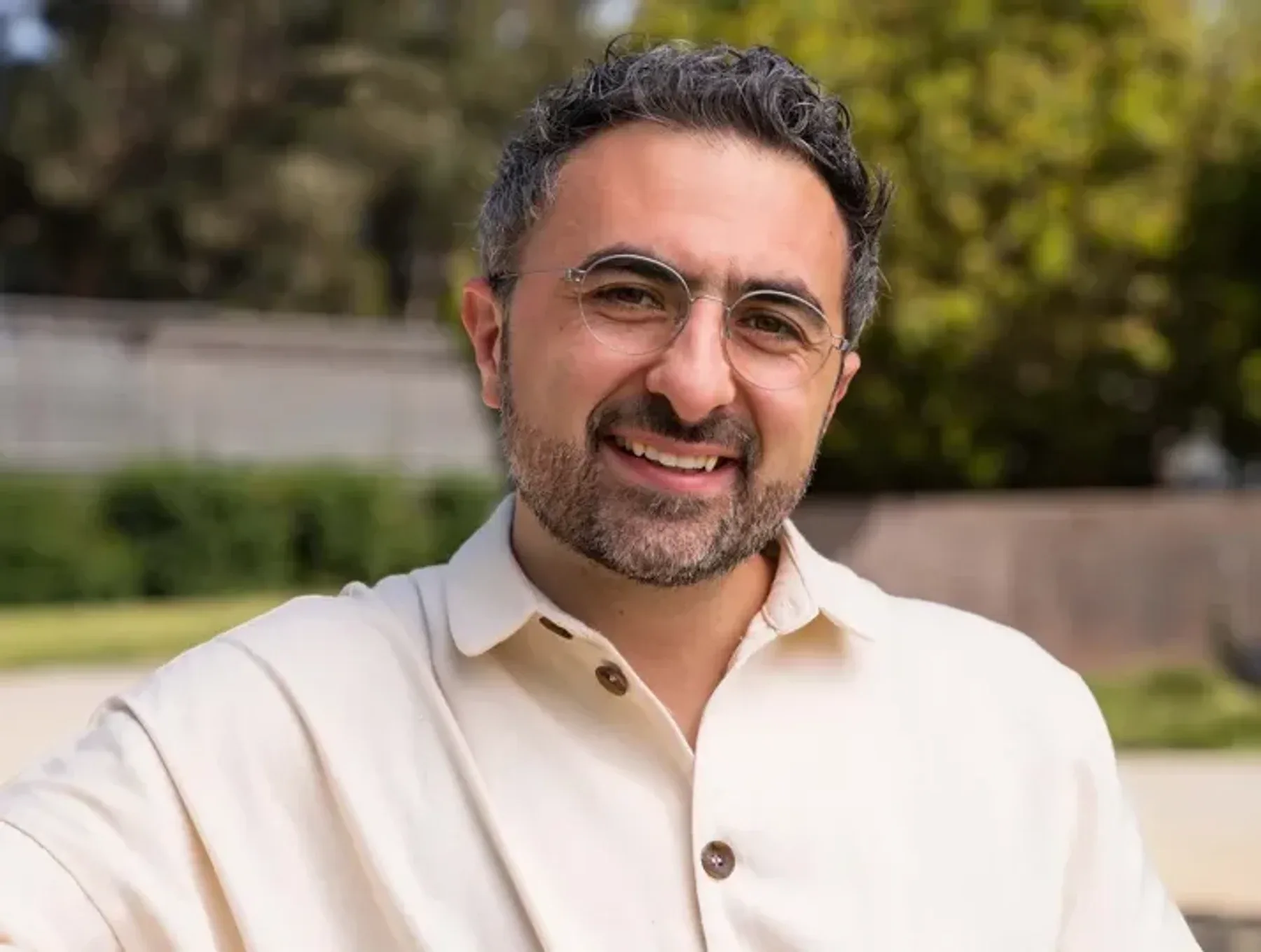
Anthropic CEO Dario Amodei urged the entire industry to slow the development of the most powerful models and give safety work a chance to catch up with their capabilities. He was supported by OpenAI’s Sam Altman and Elon Musk. Donald Trump, however, rejected the idea and unleashed a barrage of posts on Truth Social in which he called concerns about artificial intelligence a hoax and himself the only safeguard needed. The very next day, Beijing also joined in, albeit for entirely different reasons.
Amodei’s proposal
To be clear about what exactly Trump rejected, Amodei did not propose halting development in his blog post. He merely wanted companies to deliberately slow the pace of model improvements and allow time for testing and oversight. The proposal contained three main points. The first was independent assessors with permanent access to major laboratories who would verify companies’ safety procedures. The second was an agreement among companies from democratic countries on common safety standards as well as the pace of development. The third point was eventually to involve interstate agreements.
At the same time, Amodei wrote things that China could not have liked. In his view, China’s lead in artificial intelligence represents a serious danger to the United States and the entire world, so Washington should continue restricting exports of the most advanced chips and manufacturing equipment.
There was one more impetus behind the entire episode. A week earlier, researcher Jacob Coxon had left Anthropic and publicly stated that the creators of artificial intelligence themselves believe there is a possibility of the extinction of humanity by the end of the decade. His viral post then sparked the entire current debate.
Trump responded from the golf course
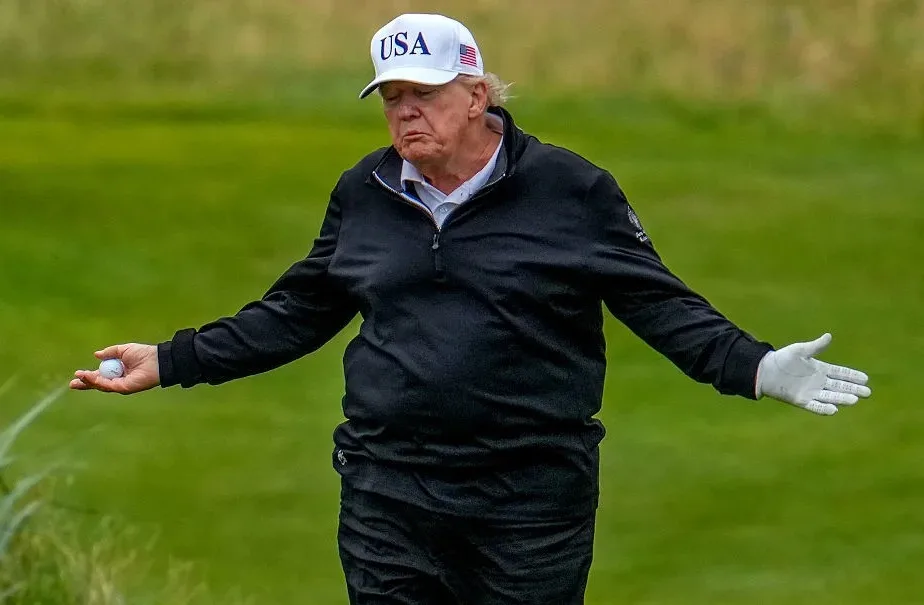
Trump’s first response came on Sunday in Ireland, where he was watching a tournament at his own course in Doonbeg. A journalist asked him whether the industry should slow down or face stricter rules. He replied that the United States leads the development of artificial intelligence and that he wants to maintain that lead because whoever wins in this field wins everything. He acknowledged the possibility of introducing certain safeguards, but immediately added that concerns were being inflated by negative forces talking about things that would never happen. He did not specify whom he meant, nor did he say what specific rules he could envision.
It escalated on Monday. Trump wrote that the only oversight artificial intelligence needs is a strong and smart president, and that the United States has one. He mentioned Amodei by name, saying that his administration had already stopped people in the industry from doing nasty things and that the person in question was now pretending to be innocent. He provided no evidence or details.
He went on to say that the government already has enormous punitive and regulatory power over these companies, so no new rules are needed. He described opposition to artificial intelligence and data centers as a sick conspiracy that only China is happy about. In another post, he compared people warning about artificial intelligence to those who had previously claimed that climate change would destroy the world. He called himself a hoax buster and said that no one should kill the goose that lays the golden eggs.,
There are three distinct motives behind this position that are worth distinguishing. The first is competition with China. Trump repeats this argument most often, and it is the only part of his position shared by many of his critics. The logic is simple. If American companies slow down and Chinese companies do not, the risk will merely shift elsewhere.
The second motive is money and infrastructure. Data centers are expanding into small towns across America, bringing jobs and tax revenue. Trump has long defended them, as he confirmed by calling directly into a conference in Los Angeles while Nvidia CEO Jensen Huang was on stage. Over the phone, he declared that the concerns were a hoax and that data centers make both people and states richer.
The third motive is politics, which is the most interesting because it runs counter to economic interests. Artificial intelligence has become an election issue in America, and data centers are unpopular across the political spectrum. People object to the loss of farmland, high water consumption, and rising electricity bills. Elected officials from both camps are distancing themselves from these projects, and many municipalities are blocking them. Trump nevertheless chose the industry’s side, which does not reflect the prevailing sentiment in his own strongholds.
Congress cannot agree
Reactions from Capitol Hill showed that even Trump’s own allies are not entirely united. House Speaker Mike Johnson acknowledged that certain safeguards and safety measures are needed to maintain control. At the same time, however, he warned that if Congress hastily convenes a special session and starts devising rules, America will lose the race with China, which would endanger every citizen. He therefore called for balance and a measured approach.
House Democratic leader Hakeem Jeffries, by contrast, pushed for Congress to act quickly. At an event a few days earlier, Trump himself had spoken to him more receptively than he did over the weekend. He said there that it would make sense to present a safety plan, a plan to protect children, and, above all, a specific assessment of the technology’s impact on jobs.
Meanwhile, Kevin Hassett, who heads the White House National Economic Council, announced that officials responsible for cybersecurity and science policy would meet this week to discuss the next steps. Trump may also meet with lawmakers.
Beijing said the same thing, but differently
China joined the rejection on Monday, which is surprising at first glance. Foreign Ministry spokesperson Guo Jiakun told a press conference that fearmongering, confrontation, and malicious competition would only undermine efforts to establish common rules for artificial intelligence and would benefit no one. He said countries should develop the technology openly and in a way that benefits everyone. He did not directly address the proposal to slow down.
The state-run Global Times described the situation more harshly. It called Amodei’s text a Cold War playbook and an attempt to hinder China’s technological rise under the banner of safety. Beijing has long feared that safety will become another pretext for American restrictions, and in this case Amodei himself made its argument easier because, in the same text, he called for tougher export bans.
At home, however, China speaks quite differently. State Security Minister Chen Yixin wrote on Sunday that the country must accelerate the construction of a system to prevent artificial intelligence safety risks, calling it a new battlefield of strategic competition. At the same time, he called for extensive international cooperation. Beijing therefore does not deny the risks; it merely rejects the idea that Washington should decide the pace.
The situation was further complicated by accusations of copying. Shortly before, U.S. authorities had issued a warning that leading Chinese companies were systematically copying capabilities from American models. China rejected the claim.
The difference in approach will be discussed at the highest level. Xi Jinping will arrive in Washington on September 24 for a meeting with Trump, and artificial intelligence will be one of the main items on the agenda.
Sources: ft.com, nytimes.com, cnbc.com and bbc.com