

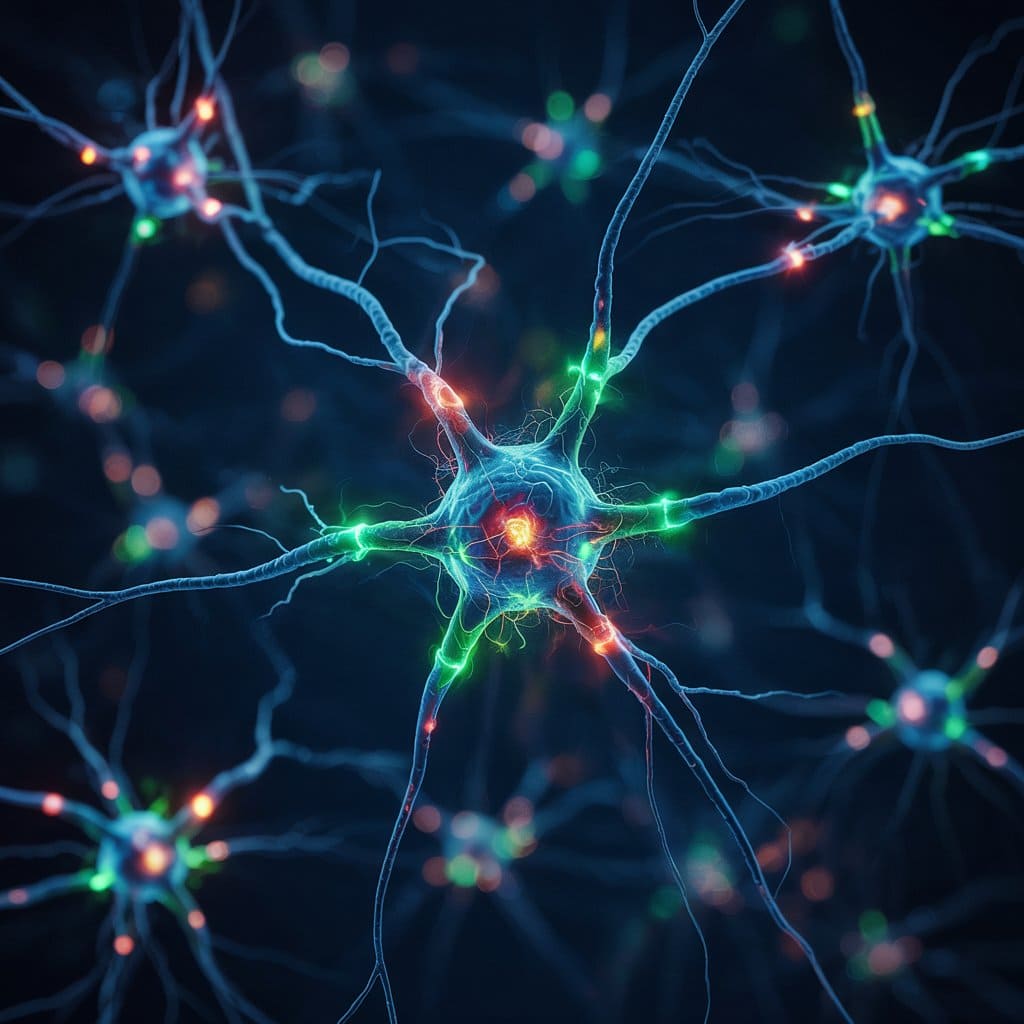
Super-Turing AI: Energy-Efficient Artificial Intelligence Inspired by the Human Brain
At a time when the computational demands of modern artificial intelligence systems are growing rapidly, scientists are seeking innovative approaches to creating more energy-efficient AI systems. One of the most promising directions is so-called Super-Turing AI, which draws inspiration from how the human brain works. New research published in the journal Science Advances offers a fascinating insight into this revolutionary technology.
What Is Super-Turing AI?
Super-Turing AI represents a new paradigmatic approach to artificial intelligence that goes beyond the traditional computational models defined by the Turing machine, a theoretical model of a computer described by mathematician Alan Turing and used to model algorithms in computability theory. While classical computers and current AI systems operate according to principles mathematically described by Alan Turing in the mid-20th century, Super-Turing models use different computational mechanisms inspired by neurobiology. "Classical computational models, which form the basis of most AI systems today, cannot fully replicate how the human brain works," explains the research team from Texas A&M University. "The brain can process information in parallel and adaptively, with extraordinary energy efficiency that current AI systems cannot imitate." But Super-Turing AI overcomes these limitations by implementing computational models that include:
Information processing based on timing and synchronization (similarly to neurons in the brain).
Dynamic reconfiguration of computational circuits depending on the problem being solved.
Processing of analog and continuous signals instead of purely digital ones.
Use of stochastic (random) processes for certain types of computation.
Project Goals: Energy Efficiency as a Priority
The main goal of Super-Turing AI research is to create artificial intelligence systems that could match or surpass the performance of the human brain while consuming a fraction of the energy required by current AI systems. "The human brain consumes approximately 20 watts of energy," state the scientists from Texas A&M. "By contrast, training and operating large language models can require megawatts of electricity, representing energy consumption equivalent to that of a small city." The study published in Science Advances demonstrates a neurobiologically inspired computational model that achieves impressive results:
Up to a 94% reduction in energy demands compared with traditional AI approaches.
Maintaining or improving computational accuracy.
The ability to solve complex problems with less data.
Greater resistance to noise and inaccuracies in input data.
Current Developments and Breakthroughs in Super-Turing AI
A research team led by Professor Indranil Chakraborty has developed a new type of neural network that uses pulsing (spiking) neurons instead of traditional mathematical models. These neurons function similarly to biological neurons in the human brain—they communicate through electrical impulses and respond to the timing of these impulses.
"Our spiking neural networks demonstrate exceptional energy efficiency while maintaining high computational performance," says Chakraborty. "This is possible thanks to the unique way in which information is encoded and processed in the network—not merely as numerical values, but as patterns of activation over time." As part of the research, special hardware architectures were developed that can efficiently implement Super-Turing computational models:
1. Memristor circuits - electronic components that "remember" their previous state, similarly to biological synapses.
2. Neurosynaptic chips - processor architectures specifically designed for neuromorphic computing.
3. Photonic neural networks - use light instead of electricity to transmit and process information.
Applications and Potential Impact
Super-Turing AI has the potential to transform many areas where classical AI systems are currently deployed:
Edge computing - makes it possible to run complex AI models directly on mobile devices without the need to connect to expensive servers.
Autonomous vehicles - reducing the energy demands of AI systems in vehicles extends the range of electric cars.
Healthcare - implantable medical devices with AI functionality and minimal energy consumption.
Space exploration - satellites and probes with advanced AI capabilities operating with limited energy resources.
"Energy-efficient AI is not only an economic and environmental necessity, but also the key to further scaling AI systems," explains the research team. "As performance increases, energy consumption also grows exponentially, creating an insurmountable barrier to the further development of traditional architectures."
Challenges and Future Directions
Although the research results are promising, Super-Turing AI faces several significant challenges:
Theoretical understanding - fully understanding computational principles that go beyond classical Turing theory.
Hardware implementation - developing specialized chips optimized for Super-Turing computing.
Software tools - creating new programming paradigms compatible with neurobiological models.
Integration with existing systems - ensuring compatibility with existing digital infrastructure.
The research team is planning the next steps: "In the coming years, we will focus on scaling our prototypes and demonstrating their capabilities in real-world applications," states Professor Chakraborty. "At the same time, we will deepen our theoretical understanding of Super-Turing computing and its relationship to human cognition."
Toward a Sustainable Future for AI
Super-Turing AI represents a fascinating direction of research that could fundamentally change how we design and use artificial intelligence systems. By combining insights from neurobiology, physics, and computer science, a new paradigm is emerging that promises to overcome the limitations of current approaches. At a time when environmental and energy-related issues are becoming increasingly urgent, Super-Turing AI offers a path toward a more sustainable future for computing technologies. Instead of continually increasing computational power and energy demands, it teaches us to look for inspiration in nature, which over billions of years of evolution has developed extraordinarily sophisticated and energy-efficient "computational systems"—including our own brain. As Professor Chakraborty concludes: "It may turn out that the path to truly advanced artificial intelligence does not lead through larger data centers consuming ever more energy, but through a deeper understanding of the biological principles that govern our own brain."


