

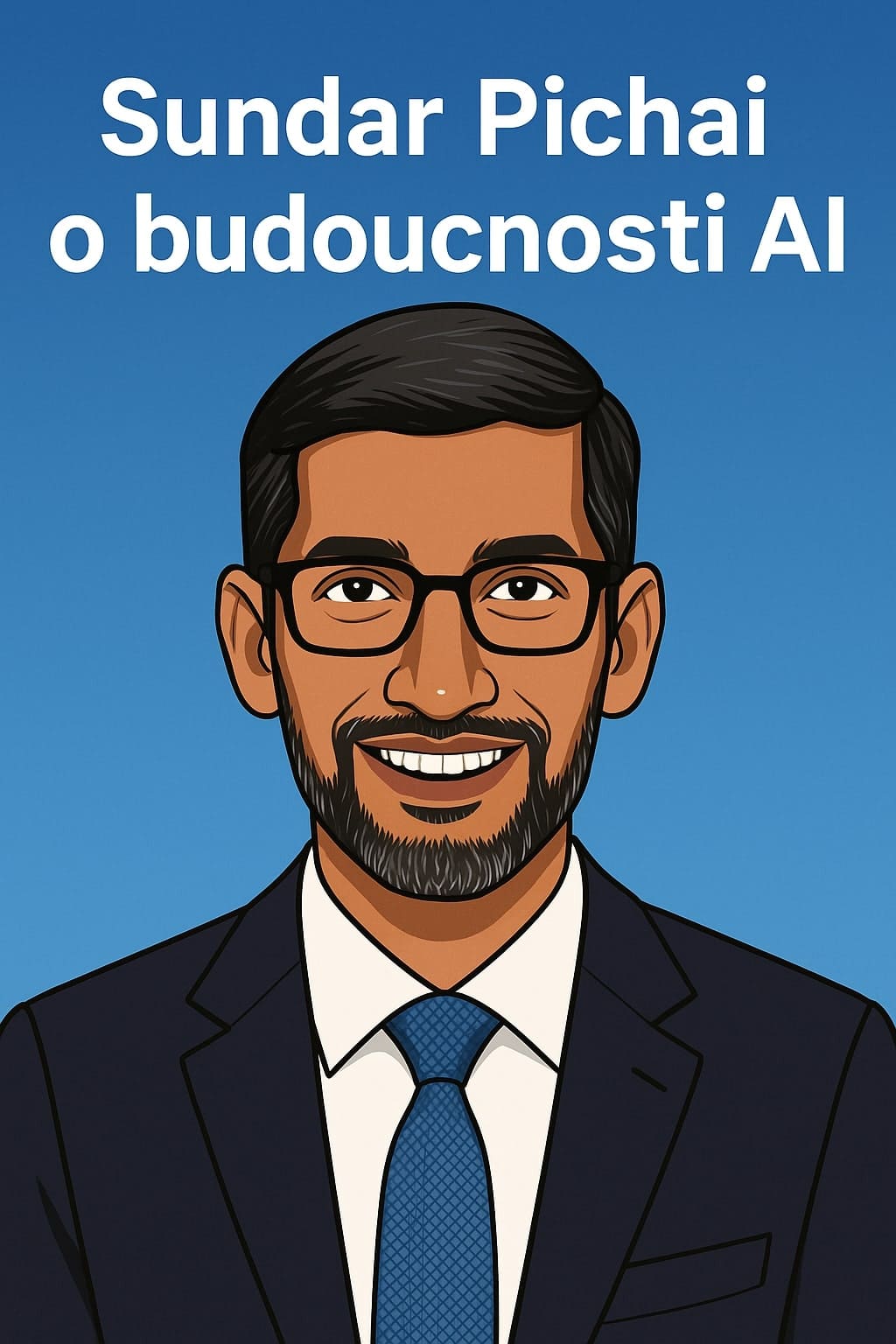
Sundar Pichai on the Future of AI: How Google Plans to Transform Search and the Web
Google CEO Sundar Pichai gave an extensive interview on the Decoder podcast with Nilay Patel of The Verge, which took place after the Google I/O 2025 conference. The interview focused on the major changes artificial intelligence is bringing to Google Search and the web ecosystem, as well as what these changes mean for publishers and users in the years ahead.
AI as a Platform Revolution
During the interview, Pichai described the current developments as a "platform shift" comparable to previous technological leaps, such as the advent of mobile technology or cloud services. In his view, artificial intelligence will fundamentally change how people interact with information online. This transformation is not merely a gradual evolution of existing technologies, but a genuine revolution in how information is accessed and processed. Google's CEO emphasized that this is a change that will affect the entire digital world. According to him, AI platforms will give users access to richer summaries and answers than were previously possible through traditional search algorithms. This shift has the potential to redefine not only how people search for information, but also how they work with it and use it in their everyday lives.
New Features: AI Overviews and the Future of Agents
Google is currently introducing new features known as "AI Overviews," which use generative artificial intelligence to create summaries of search results. These features represent the first step toward more advanced AI systems that could take over a significant portion of the web-browsing process on behalf of users in the future. Pichai presented a vision of the future in which AI agents will be able not only to search for information, but also to synthesize it across different sources and potentially even perform actions on behalf of users. This technology could fundamentally change how people interact with the internet—instead of manually browsing different websites, AI agents could automatically collect, analyze, and present relevant information in a coherent form. This vision suggests a future in which the user's role shifts from active searching to a more conversational interface, where users express their needs and AI systems handle the complex process of retrieving and processing information from across the web.
Publisher Concerns and the Impact on Web Traffic
One of the most controversial topics in the interview was the potential impact of these changes on websites and their owners. Critics argue that if Google begins summarizing content directly in search results or through AI agents, it could lead to a significant decline in traffic to the original sources. This situation could undermine the business models of publishers and content creators who depend on traffic from Google services. Pichai responded to these concerns with a strong statement about Google's commitment to supporting an open web ecosystem. He was quoted as saying: "If website owners don't see value coming back from Google over time... we will pay the price. We have the right incentive structure." With this statement, he sought to reassure critics that Google has a vested interest in ensuring that websites and their owners benefit from their relationship with the search engine. The CEO also stated that, according to aggregated data, Google is seeing growth in queries and is sending more traffic overall than before. At the same time, however, he acknowledged that there are individual variations depending on the type of query or the specific website. This admission suggests that while overall trends may be positive, some categories of websites or specific pages may experience a decline in traffic.
Creator Compensation and Fair Use Questions
The interview also touched on the sensitive issue of fair use of content when training AI models and the question of whether content creators should be compensated when their work helps artificial intelligence generate answers. This is a legal and ethical area that is still evolving and is significant for the future of relations between technology companies and content creators. Pichai did not announce any specific compensation mechanisms in the interview, but confirmed that these issues are the subject of active discussion within Google. This statement suggests that the company is aware of the seriousness of the issue and is working to address it, even though it does not yet have finished solutions to present to the public. Discussions about compensation and fair use are likely to continue and may significantly influence how AI technologies are developed and implemented.
Combating Spam and Hallucinations
With growing reliance on generative systems come new challenges that Google must address. Pichai identified two key issues: combating low-quality "AI spam" that floods search results and reducing hallucinations—incorrect answers generated by large language models. The problem of AI spam represents a new category of low-quality content generated by artificial intelligence that can significantly reduce the quality of search results. Hallucinations, meanwhile, pose a challenge in the form of AI systems that can generate plausible-sounding but factually incorrect information. According to Pichai, both of these remain priority areas for Google's teams. Combating these problems is crucial to maintaining users' trust in AI-powered search and ensuring that new technologies genuinely improve the quality of information available to users rather than making it worse.
A Vision for the Future of Search and the Web
Pichai presented his vision of the web of the future, where users will increasingly rely on conversational interfaces to interact with information. Multimodal search, which combines text, images, and voice, will become the standard, according to his predictions. In this future, developers will need to adapt their content to make it more machine-readable, enabling it to be displayed accurately by both traditional ranking algorithms and newer agent-based systems. The CEO emphasized that although change brings disruption and a degree of uncertainty, the goal remains to channel value back into the broader web ecosystem rather than replace it with closed platforms or walled gardens. This vision anticipates an evolution of the roles of websites and publishers within the digital ecosystem, not their replacement.
The interview with Sundar Pichai revealed a complex view of a future in which Google believes that its adoption of generative artificial intelligence will ultimately benefit both users and publishers, provided it is carefully managed. At the same time, however, Pichai acknowledges that significant challenges surrounding attribution, compensation, quality control, and maintaining an open web remain unresolved as this transformation accelerates. The future will show how successfully Google can balance innovation in AI with maintaining a healthy and sustainable web ecosystem.


