

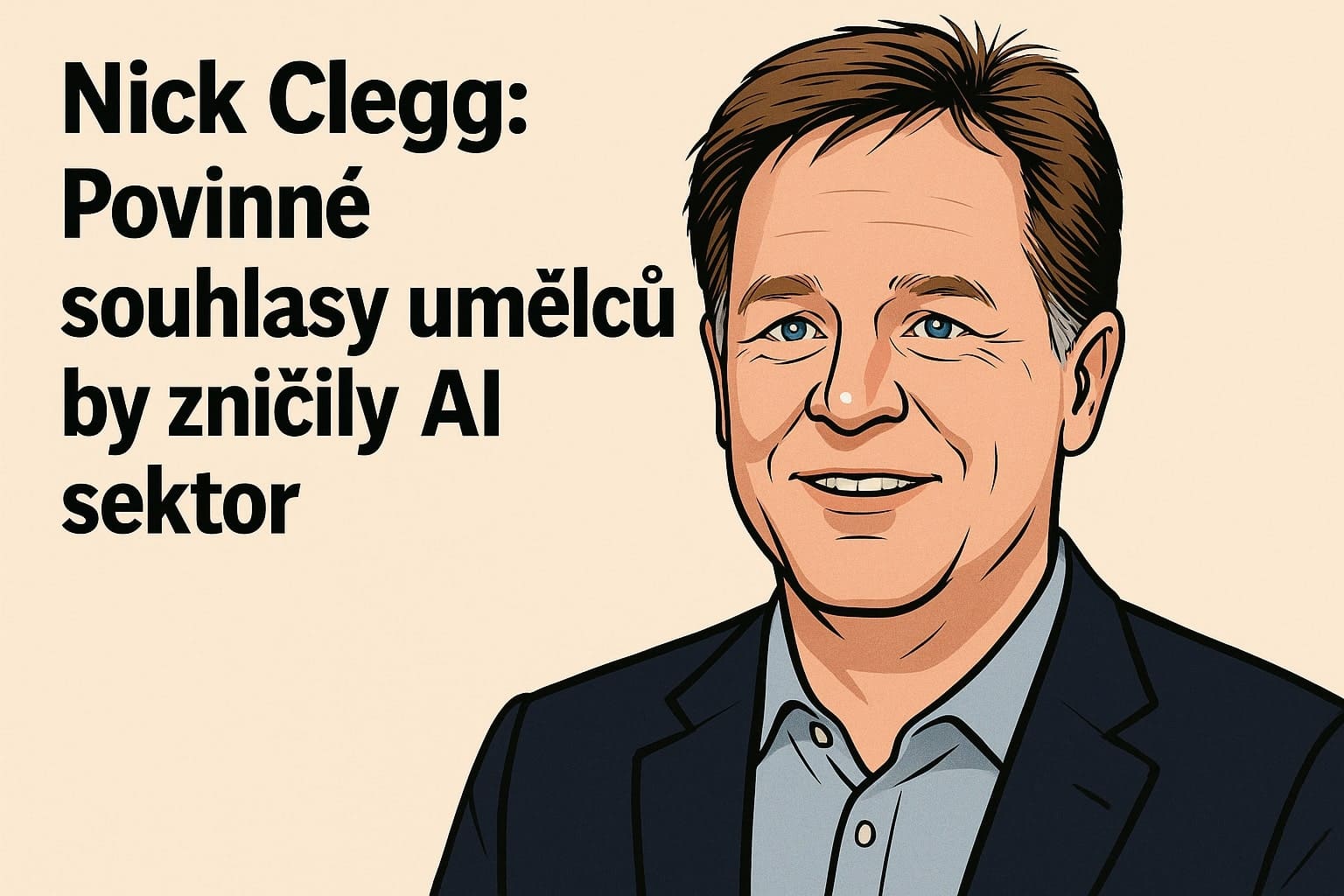
Nick Clegg: Mandatory Artist Consent Would Destroy the UK AI Sector
Nick Clegg, the former British Deputy Prime Minister and a current senior executive at Meta, sharply criticized proposals that would require technology companies to obtain explicit permission from artists before using their works to train AI models. In his letter and subsequent comments, reported by The Verge, Clegg warned that such requirements would "kill" the UK AI industry because of the massive scale of data needed to train modern AI systems. According to him, it would be practically impossible to contact every creator whose content is used to train AI, and if such requirements applied only in the United Kingdom and not in other countries, the domestic UK AI sector could be seriously disadvantaged or even disappear overnight.
This debate took place in the context of proposed amendments in the UK Parliament aimed at increasing transparency about which copyrighted works are used to train generative AI systems. The amendment, which was ultimately rejected, would have required technology companies to disclose all copyrighted material used in their training processes. The measure was supported by prominent artists including Paul McCartney, Dua Lipa, Elton John, and Andrew Lloyd Webber. While some lawmakers argued that disclosure is necessary for copyright enforcement and fairness to creators, government ministers countered that both the creative industries and technological innovation must thrive together, and that excessive regulation could harm economic competitiveness.
Instead of an explicit consent system, Clegg advocates an opt-out system in which artists who do not want their works included in training datasets could have them removed without having to grant prior permission. He views this approach as a pragmatic balance between respecting creators' rights and enabling technological progress. Clegg's position reflects concerns within the technology industry about regulatory burdens that could stifle innovation if unique national rules made large-scale data use unfeasible. Supporters of his approach argue that it maintains the United Kingdom's global competitiveness, while critics warn that it could undermine artists' rights unless robust opt-out mechanisms are in place.


