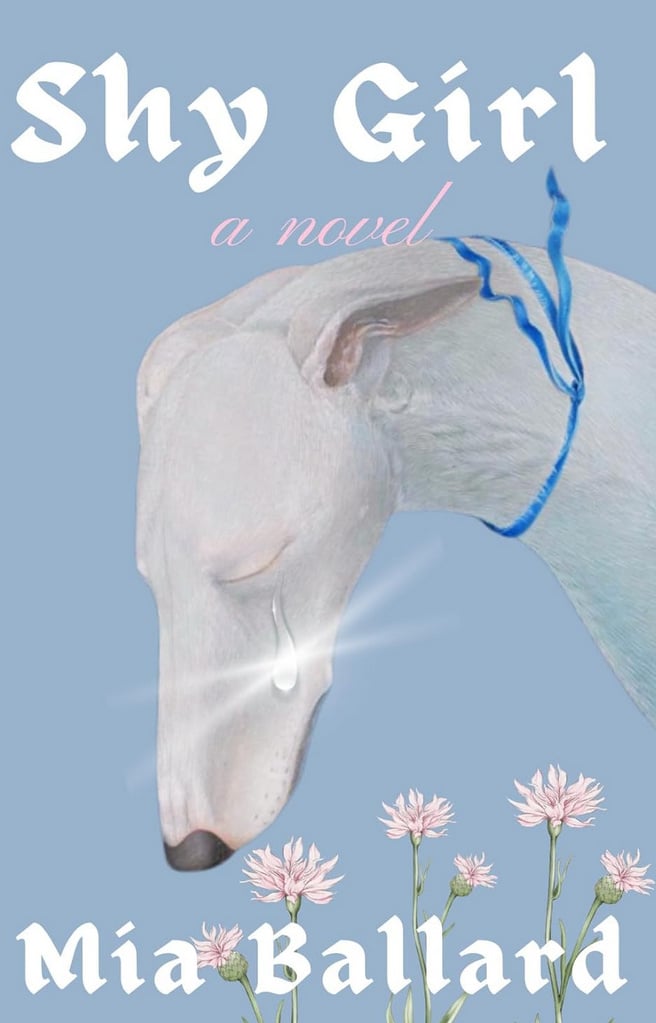
The book titled Shy Girl by Mia Ballard appeared as a self-published title in February 2025. Readers received it fairly well, with more than four thousand ratings on Goodreads and an average of 3.52 stars. Nothing extraordinary, but enough to attract the attention of a major publisher. Hachette US acquired the rights in July 2025. Hachette UK even published the book in November of the same year.
Everything seemed to be proceeding as usual. Then March 2026 arrived. Hachette US announced that it was canceling the American edition, which had been scheduled for April. The reason? Suspicions that a large portion of the text had been generated by artificial intelligence. Pangram Labs, the tool that analyzed the text, flagged 78% of the content as AI-generated. The controversy immediately became the biggest scandal in the publishing industry in recent years.
How could it have gotten through at all?
That is the question hanging in the air. How did a book with such a high proportion of AI-generated text make it through the entire acquisition process, land in the hands of editors, and even get published in Britain?
Publisher Brooke Warner examines the issue bluntly on her Substack. Publishers simply do not have the tools or processes to detect such things. The acquisition process works like this: an editor brings a manuscript to an editorial meeting, makes the case for it, and if it is approved, the contract is signed. No one systematically Googles authors, reads Reddit threads, or checks AI detectors. Trust is the foundation of the entire relationship.
Warner herself admits that, as a young editor, she once uncovered plagiarism only because the author had forgotten to remove a hyperlink to Wikipedia from the manuscript. She clicked it. And read exactly what was written in the manuscript, word for word. Without that coincidence, she would never have discovered anything.
The Shy Girl case is fragile in exactly this way. The young editor who acquired the book probably had no reason to be suspicious. Moreover, Hachette UK had already "vetted" it by publishing it. Why would the American division reexamine something its British sister company had approved?
Plagiarism of a different kind
Warner is not afraid to say out loud what many in the industry only whisper: using AI-generated text and passing it off as your own work is plagiarism. Just a slightly different kind. The classic definition of plagiarism says that it is knowingly passing off someone else's work as your own. But AI is not "someone." It is "something." And it is precisely this gap in the definition that allows authors to sign a contract declaring that the work is their original creation while still sleeping soundly at night.
Hachette's standard contract includes a clause stating that "the work is in all respects the author's original creation". But what does that mean when an author enters a prompt into a chatbot and then edits the text a little? Publishers do not yet have an answer to that question. And that is a problem.
Authors are afraid. And with good reason.
Research by the University of Cambridge from November 2025 produced chilling figures. 51% of British novelists believe that AI will eventually replace their work entirely. More than a third of authors (39%) say their incomes are already declining because of generative AI. And 85% expect the situation to get worse. Genre authors are considered the most vulnerable group. Two-thirds of respondents described romance authors as "extremely vulnerable," closely followed by thriller and crime writers. Exactly the genres in which Shy Girl operates.
What is bitterly ironic about all this? The generative AI tools now threatening writers were most likely trained on millions of pirated novels from shadow libraries, without the authors' consent and without compensating them. Authors are thus funding their own displacement from the market.
Some publishers, such as Kevin Duffy of Bluemoose Books, have a clear view on the matter. "We are an AI-free publisher, and it will say so on the cover," he says. Let readers decide for themselves. This approach is still more the exception than the rule, but perhaps it will not be for long. The Cambridge research showed that 86% of literary creators prefer an "opt-in" model, meaning that AI companies would have to ask for permission and pay before using a work for training. Half of writers would like licensing to be handled collectively by an authors' association.
Meanwhile, the market is seeing a proliferation of AI tools such as Sudowrite, Novelcrafter, and Squibler, which make it possible to write an entire novel with virtually no human involvement. Platforms such as Spines then help with publishing, from covers to distribution. The entire chain, from idea to bookstore, can take place without a single real author.
What can be done now?
The Shy Girl controversy is, as Warner says, a warning sign for the entire industry. Publishers must update their contracts, add explicit clauses prohibiting the use of AI to write text, and start taking seriously what is happening on Reddit and in reader communities. Authors, in turn, must face an uncomfortable truth: the trust on which the relationship between author and publisher rests is now more fragile than ever.
And readers? They may soon have to get used to looking for a small label on the cover. Like on organic vegetables. Only this time it will say: Written by a human.
Additional source: nytimes.com