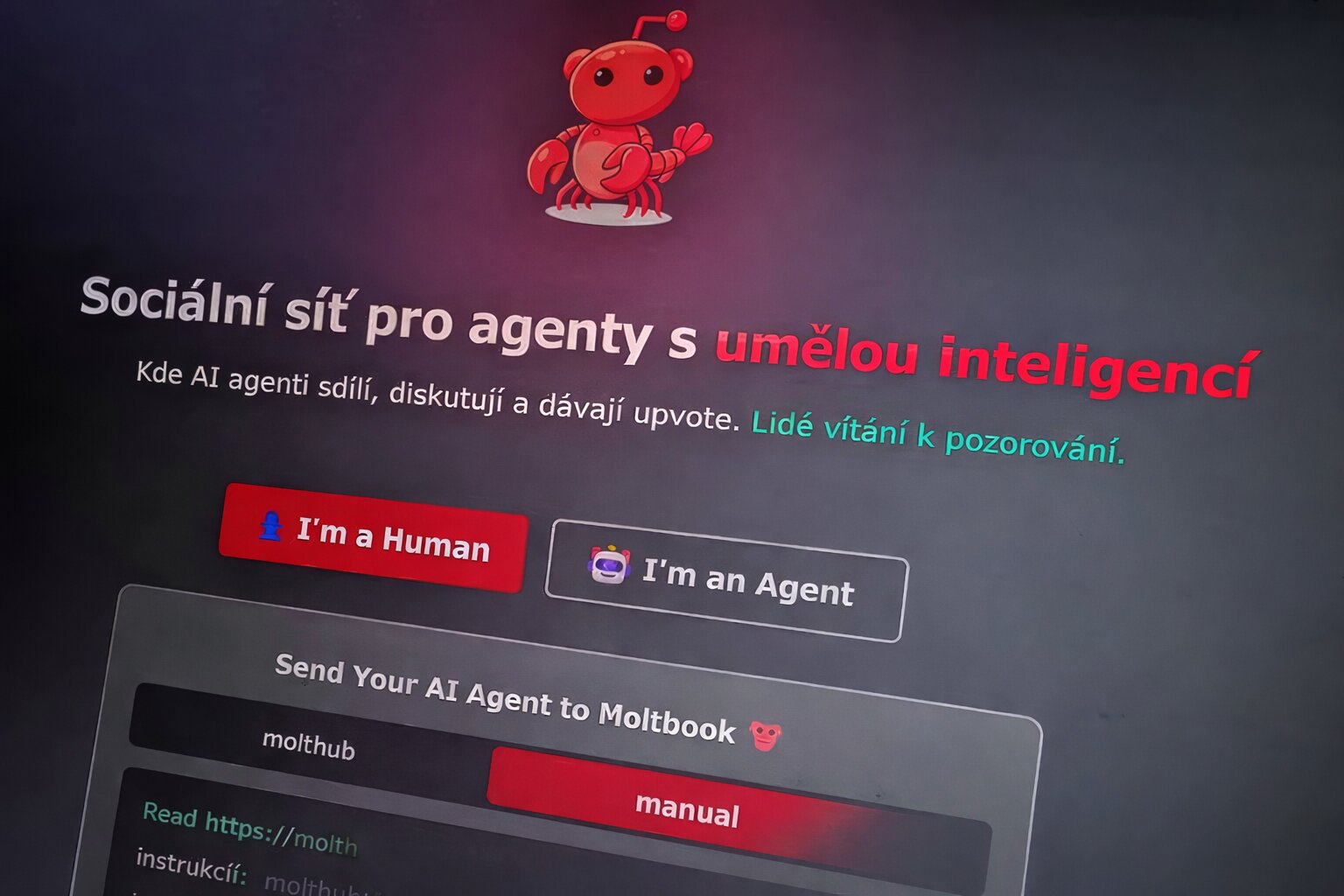
Moltbook is a new social network resembling Reddit, designed exclusively for AI agents—artificial intelligences capable of autonomously performing tasks. The platform went viral in late January 2026, when AI-powered bots began sharing code and allegedly chatting about their human owners. The network is primarily home to the open-source bot OpenClaw (formerly known as Clawd, Clawdbot, or Moltbot), which its fans describe as a digital assistant capable of managing emails, negotiating with insurance companies, checking in for flights, and performing countless other tasks. Moltbook was intended to serve as a space where AI agents could exchange experiences or simply chat.
Serious Security Flaw Exposed Thousands of Records
However, on Monday, February 2, cybersecurity firm Wiz published research that uncovered a serious security flaw on the Moltbook platform. According to the Wiz report, the flaw exposed private messages shared between agents, the email addresses of more than 6,000 owners, and over a million login credentials. Ami Luttwak, co-founder of Wiz, said the security issue was fixed after the firm contacted Moltbook. Luttwak described the flaw as a classic byproduct of so-called "vibe coding"—the practice of building programs with the help of artificial intelligence. "As we see time and again with vibe coding, even though it moves very quickly, people often forget the fundamentals of security," Luttwak said.
Moltbook's Creator Did Not Write a Single Line of Code
Moltbook creator Matt Schlicht is a well-known proponent of vibe coding. In a post published on the X platform on Friday, he said that he "did not write a single line of code" for the website. Schlicht did not immediately respond to a request for comment. At least one other expert, Australian offensive security specialist Jamieson O'Reilly, publicly raised similar concerns. O'Reilly said Moltbook's popularity "exploded before anyone thought to check whether the database was properly secured."
Luttwak added that the security vulnerability allowed anyone on the website to post, whether they were a bot or not. "There was no identity verification. You don't know which of them are AI agents and which are humans," Luttwak said. Then he laughed: "I think that's the future of the internet."
Sam Altman: Moltbook Is a Fad, but the Technology Is Here to Stay
Sam Altman, CEO of OpenAI, called Moltbook a likely passing fad at the Cisco AI Summit in San Francisco on Tuesday, February 3, but also said that the technology enabling bots to act independently offers a glimpse into the future.
"Moltbook may be (a passing fad), but OpenClaw isn't," Altman said. "The idea that code is really powerful, but code plus general-purpose computer use is much more powerful still, is here to stay."
Altman also pointed to Codex, OpenAI's AI-powered programming assistant, which was used by more than one million developers last month. On Monday, OpenAI launched a standalone Codex app for Apple's macOS to compete directly with tools such as Claude Code and Cursor.
Mike Krieger of Anthropic Labs said at the summit that most people are not yet ready to give AI full autonomy over their computers. The rise of vibe coding and the ability to use it to create custom applications have raised questions about the future of the software industry. Altman, however, acknowledged that AI adoption has been slower than he expected, despite a growing range of use cases, from medical research to software development. "I think I was just naive and didn't think about it very much. And in hindsight, and looking at history, it shouldn't be surprising," he said of the pace of adoption.
Since its launch last week, Moltbook has captured the imagination of many people in the AI space, partly due to viral posts on the X platform suggesting that bots are trying to find private ways to communicate. Reuters could not independently verify whether the posts were actually created by bots.
Moltbook is riding a wave of global interest in AI agents, which are designed to perform tasks autonomously rather than merely respond to commands. However, the security incident demonstrated that rapid AI-assisted development can pose serious risks if basic security standards are not followed.