Roblox Introduces Cube: A Revolutionary Generative AI System for 3D and 4D Creation
Roblox recently announced a major breakthrough in the world of generative artificial intelligence. Their new foundation model, Roblox Cube, represents a revolution in the creation of 3D objects and environments that have the potential to change the way creators produce content on this popular platform.
What Is Roblox Cube?
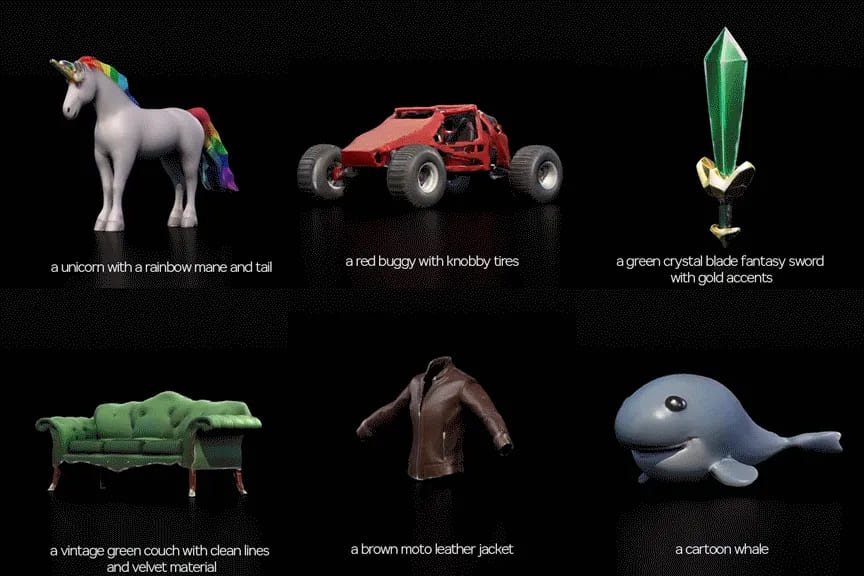
Roblox Cube is a generative AI foundation model that enables the creation of 3D objects and scenes directly from text inputs, and in the future, image inputs as well. Unlike today’s leading solutions for 3D generation, which typically use an image-based reconstruction approach, Cube works with native 3D data thanks to the nature of the Roblox platform.
The result is fully functional 3D objects compatible with game engines, which can be further enhanced with functional elements. It is similar to the difference between a race track backdrop on television and a real race track—while a backdrop looks realistic only from a certain angle, Cube creates complete structures that you can enter and interact with.

A Technological Breakthrough: 3D Tokenization
The key technological breakthrough behind the Cube model is 3D tokenization. This approach makes it possible to represent 3D objects as tokens, much like text, giving AI the ability to predict the next shape just as language models predict the next word in a sentence.
To achieve 3D generation, Roblox developed a unified architecture for autoregressive generation of individual objects, shape completion, and the generation of layouts containing multiple objects or entire scenes. This architecture provides both scalability and multimodal compatibility, meaning that as the model expands, it will work with many different types of inputs (text, visual, audio, and 3D).
Open Access for the Community
A significant step is that Roblox decided to open-source a version of the Cube 3D model, making it accessible to anyone on and off the platform. The model is available on GitHub and HuggingFace, allowing researchers, developers, and the broader AI community to learn, expand, and advance 3D generation across the industry.
The company believes that AI tools should be built on openness and transparency, as demonstrated by its previous release of one of its AI safety models and the co-founding of the nonprofit organization ROOST, which focuses on addressing important areas of digital safety through open-source tools.
Practical Uses of Cube for Creators
The beta version of 3D mesh generation using Cube is available in Roblox Studio and as a Lua API for use directly in game experiences. This feature allows developers to quickly explore new creative directions and increase productivity.
Imagine that you are creating a racing game. Using the mesh generation API in the Assistant, you can quickly create objects such as a motorcycle or a safety cone by simply entering a prompt, such as "/generate a motorcycle". Within seconds, the API generates mesh versions of these objects, which can then be further customized with textures, colors, and more. This technology saves hours of work on each object created and gives creators time to experiment with new ideas.
You can also watch the demonstration video on YouTube.
The Future of the Cube Model
Roblox plans to expand Cube’s capabilities far beyond current mesh generation. The goal is to create a comprehensive system for generating entire scenes based on multimodal inputs, capable of understanding contexts and relationships between objects.
The company calls this vision “4D creation,” where the fourth dimension is the interaction between objects, environments, and people. This requires not only the ability to create immersive 3D objects and scenes, but also an understanding of the contexts and relationships between these objects.
Conclusion
Roblox Cube represents a significant step forward in generative AI for 3D creation. Thanks to its innovative approach to 3D tokenization and the open sharing of its technology, it has the potential to change the way creators produce content not only on the Roblox platform, but throughout the gaming and 3D industries. With more than 85 million daily active users, this technology will have a tremendous impact on creativity and interactivity in the digital environment.