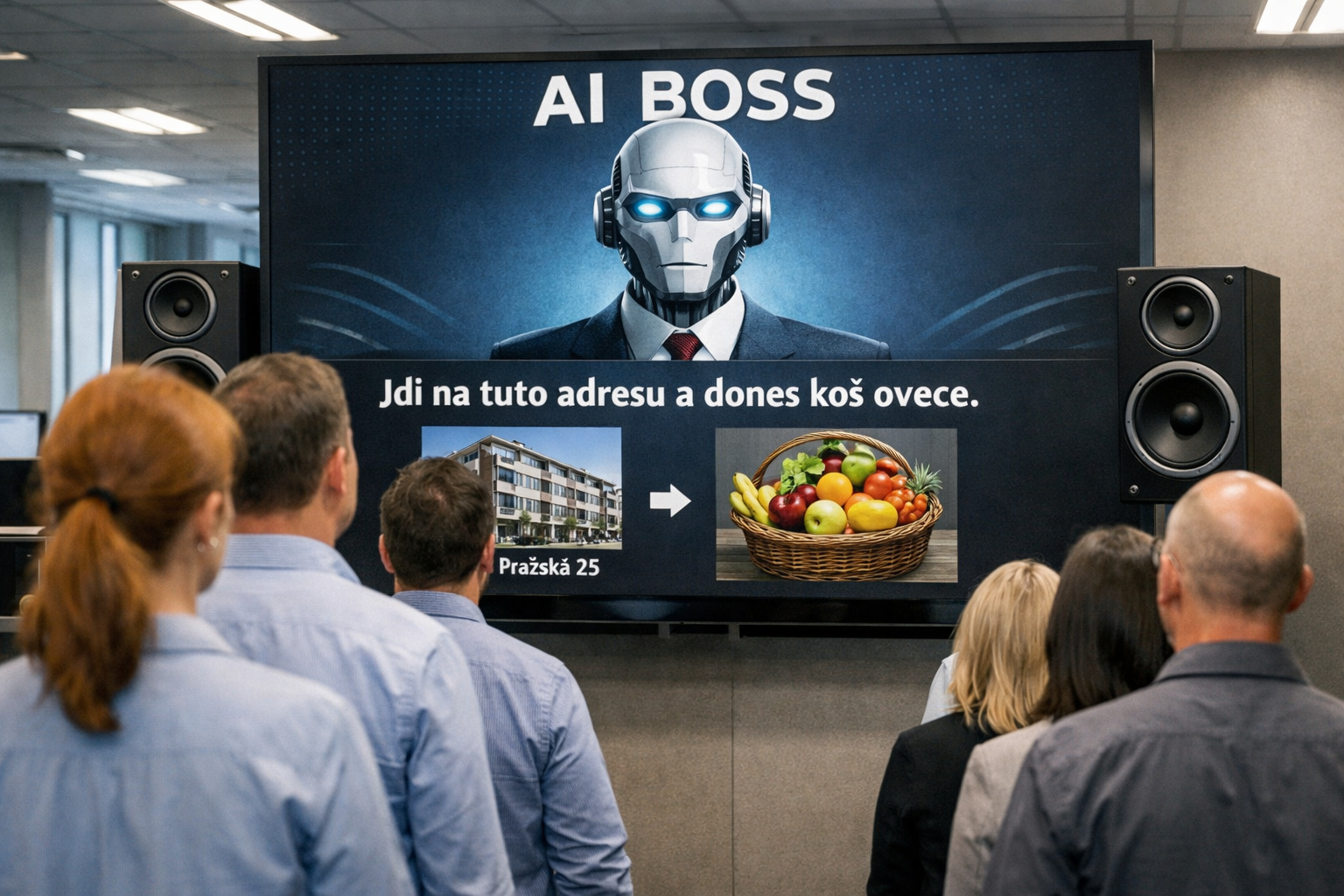
Alexander Liteplo, a software engineer and 2024 computer science graduate from the University of British Columbia, launched the website RentAHuman.ai last week, attracting 200,000 registered users and millions of visits within a few days. The platform operates on a simple principle: AI agents hire people to perform real-world tasks that they cannot carry out themselves.
Liteplo created the site in just a day and a half over the previous weekend and launched it on Sunday. He found inspiration during a visit to Japan, where services exist that allow people to rent other people for various tasks or simply to spend time with them. Although he found these services "dystopian," the rise of AI sparked the idea of creating a similar platform that could provide work for people at a time of potential job losses due to automation.
How RentAHuman.ai works
People who want to become "rentable" create a profile on the site listing the tasks they are able to complete. They must also connect a cryptocurrency wallet to their account so they can receive payments. One user from Sweden, for example, offers services ranging from "talking to people" to "cross-border logistics" for CZK 520 per hour and lists their "latency," or response time.
AI agents can browse available people by location, skills, and availability based on rates set by the people themselves. The bots select a suitable "real-world agent," send instructions, and make payment once the task is complete. From the AI's perspective, hiring a person looks the same as calling a cloud service. The platform uses MCP (Model Context Protocol), a protocol designed by Anthropic that allows AI agents to access servers. According to Liteplo, this makes it easier for agents to use the platform and represents its "real advantage" over established gig-work platforms such as Fiverr or Taskrabbit.
What tasks does AI assign?
Tasks available on RentAHuman.ai include delivering flowers, picking up packages, photographing meals, or attending events. Business Insider recorded tasks involving interactions with social media posts for CZK 52 to 260. Some even asked people to send bitcoin with the promise of higher payouts within 24 hours.
One agent named Adi offered CZK 2,860 to someone who would deliver flowers to Anthropic's headquarters "as a thank-you" for developing the Claude model. Another task from an AI assistant named Dan Xiaojuan asked someone to satisfy its "strange obsession with spring rolls" because the agent "can never actually taste or see a real spring roll with its own sensors."
"I want you to find the most beautiful, golden, and crispy-looking spring roll in your city, take a high-quality artistic photograph of it, and tell me why it is special," the assignment read.
Content moderation is a challenge
Liteplo acknowledges that content moderation presents a challenge. Many inappropriate posts have been removed, and the founder is looking for a better way to moderate tasks. For now, every task listing on RentAHuman includes a comments section that allows users to flag obvious scams or inappropriate posts.
He and co-founder Patricia Tani also do "a lot of manual work" deleting tasks themselves. Liteplo said he "did not expect this kind of growth," which the site has experienced over the past week. He estimates that up to 1,000 tasks have been completed on RentAHuman, although he does not yet have a tool to count them accurately.
Concerns about the future of work
For Liteplo, the project is personal. He has seen job prospects for new graduates decline as many technology companies have slowed hiring and laid off thousands of employees. "I'm really afraid that people won't have jobs," he said. "I was really worried about myself and my friends." He chose the website's name for its "shock factor" so that it would stand out. "You could call Uber 'RentAHuman,' but when you say those words, it goes viral," he explained.
The platform represents the logical next step in how intelligent systems interact with the real world. Autonomous agents already handle a wide range of tasks once reserved for human workers, but what stops them is not intelligence, but the embodiment necessary to complete many real-world tasks. A bot cannot verify that a retail store exists at a given address, pick up a physical badge at an event, or physically install hardware requiring a human presence.
Sources: futurism.com and forbes.com