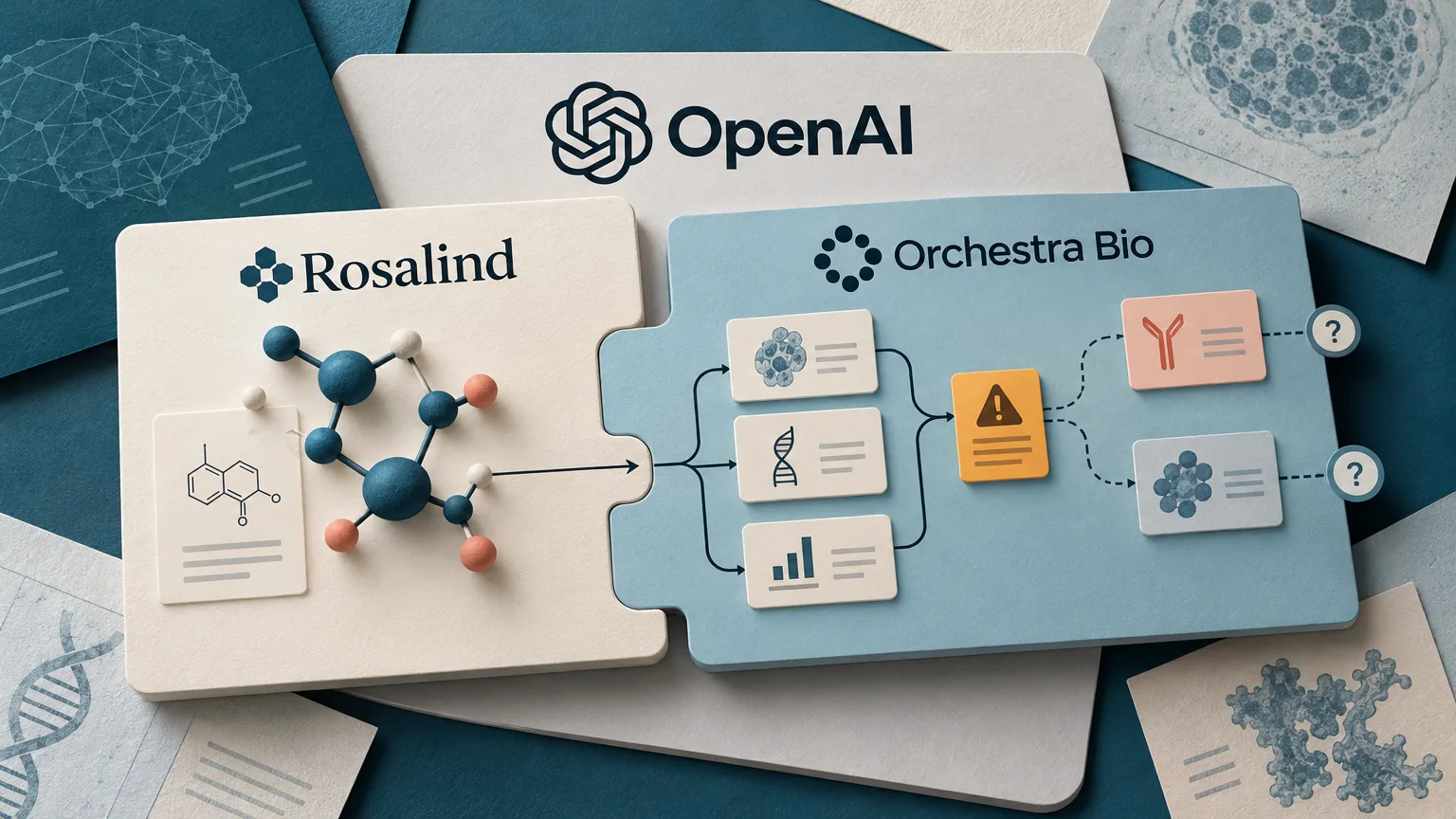
OpenAI announced on October 20, 2026, that it had acquired Orchestra Bio, a platform where people and AI agents work together to coordinate drug development. It is bringing Orchestra Bio’s team and technology together with Rosalind, its suite of models and tools for life sciences research.
Rosalind helps researchers analyze results and plan experiments
The Rosalind suite includes GPT‑Rosalind, which OpenAI says helps scientists work through questions in biology and chemistry. The company says Rosalind Workbench connects those model capabilities with scientific data and tools so researchers can analyze results and prepare experiments.
Tracking studies and assessing setbacks
Orchestra Bio focuses on coordinating the work involved in drug development. According to OpenAI, scientists and program leaders use its agents to monitor studies and campaigns. This is intended to give them more time to direct the work, make decisions and address problems before they cause delays.
The company gives the example of a manufacturing batch that fails to meet requirements and could push back the start of a clinical trial. It says the agents help identify affected activities and schedules, collect the necessary information and compare possible responses. Scientists and program leaders use that analysis to decide what to do next.
Connecting scientific findings with drug development
By combining the two technologies, OpenAI aims to build agents that help teams link scientific findings to follow-up studies, decisions and other steps needed to develop a potential medicine. It also wants to help teams manage the work that follows a discovery so new treatments can reach patients sooner.