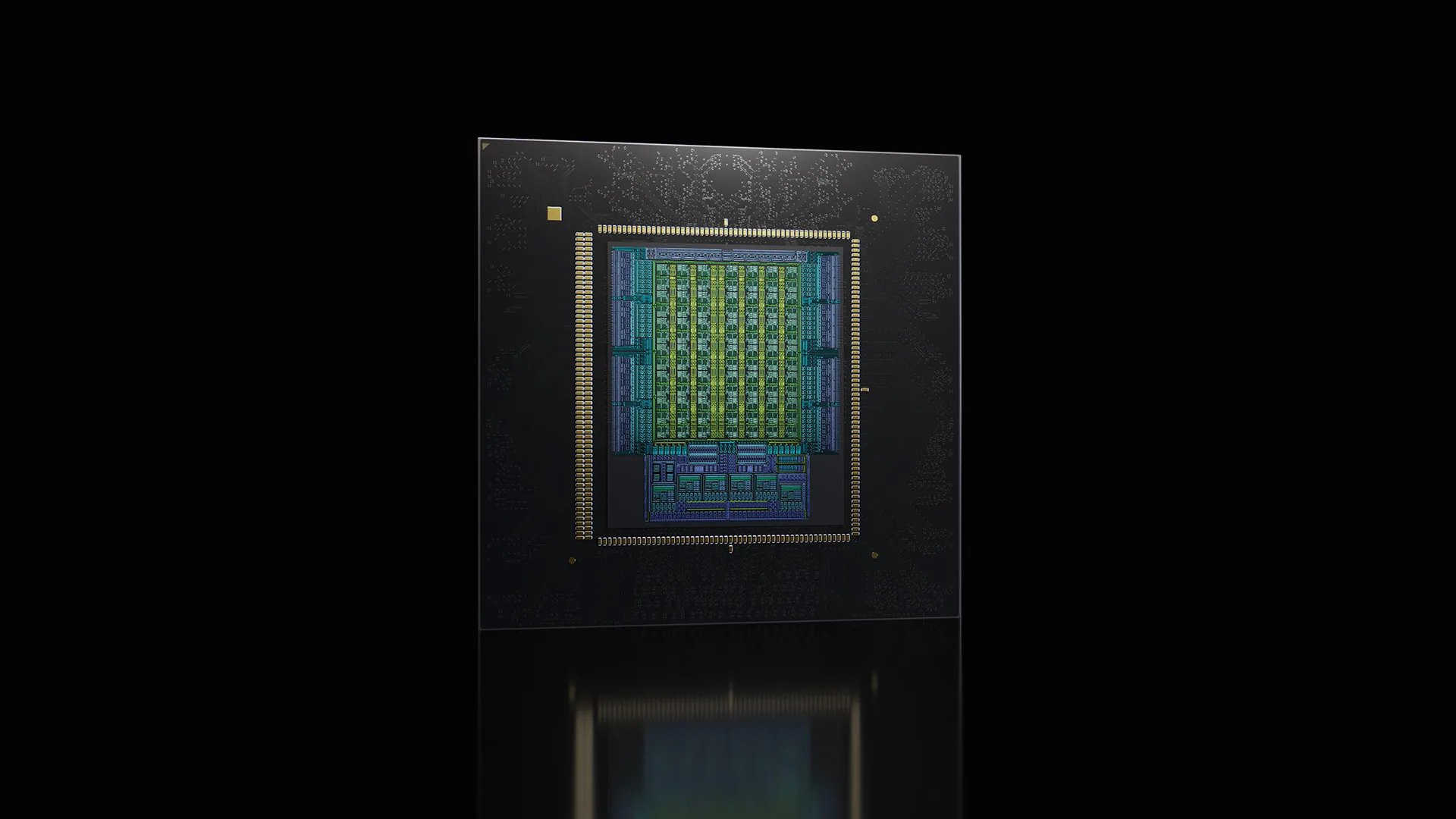
Nvidia announced that SpaceXAI, an artificial intelligence company operating under Musk's rocket company, will deploy the new Vera processors for the next generation of agentic applications. At the same time, the company plans to use Nvidia hardware to build something no one has attempted before: a data center orbiting Earth. The first satellite is called Starmind AI1 and, according to the plans, will carry a complete computing rack like those commonly found in terrestrial data center halls.
The processor will directly support AI agents
Nvidia presents Vera as the first processor designed specifically for AI agents. The difference from the conventional understanding of artificial intelligence lies in the processes between individual model calls. An agent must execute code, use tools, process data, run simulations, and coordinate tasks. This work is handled by the processor rather than the graphics card, which has been a limitation until now. The graphics chips were left waiting unnecessarily for the processor to finish processing the data.
Vera offers 88 custom Olympus cores, Spatial Multithreading technology, and LPDDR5X memory with bandwidth of up to 1.2 TB per second. Nvidia promises that agentic workloads, reinforcement learning, and data processing will be completed up to 1.8 times faster than on x86 architecture processors.
According to SpaceXAI President Mike Nicolls, Vera will provide the performance and memory bandwidth needed for enormous volumes of orchestration, code, and data, while graphics cards will do what they do best. The result should be more efficient use of every watt. Ian Buck, who leads Nvidia's hyperscale and high-performance computing division, added that agentic artificial intelligence needs a computer designed not to generate responses, but to take action itself.
SpaceX, in partnership with Nvidia, has designed a space-optimized Vera Rubin NVL72 system for launch to orbit in Q4 next year, with significant scale in 2028 https://t.co/qdDq8YBkzl
— Elon Musk (@elonmusk) August 24, 2026
Gigawatts on Earth and in orbit
Vera is part of the Vera Rubin platform. Nvidia designed it as a comprehensive architecture combining computing components, NVLink interconnects, Spectrum-X Ethernet networking, BlueField data processors, and proprietary software. The goal is to reduce the cost per token and extract the maximum value from every megawatt-hour invested.
SpaceXAI is building infrastructure for the Grok chatbot on this architecture, with the goal of achieving computing capacity measured in gigawatts. It also plans to use Vera Rubin beyond terrestrial data centers. Different rules apply in space when it comes to power, heat dissipation, transmission capacity, reliability, and the physical layout of the entire system. Nvidia and SpaceXAI are now working to ensure that the same architecture and software will also function in an environment where no one can replace a faulty module.
Starmind AI1: a rack with 72 graphics chips
The specifications of the first satellite have already been released. SpaceX and Nvidia are jointly developing the computing section of the Starmind AI1 satellite, which is intended to be the first in a planned constellation of orbital data centers. Each satellite will carry Rubin graphics chips and Vera processors, while the Space-1 Vera Rubin module is expected to deliver up to 25 times greater performance for AI workloads than the H100 chip. The AI1 satellite is expected to deploy solar panels spanning 75 meters and cooling panels 30 meters long. Its peak power output will reach approximately 250 kilowatts, averaging 175 kilowatts, which is enough to power a full Vera Rubin NVL72 rack with 72 graphics chips.
In other words, it is a piece of a terrestrial data center launched into orbit, with solar panels as long as a football field and enormous radiators instead of fans.
The timeline is ambitious even by Elon Musk's standards. Prototype testing is scheduled for early 2027. If development is not delayed, mass production will begin later that year at a new facility called Gigasat, while the company is targeting the final quarter of 2027 and beyond for commercial launches in greater numbers. The first satellites are therefore expected to reach orbit by the end of 2027, with the project set to expand significantly the following year.
A factory in Texas and an application for one million satellites
Production capacity is being established in Texas. The satellite facility in Bastrop covers approximately four square kilometers, and the company expects to begin meaningful production volumes there by the end of 2027. This aligns precisely with the scheduled first AI1 launches.
The scale SpaceX is discussing with US authorities is even greater. The company has applied to the Federal Communications Commission for permission to eventually launch up to one million satellites capable of performing computations for artificial intelligence. The commission approved the initial application but has not yet decided on the full scale of the deployment.
SpaceX is marketing the orbital solution as a way to bypass the energy constraints that are increasingly slowing the pace of data center construction on Earth. In space, sunlight is essentially unlimited, there is plenty of room, and no one is competing for land, electricity, or water. Nevertheless, many critical questions remain. The cost of data centers in orbit is a major unknown. The expense of launching the technology, servicing it, managing power and heat dissipation, and providing sufficient transmission capacity raises doubts about whether space-based servers can compete at all with those built on Earth.
Nvidia is SpaceX's primary supplier
Musk discussed the relationship with Nvidia during the August earnings call. He described the Vera Rubin architecture as the best available on the market today and added that SpaceX is relying exclusively on Nvidia. The company confirmed that it had selected Nvidia as the sole technology supplier for its orbital AI infrastructure.
The competition felt the impact immediately. In early August, AMD reported the best quarter in its history, with record revenue of $11.5 billion, representing a year-on-year increase of 50 percent. Nevertheless, its shares fell by more than 14 percent after the results were published, because the announcement of SpaceX's exclusivity completely overshadowed the achievement.
The relationship between the two companies also works both ways. According to a filing published on August 14, Nvidia holds approximately 123 million Class A shares of SpaceX, representing a stake worth roughly $21 billion based on prices at the end of June. The partnership dates back to Nvidia's earlier investment in xAI, which SpaceX later acquired in exchange for its own shares. Nvidia is therefore both a major supplier to SpaceX and one of its largest shareholders.
Sources: nvidia.com, finance.yahoo.com and xtb.com