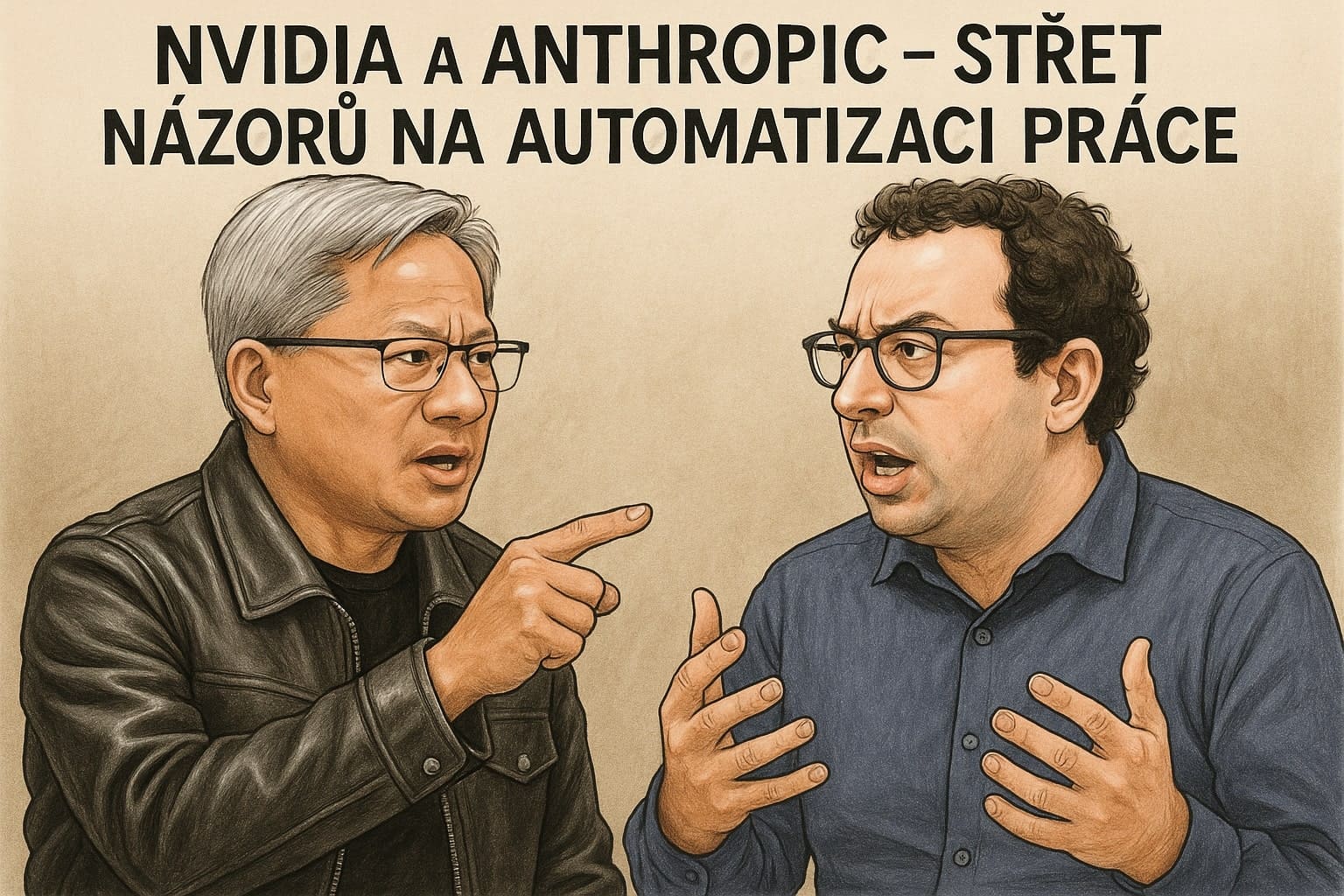
Nvidia and Anthropic - a clash of views on workplace automation
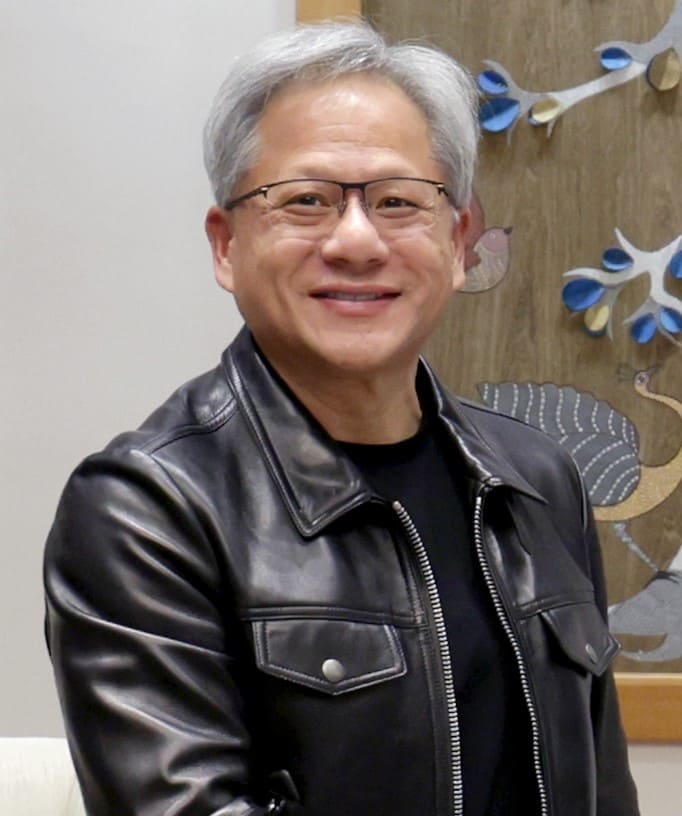
The CEO of Nvidia, Jensen Huang, has openly challenged predictions made by his industry peer Dario Amodei, CEO of Anthropic, regarding the impact of artificial intelligence on the labor market. During a press conference at the Viva Technology conference in Paris, Huang firmly rejected Amodei's prediction that AI could automate up to half of all entry-level office jobs within five years. Huang issued a sharp criticism, stating that he "basically disagrees with almost everything" his AI industry peer says. This public disagreement reveals deeper philosophical differences between two influential figures in the technology world regarding the direction and impact of artificial intelligence on society.
Huang's criticism of Amodei's philosophy
Jensen Huang did not focus solely on the issue of jobs but dissected Amodei's entire philosophy toward artificial intelligence. According to Huang, Amodei holds three problematic positions: first, he believes that AI is so frightening that only they should develop it; second, he thinks AI is so expensive that no one else should build it; and third, he claims that AI is so incredibly powerful that everyone will lose their jobs, which explains why his company should be the only one building it. Huang considers this logic flawed and dangerous. Instead, he advocates an open approach to AI development: "I think AI is a very important technology; we should build and develop it safely and responsibly. If you want things to be done safely and responsibly, you do it openly... Don't do it in a dark room and tell me it's safe."
Background to the dispute and Anthropic's history
Anthropic was founded by Dario Amodei and other former OpenAI employees in 2021, with safety as one of its core missions. Many of Anthropic's founders reportedly left OpenAI due to disagreements over the company's direction and safety culture. This background is crucial to understanding the current dispute, as Amodei has long positioned himself as one of the most vocal advocates of a cautious approach to AI development. In several public statements, he has expressed his belief in the potential existential risks of artificial intelligence and warned that humanity could one day lose control over AI systems if they become more intelligent than humans. In addition, he has voiced concerns about the potential misuse of advanced AI by malicious actors to create biological weapons, cyberattacks, or tools for massive disruption. And some are already attempting this, as we wrote here.
Amodei's response and defense of his positions
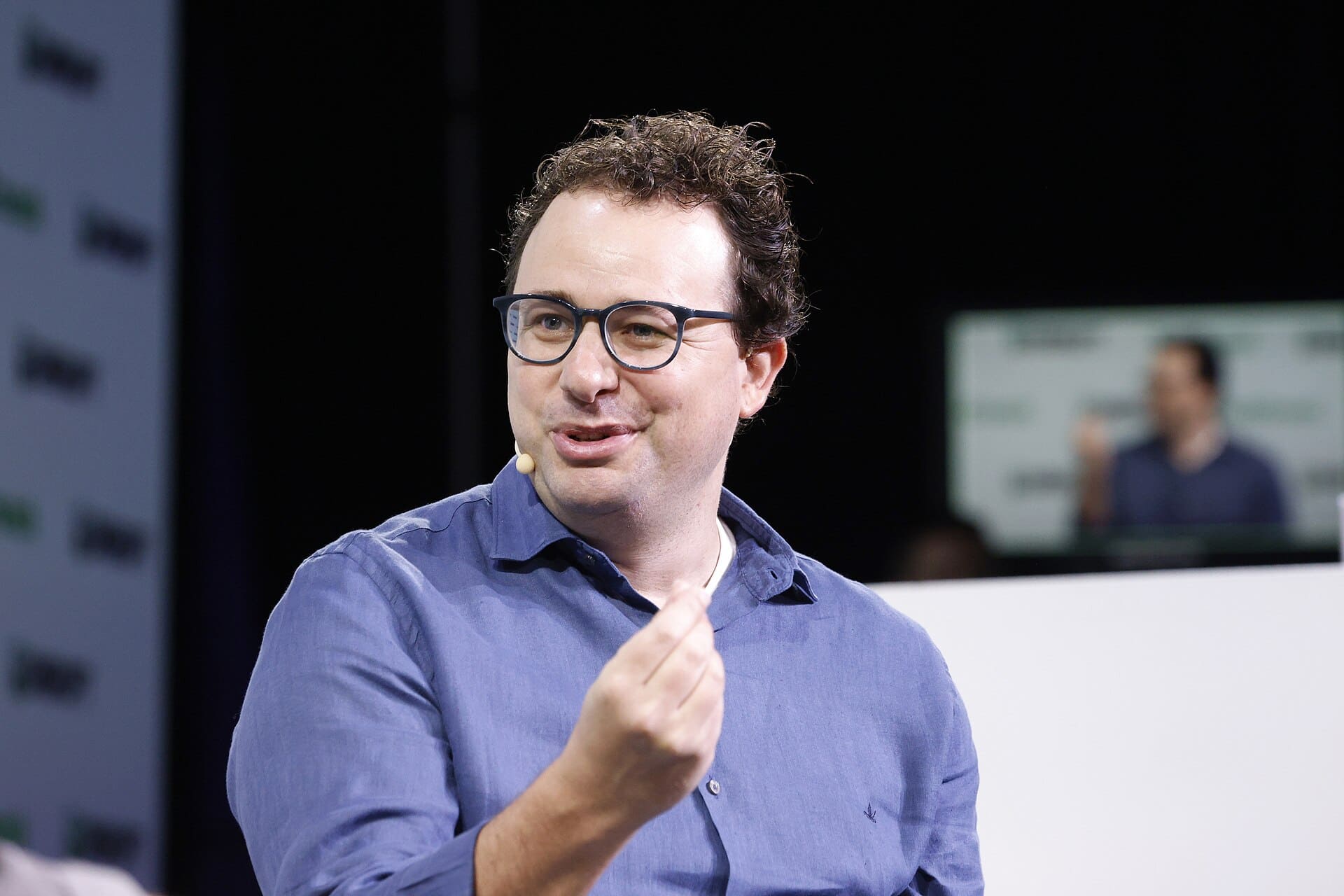
An Anthropic spokesperson responded to Huang's accusations in a statement to Fortune: "Dario has never claimed that 'only Anthropic' can build safe and powerful AI. As the public record will show, Dario has advocated for a national transparency standard for AI developers (including Anthropic), so that the public and policymakers are informed about the capabilities and risks of models and can prepare accordingly." The statement also confirmed that Amodei had expressed concerns about the economic impact of AI, particularly on entry-level positions, and that he stands by those statements. In a recent interview with Axios, Amodei indeed predicted that AI could eliminate roughly 50% of all entry-level office jobs and urged lawmakers to prepare to protect people's livelihoods.
Huang's vision for the future of work with AI
Although Jensen Huang acknowledged that technology could have some impact on workers, he rejected Amodei's bold claim about massive job losses. In his view, everyone's work will change, some positions will become obsolete, but many new jobs will be created. "Whenever companies become more productive, they hire more people," Huang argued. This optimistic vision conflicts with more pessimistic predictions and reflects the broader debate within the technology community over whether AI will lead to mass unemployment or instead create new opportunities. Huang bases his position on historical precedents of technological revolutions that ultimately created more jobs than they eliminated.
Quantum computing and Nvidia's European plans
Huang made his comments at a press conference following Nvidia GTC Paris, where the company announced a new partnership with French startup Mistral as part of an effort to expand Europe's computing capacity. Nvidia plans to establish more than 20 "AI factories" across the continent, with Huang promising European researchers and startups that their "GPU shortage will soon be resolved." The CEO also discussed Nvidia's quantum computing efforts, highlighting the hybrid quantum-classical CUDA-Q platform and claiming that quantum computing is reaching an "inflection point." According to Huang, the technology could begin solving real-world problems within the next few years, representing another area in which Nvidia is seeking to dominate future technology trends.