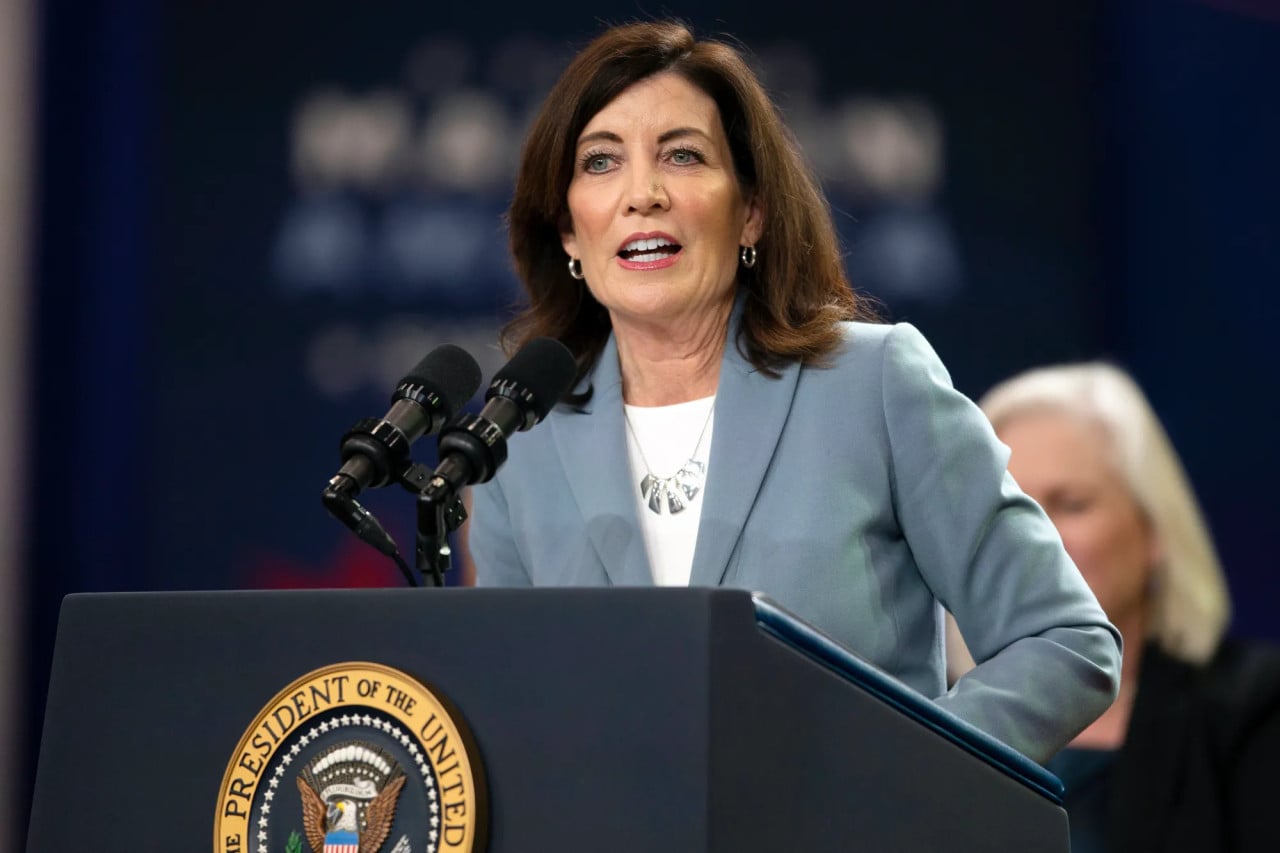
New York has become the first U.S. state to suspend the construction of large artificial intelligence data centers. Governor Kathy Hochul signed an order in Brooklyn that will halt the issuance of permits for new server facilities for up to a year. It applies to so-called hyperscale facilities, meaning those that consume 50 megawatts of energy or more. It was their enormous electricity consumption and thirst for water that drove people to social media and into the streets.
Until recently, politicians welcomed such projects as a source of investment. Now they have become a target. Electricity bills are rising, concerns about drinking water are growing, and Hochul decided to act. “New York has always been at the forefront of innovation, but at the same time, we have always ensured that people benefit from it too," the governor said.
Suspension for up to a year
The signature means a one-year pause in state permits related to environmental protection. During that time, the Department of Public Service will be tasked with preparing a general environmental impact assessment of data centers, which will take up to a year to complete. Until the document is ready, the environmental protection agency will not issue any new permits for projects that have not yet undergone an assessment.
The assessment is intended to map out what the giant facilities will do to the power grid, how much water they will consume, and how they will affect water quality and the air. Hochul wants to eliminate sales tax exemptions for the largest data centers and had already launched proceedings intended to force these facilities to pay more for energy or secure it themselves.
A new agency called DIGIT has also been established. It will initially focus on major developers of advanced artificial intelligence, require them to be more transparent about safety measures, and introduce a mechanism for reporting serious safety incidents.
Opposition is growing across the country. Polls of voters from both parties show increasing resistance to data center construction. People object to expensive electricity, water consumption, and noise. According to a June poll by the Siena Institute, 46 percent of respondents considered a one-year pause a good step, while only 21 percent considered it a bad one. The sentiment extended across the political spectrum. Democrats supported the idea by a margin of 37 percentage points, while Republicans did so by 13.
Voices opposing the suspension
Not everyone likes the move. Blakeman, the Nassau County executive, opposes a statewide pause and argues that local authorities should be able to negotiate projects with companies themselves if those projects bring in enough money.
Other Republicans have also spoken out. Assemblyman Scott Gray and three colleagues wrote a letter to the governor in June rejecting the pause, saying that a statewide halt is the wrong answer to the right questions. According to them, decisions about where projects are located belong to local communities, not Albany.
Technology companies are raising the same objection again and again. They argue that blocking construction takes jobs away from local people and leaves America behind in the race with China. Some called the pause shortsighted and also warned that New York could set off a trend in which other governors begin unilaterally closing the door on projects that are important to both the economy and national security.
A sharp reaction came from the White House the very next day. President Donald Trump wrote on Truth Social that New York had made a terrible decision and should reverse it “IMMEDIATELY." He portrayed data centers as money-making machines. According to him, companies will now head to Alabama, Florida, Texas, or Arizona, taking with them tax revenue and jobs, which he described as “liquid gold." He added an accusation that Hochul had acted for political reasons and warned that such an approach would hand artificial intelligence and new technology to China.
Trump did concede one point, however, agreeing with opponents of the giant facilities. He wrote that companies must pay for their own water and energy, and that whatever is left over should go back to the state and the local community.
New York has gone the furthest
Similar proposals are being considered elsewhere, but so far no one has gone this far. Maine appeared headed toward a similar pause, but the state's Democratic governor, Janet Mills, vetoed it. She argued that it would prevent the construction of a data center in a town struggling after the closure of a local factory. Virginia Governor Abigail Spanberger also warned against similar bans.
Hochul may not have had the final word yet. Last month, the New York legislature passed its own proposal for a one-year pause that would halt permits for data centers drawing more than 20 megawatts. The governor has not yet decided whether to sign it and indicated that she would discuss its wording further with lawmakers.
Sources: reuters.com and theguardian.com