

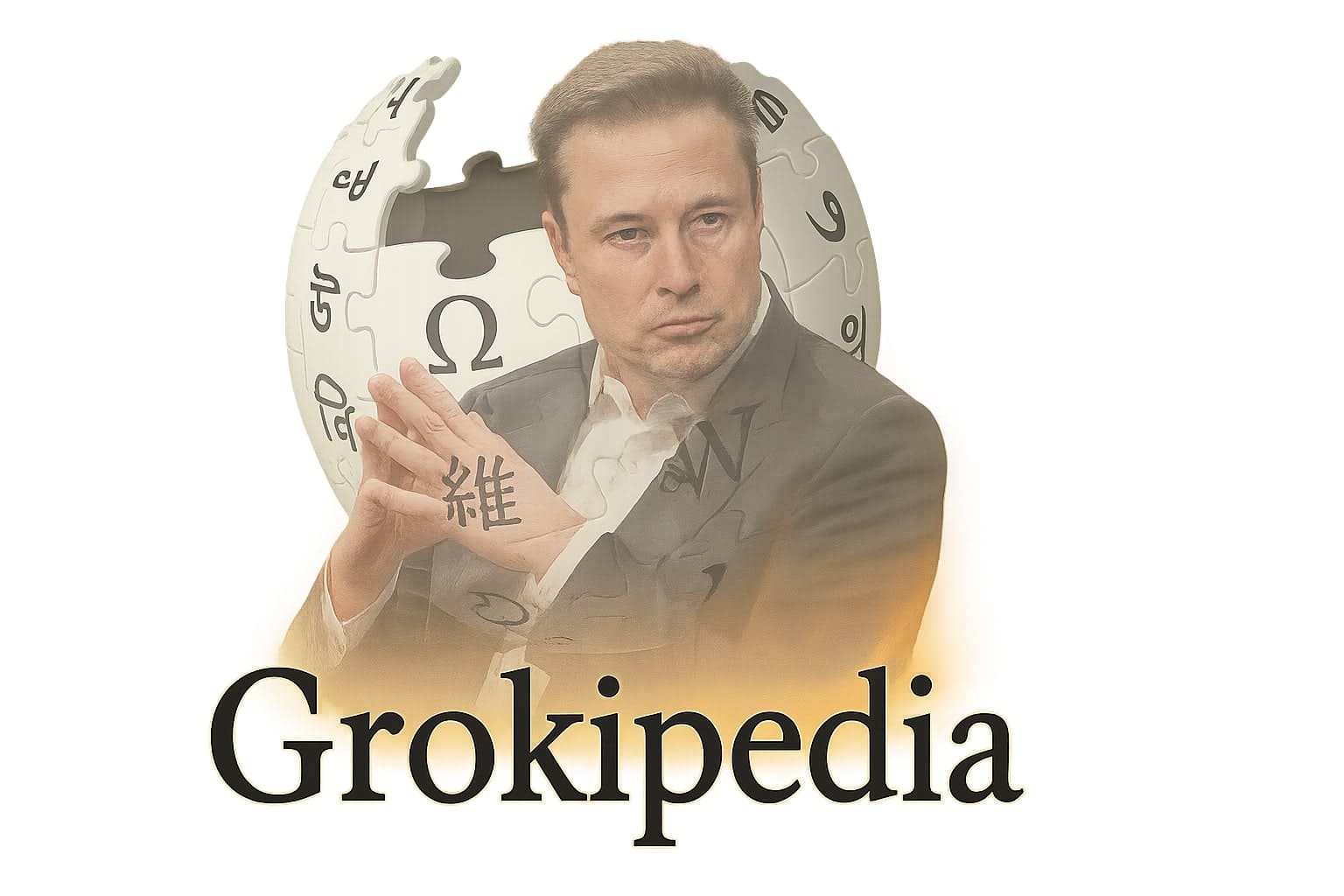
Elon Musk envisions Grokipedia as the ultimate monument to human knowledge, something so complete and truthful that it could be carved in stone and stored in space. In reality, however, it is a complete mess, and now that anyone can suggest edits, the situation is getting even worse. Grokipedia, created by xAI, is an AI-generated version of Wikipedia with an anti-woke approach, but the results so far are chaotic and riddled with errors.
Originally, when Grokipedia launched in October, it had roughly 800,000 articles written by Grok, and everything was locked against editing. It already looked bad at the time—the articles were racist, transphobic, excessively flattering toward Musk, and in some places copied directly from Wikipedia. But at least it was predictable. Then version 0.2 arrived, when Musk opened the door to edit suggestions from anyone.
How edit suggestions work on Grokipedia
Suggesting an edit is easy, so easy that the site does not even need instructions. Just highlight the text, click the “Suggest Edit” button, and fill out a form summarizing the change, optionally proposing new content and adding sources. Approval is decided by Grok, xAI’s chatbot, which is known for its problems and its worship of Musk. Grok not only reviews suggestions but also makes the changes to pages itself. On Wikipedia, most edits do not require approval, but a community of human editors monitors the recent changes page.
However, it is unclear what changes Grok is actually making. The system is confusing and lacks transparency. Grokipedia says it has already approved “22,319” edits, but there is no way to see what they were, which pages they were made on, or who suggested them. That is a major difference from Wikipedia, where edit logs can be sorted by page, user, or the IP addresses of anonymous contributors. Perhaps many of those edits merely add internal links to other Grokipedia pages, but that is only a guess based on browsing several articles.
On Grokipedia’s home page, there is a small panel below the search bar that displays about five recent updates in rotation. These merely state the article’s title and that some unspecified edit was approved. Nothing more. The content depends on what users come up with, so strange things get mixed together—often pages about Elon Musk or religious topics, interspersed with TV shows such as Friends or The Traitors UK, and even suggestions to add information about the potential health benefits of camel urine.
Consistency problems
Wikipedia has a clear timeline of edits with details about who did what and why, along with discussion logs for disputed matters. It also has detailed guidelines for style, sources, and processes, and page versions can be compared so that people can see exactly what changed. Grokipedia has no such guidelines—and it shows, as many suggestions are an incoherent mess. It does have an edit log, but it is a nightmare. It only shows a timestamp, the suggestion, and Grok’s decision, often accompanied by a complicated AI-generated explanation. It must be browsed manually in a small pop-up window with no option to skip ahead or sort. It is frustrating even with a small number of edits, and with more it would be unusable. Moreover, it does not show where the changes were actually made.
Grok is not consistent as an editor. This makes for confusing reading, and the logs reveal the lack of rules for people submitting suggestions. For example, Elon Musk’s biographical page contains many suggestions about his daughter Vivian, who is transgender. People suggest using both the name and pronouns that correspond to her gender identity and those assigned to her at birth. Because Grok makes edits incrementally, the page is left with a confusing mixture of both, and it is almost impossible to track exactly what happened.
Easy to abuse
As a chatbot, Grok can be influenced through persuasion. On Musk’s page, one user suggested fact-checking a quote about the fall of Rome being linked to low birth rates, stating that the “veracity of this statement should be verified.” Grok rejected it as unnecessary in a lengthy explanation. But Grok accepted a similar suggestion with different wording and added information that it had previously deemed unnecessary. It is not difficult to imagine how someone could adjust the wording to get edits approved.
This is technically possible on Wikipedia as well, but it has an army of volunteer administrators, selected after a review or election, who enforce standards. They block accounts or IP addresses and lock pages in cases of vandalism or edit wars. Grokipedia has nothing of the sort, leaving it at the mercy of random people and a chatbot that once called itself MechaHitler. This became apparent on the pages about World War II and Hitler, with repeated (rejected) suggestions to add that Hitler was a painter or to reduce the number of Holocaust victims below the actual figure. On Wikipedia, these pages are “protected,” meaning that only certain users can edit them, with detailed logs explaining why. If Grokipedia’s system were easier to navigate, more examples would be found.
Such pages are an obvious target for abuse, and it is no surprise that they are among the first to be attacked. They will not be the last, and with the chaotic editing system and Grok’s limited safeguards, it may soon become difficult to distinguish vandalism from legitimate edits. At this rate, Grokipedia does not appear to be on a path to the stars, but rather headed for a swamp full of incomprehensible misinformation.
Source: theverge.com


