

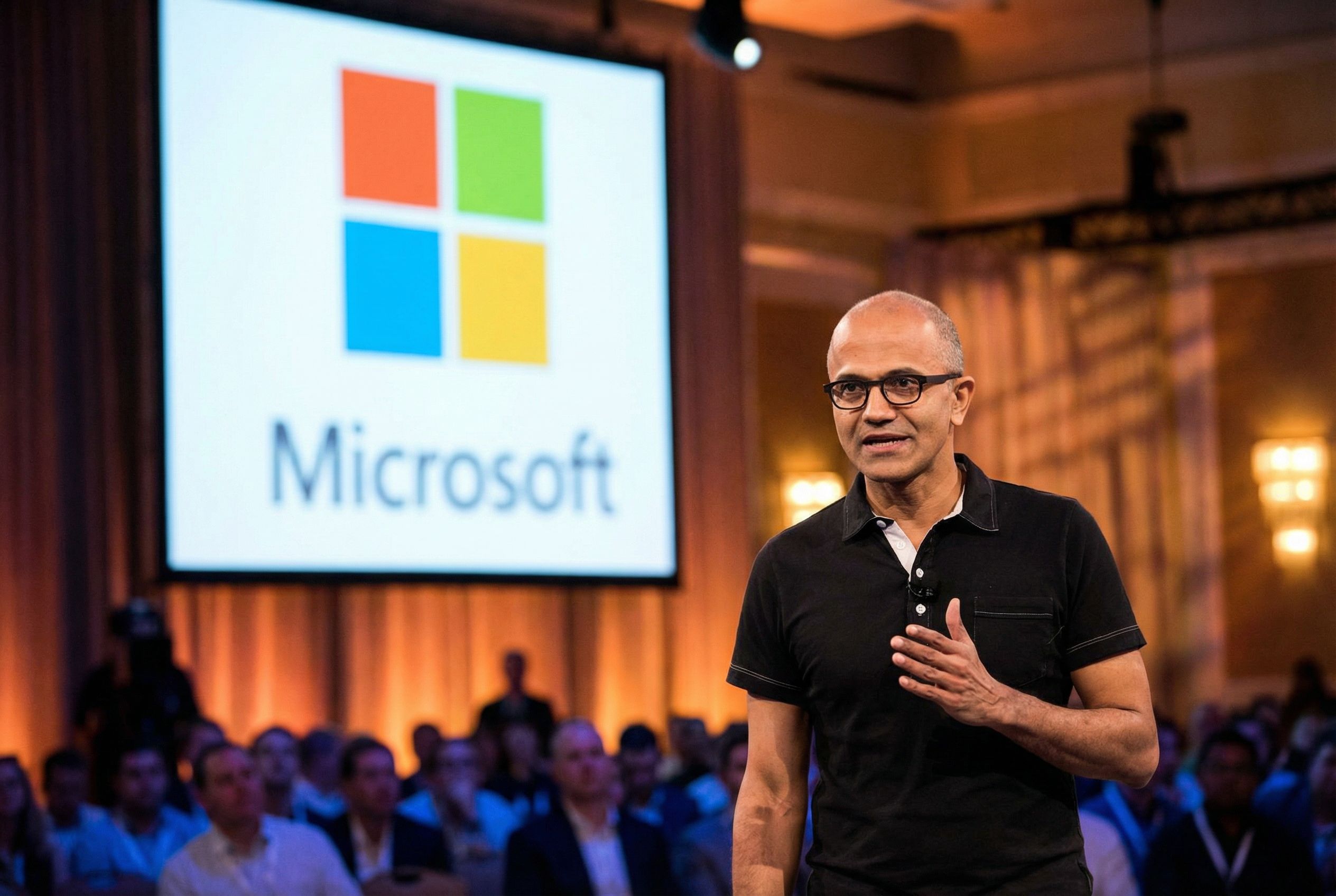
On January 29, Microsoft reported solid results for the quarter, with revenue of $81.3 billion (approximately CZK 1.9 trillion), representing year-over-year growth of 17%. Net income reached $38.3 billion (about CZK 890 billion), an increase of 21%. Microsoft's cloud services surpassed the record threshold of $50 billion (roughly CZK 1.16 trillion).
Nevertheless, the company's shares fell on Thursday as investors expressed concerns about the enormous spending on building cloud infrastructure and questioned whether these investments would pay off. CEO Satya Nadella spent a significant portion of the investor call arguing that the answer to this question is unequivocally yes.
Billions Invested in Data Centers
Microsoft spent nearly as much on capital expenditures in the first half of its current fiscal year as it did during the entire previous year. The figures are truly enormous: Microsoft spent $88.2 billion (approximately CZK 2.05 trillion) on capital expenditures last year and has spent $72.4 billion so far this year (about CZK 1.68 trillion). Most of this spending is directed toward providing AI services to businesses and major AI labs, particularly OpenAI and Anthropic. The main question for investors is: Will this spending translate into greater usage and ultimately into profits?
Investors are concerned that Microsoft's main enterprise cloud product, Azure, and its Microsoft 365 applications did not grow as quickly as expected. UBS Wall Street analyst Karl Keirstead wrote in a research note on Thursday: "The fact that both Azure and M365 segments came in slightly below expectations is the key negative we are hearing." Keirstead, however, is not concerned and recommends buying the stock.
Copilot Usage Figures
A few months ago, reports emerged that people did not actually want to use Microsoft's AI, despite Copilot being integrated into every conceivable company product. Nadella spent most of the investor call on what can best be described as a PR campaign focused on AI usage. Despite his presentation, some of the figures he provided were fairly vague.
For example, Nadella said that daily users of consumer Copilot AI products had increased "nearly threefold year over year". This covers AI chats, the news feed, search, browsing, shopping, and "operating system integrations." However, he did not say how many actual users this represents, and Microsoft declined to comment or provide clarification.
Last year, the company said in its annual report that it had surpassed 100 million monthly active Copilot users, but that included both commercial users and consumers. A Microsoft spokesperson told TechCrunch that this figure had risen to 150 million in total. Again, this includes both commercial and consumer users.
More Specific Figures
Nadella was more forthcoming about Microsoft's coding AI, GitHub Copilot, saying that it now has 4.7 million paying subscribers, a year-over-year increase of 75%. This appears to be a healthy business. Last year, Microsoft said in its annual report that GitHub Copilot had 20 million users, a figure that includes those who opted for the free version.
Nadella also said that Microsoft 365 Copilot now has 15 million paid licenses purchased by companies for their employees. That is out of a total of 450 million paid licenses, according to the company.
Nadella also mentioned the growth of Dragon Copilot, Microsoft's healthcare AI agent for healthcare professionals. He said that the product is available to 100,000 healthcare providers and was used to document 21 million patient encounters during the quarter, a threefold year-over-year increase.
Demand Exceeds Capacity
Will the billions spent on data centers pay off? Nadella clearly thinks so. He and CFO Amy Hood said during the investor call that demand for AI services across products significantly exceeds data center capacity, meaning that all new equipment is essentially booked to full capacity throughout its entire useful life. Although analyst Karl Keirstead noted investors' concerns, he personally recommends buying Microsoft shares because he believes in the long-term potential of investments in AI infrastructure.


