

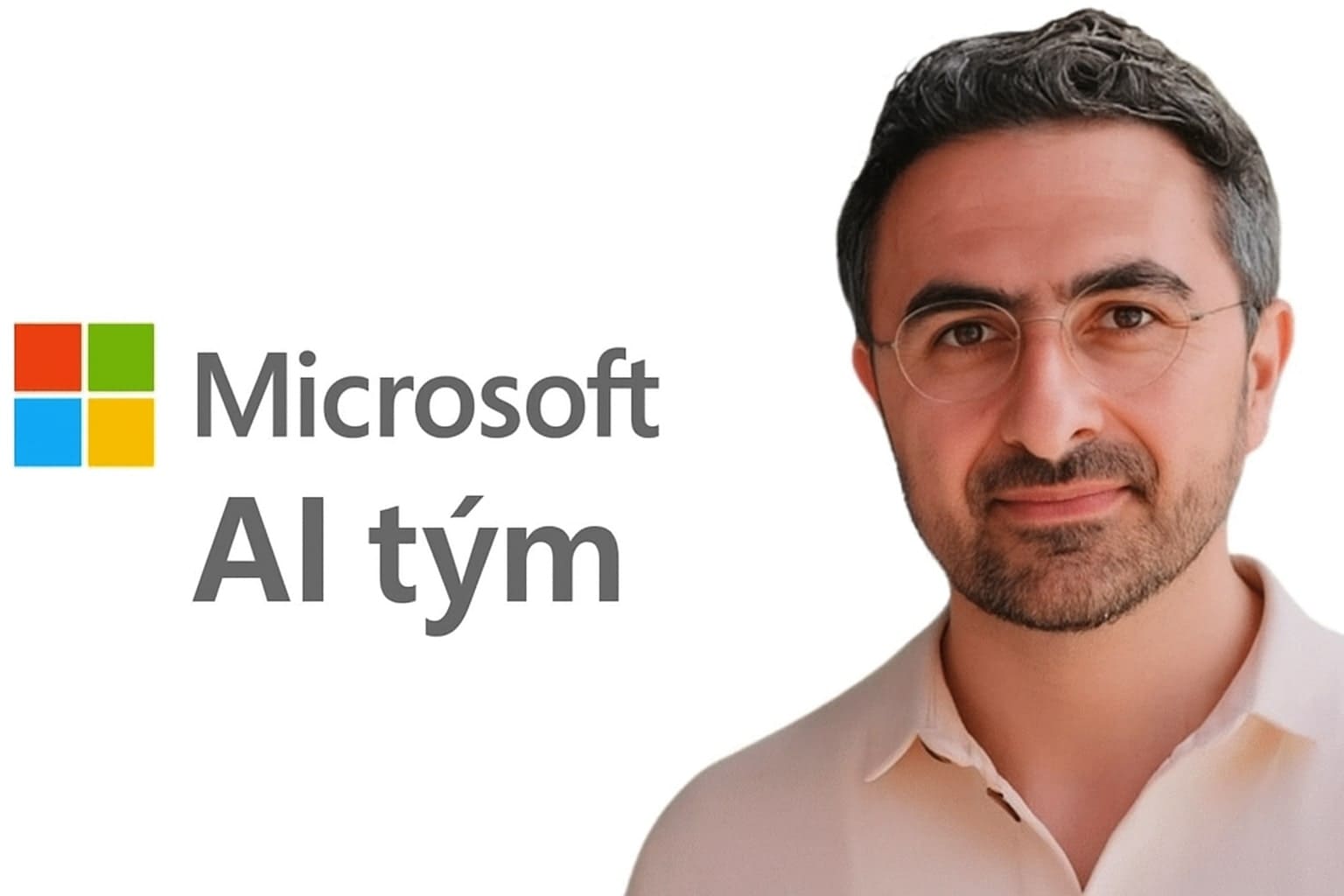
Mustafa Suleyman, who leads the Microsoft AI team, is addressing the question of what kind of artificial intelligence the world truly needs. According to him, this is one of the most important questions of our time. AI has made enormous progress in recent years. Systems have passed the Turing test, which inspired researchers for 70 years, without much fanfare. With the arrival of models capable of reasoning and inference, we are approaching superintelligence. If artificial general intelligence (AGI) means that AI can match humans across all tasks, superintelligence will far surpass it.
Instead of endless debates about capabilities or timelines, we need to consider the purpose of the technology. What do we want from it, what limits should it have, and how can we ensure that it always benefits humanity? At Microsoft AI, they are focusing on humanist superintelligence (HSI): advanced systems that always serve people and humanity in general. These systems are problem-oriented and focused on specific domains. They are not unrestricted entities with high levels of autonomy, but carefully configured AI systems with context and boundaries. The goal is to keep humanity in control while accelerating solutions to global challenges.
That is why the MAI Superintelligence Team was created, led by Mustafa Suleyman within Microsoft AI. This team is intended to be the best place in the world for AI research and development. Humanist superintelligence is not merely a technological goal, but a tool for solving specific problems while remaining under control. They reject the idea of a race toward AGI and view it as part of humanity's effort to improve life. They also reject extreme scenarios of triumph or doom; the aim is to deliver long-term, safe benefits to billions of people. The history of humanism is one of fighting orthodoxy, totalitarianism, and pessimism while protecting human dignity and freedom. This approach will make it possible to reap the benefits of AI while minimizing the risks.
Rapid Progress in AI
The pace of development is astonishing. This year, people in AI are talking about the dawn of superintelligence. Such a system would have the open-ended ability to "learn how to learn," which is the ultimate skill. It could continuously improve and surpass human performance in every activity. It would be more valuable than anything we have ever known.
The prize for humanity is enormous: rapid improvements in living standards and science, new art and culture, and growth. Technology is the greatest engine of human progress in history. Over the past 250 years, our intelligence has led to discoveries that doubled average life expectancy from 30 to 75 years. Technology has provided food, light, housing, healthcare, entertainment, and knowledge to a population that has grown from 1 billion to 8 billion people.
Thanks to technology, we fly around the world, treat infections with antibiotics, peer into space, and share memes with millions of strangers. Modern supermarkets, hospitals, schools, and offices are marvels of human ingenuity. AI is the next stage of this journey. Satya Nadella talks about raising global GDP growth to 10%; that would be a transformative boost. As a platform of platforms, Microsoft enables others to create at a global scale.
AI helps us become better versions of ourselves. It is a path toward better healthcare for everyone, an escape from zero-sum dynamics, economic growth, and higher living standards. Without AI, gains will be harder to achieve in the coming decades. It is a continuation of human creativity and the discovery of new forms of energy and entertainment. Humanist superintelligence will help renew the world.
The Need for Control
At the same time, we must ask how to keep under control a system that is expected to become smarter than us. We do not know what may emerge from autonomous, continuously improving systems that understand our science and society. Because superintelligence can continually improve, we must control it and continuously align it with human values, forever. This applies to everyone: commercial labs, startups, and governments. Everyone must remain vigilant, even before addressing malicious actors or garage experimenters.
No AI developer, safety researcher, or expert has a satisfactory answer to the safety question. Creating superintelligence is one thing; ensuring sufficient control and alignment is the greatest challenge of the 21st century. Until we have an answer, we must consider every path, including alternatives to superintelligence.
The Purpose of Technology
The purpose of technology is to move human civilization forward. It should help us live happier, healthier lives and create a future in which humanity and the environment thrive. Albert Einstein put it best: "Concern for man himself and his fate must always form the chief interest of all technical endeavors... in order that the creations of our mind shall be a blessing and not a curse to mankind." Technology that fails to achieve this has failed, and we should reject it.
This is the test for the coming wave of superintelligence: how do we know that it will do more good than harm? How can we be sure that we will not lose control? Who will make that assessment? And most importantly, what kind of superintelligence should we build, and with what limits?
These questions lie at the heart of the MAI Superintelligence Team's work and shape its daily decisions. People's long-term interests take precedence over any research.
Humanist Superintelligence
Technologists must do a better job of envisioning the future people want. Humanist superintelligence (HSI) puts human centrality first and then accelerates innovation. First avoid harm, then accelerate.
Instead of seeking dominance in everything, HSI begins with specific societal challenges to improve well-being. A recent paper on expert AI diagnostics in medicine is a good example. It demonstrates progress toward medical superintelligence, which will be transformative. Because it is domain-focused, it presents fewer control problems. HSI captures the benefits of science without uncontrollable risks. It is a practical approach. It ensures that humanity remains on top. AI is always on people's side, supporting human roles, making us smarter, and protecting the planet and the environment.
We owe the future a better world. Technology has already delivered amazing things: air conditioning, airports, smart TVs – all of which would have astonished our ancestors. Properly managed HSI can do it again.
Three Areas Inspire Microsoft AI, but There Are More.
- An AI companion for everyone – Everyone who wants one will have a perfect, affordable AI companion for learning, productivity, and support. Many people feel overwhelmed by daily mental pressure, information, and stress. The right companion will help carry the burden, get things done, and serve as a creative partner. It will be personalized and adaptive, but capable of disagreeing in the user's best interest, focused on supporting human relationships with trust at its core. It will also transform education: it will adapt to students' strengths and weaknesses and collaborate with teachers. It will provide personalized methods, curricula, and exercises. One-size-fits-all education will seem as strange to the next generation as memorizing Latin does to us.
- Medical superintelligence – Medical superintelligence will arrive within a few years. It will perform at an expert level in diagnosis, planning, and prediction in clinical practice. Solving this is a passion of Mustafa Suleyman's. It means world-class knowledge available everywhere. Recent work demonstrates the potential: the New England Journal of Medicine features a Case Challenge in every issue – a list of symptoms to diagnose. It is difficult, with expert success rates in the low single-digit percentages. The MAI-DxO orchestrator achieved 85% accuracy. Human doctors achieved no more than 20% and required more expensive tests. This will help doctors and patients alike and points toward a revolution in healthcare.
- Abundant clean energy – Energy affects the price of everything. We need more of it, at a lower cost and from cleaner sources. Electricity consumption will rise by 34% by 2050, partly because of data centers. By 2040, we will have affordable and abundant renewable energy and storage, with AI helping to make it possible. It will create workflows for new discoveries, produce carbon-negative materials, develop cheaper batteries, and enable more efficient use of grids, water, manufacturing, and supply chains. It will design strategies for large-scale carbon removal. It will help unlock fusion. These advances, combined with HSI, will improve civilization for billions. The next decade could be the most productive in history, but the risks are growing even faster.
Safer Superintelligence
Beyond defining superintelligence, we need to consider societal boundaries, norms, and laws. At MAI, they welcome discussion and action. This requires compromises in a competitive environment. The challenges include recruitment, safety, thinking, the market, and optimal research that balances benefits and risks. There is a collective-action problem in which less safe models may be developed more quickly.
Overcoming this requires coordination among companies, governments, and others. It begins with openness about the vision and conversations with experts, regulators, and the public. That is why Mustafa Suleyman is publishing this – to begin the process and demonstrate that they are not building superintelligence at any cost. More will come from MAI about its work in the months and years ahead.
Humanity First
HSI requires a shift in the industry. Are AI creators optimizing for AI or for humanity? At Microsoft AI, they believe people matter more. They want AI that empowers everyone on the planet.
Humanist superintelligence keeps people at the center. It is subordinate, controllable AI that will not open Pandora's box. It is safe and aligned with values, but that is not enough. HSI keeps humanity at the helm and is optimized for specific domains with limited autonomy, minimizing risks while leaving room for human development.
The benefits of advanced AI cannot be unlocked alone. Accountability and oversight are welcome when the stakes are this high. Superintelligence could be the greatest invention of all – but only if it puts people's interests above everything else. Only if it serves humanity.
This is the humanist, applied superintelligence the world wants. This is the superintelligence Mustafa Suleyman wants to build. And this is the superintelligence they are building on the MAI Superintelligence Team.
Source: microsoft.ai


