

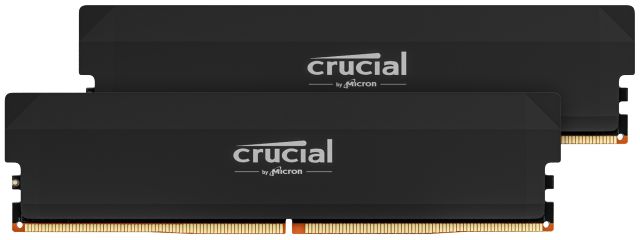
Micron Technology, known as a leader in innovative memory and storage solutions, has just announced that it is ending sales of its Crucial products designed for consumer computers. This means that these memory and storage products, which people purchased in stores, online, or from distributors around the world, will soon no longer be available. The decision comes at a time when demand for advanced memory for artificial intelligence (AI) in data centers is soaring. Micron plans to continue supplying Crucial products through consumer channels only until the end of its fiscal second quarter, which is February 2026. The company promises to work with partners and customers during this transition and ensure continued warranty service and support for all Crucial products.
Reason: Enormous demand for AI memory
The main reason for this decision is the massive growth in AI-powered data centers, which is leading to a shortage of memory and storage products. Sumit Sadana, executive vice president and chief business officer at Micron Technology, explained that the company decided to exit the Crucial consumer business so it could better secure supplies for its larger, strategic customers in rapidly growing segments. According to him, Crucial is a brand that has become synonymous with technical quality, reliability, and innovation in memory and storage, thanks to millions of customers, hundreds of partners, and the teams at Micron that have supported it for the past 29 years. This shift will allow Micron to focus on long-term growth in areas where it sees the greatest potential, such as enterprise and commercial products sold globally.
Major impact on the consumer market
Micron is the only U.S. supplier of advanced memory and competes with companies such as SK Hynix and Samsung in high-bandwidth memory, which is essential for AI chips. For example, Nvidia chips such as the GB200 require 192 GB of this memory per processor, while Google's Ironwood TPU requires the same amount. AMD's MI350 chip has as much as 288 GB of high-bandwidth memory, providing a performance advantage for AI applications. In contrast, ordinary consumer devices such as laptops often use only 16 GB of lower-specification memory. Micron supplies memory to AMD, and in the August quarter its high-bandwidth memory revenue reached nearly $2 billion (approximately CZK 47 billion), indicating an annual run rate of around $8 billion (approximately CZK 188 billion). In the most recent quarter, cloud memory revenue increased by 213% year over year.
The company is trying to minimize the impact on its employees by offering transfers to existing vacant positions within the company. Micron shares (Nasdaq: MU) have risen 175% this year, but fell 3% following the announcement and later declined by another 2.6% in afternoon trading. Goldman Sachs analysts recently raised their price target for the shares from $180 (approximately CZK 4,230) to $205 (approximately CZK 4,810), expecting positive results due to rising memory prices. Micron plans to release its quarterly results in two weeks.
Micron is now fully focused on its core areas, such as high-performance DRAM, NAND, and NOR memory, which power the data economy from data centers to smart devices. The company is headquartered in Boise, Idaho, and its innovations support advances in AI and compute-intensive applications.
Sources: cnbc.com and reuters.com


