

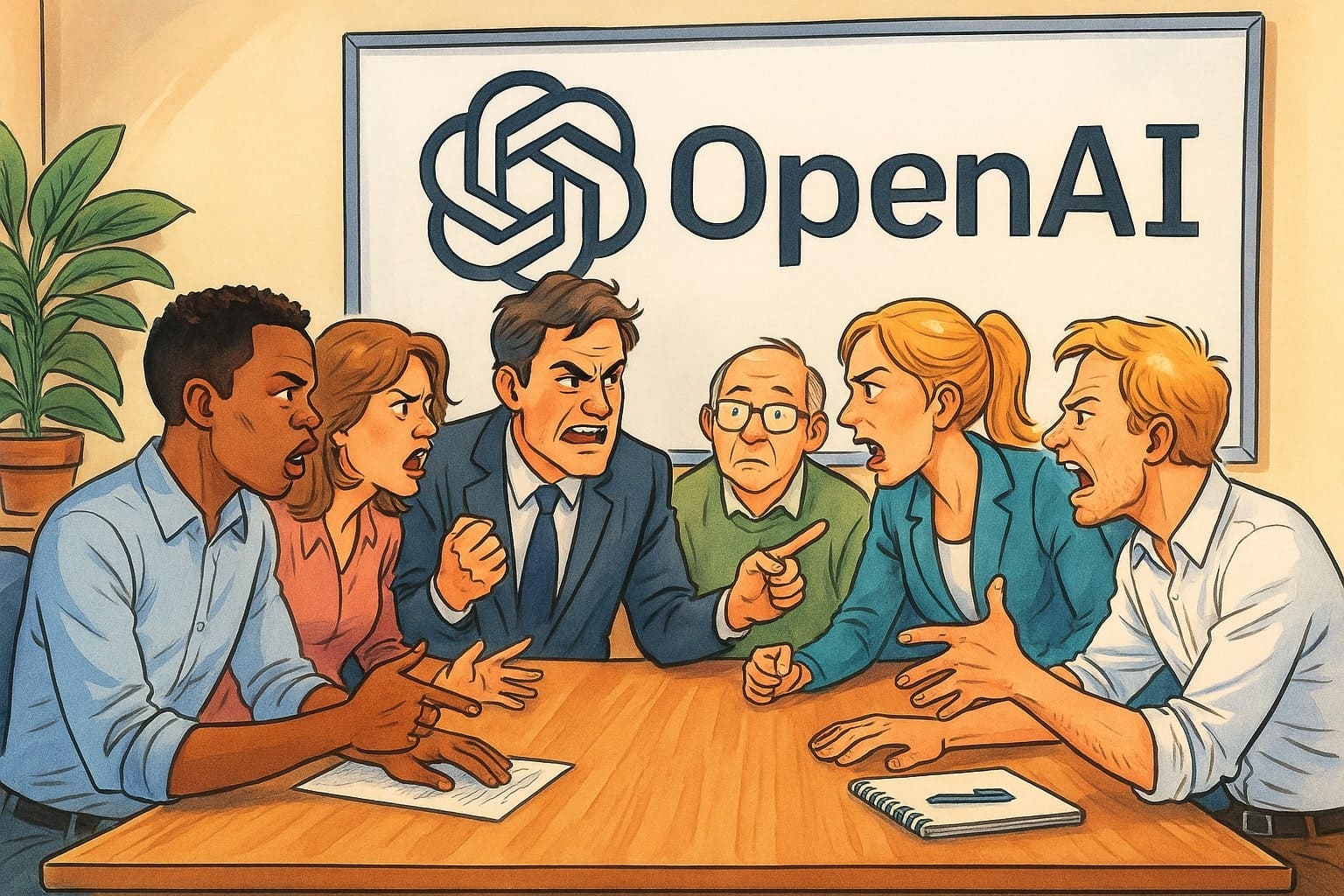
More than 600 people who came directly from Meta now work at OpenAI, representing roughly one-fifth of its total workforce of 3,000. They include Fidji Simo, who leads the applications division. This group even has its own internal Slack channel where members connect and hold discussions. This trend is bringing Meta-style growth tactics into the company, influencing both its culture and product strategy. According to a report from The Information, this is leading to significant changes as OpenAI transforms from a research lab into a major player in the consumer market.
The company conducted internal surveys asking employees whether OpenAI was becoming "too much like Meta." These questions reveal tensions within the team. For example, former Chief Technology Officer Mira Murati left precisely because of disagreements over the focus on user growth. Her departure confirms how the original emphasis on research is clashing with new approaches that prioritize rapid expansion and consumer products. Employees feel that the original, smaller and more agile atmosphere that helped OpenAI succeed is being lost.
Personalized Advertising and Sora 2
Teams at OpenAI are exploring how to use ChatGPT's memory for personalized advertising, although CEO Sam Altman previously described a similar idea as "dystopian." This approach resembles Meta's methods, where advertising is a key element. Despite past reservations, these ideas are now appearing in internal discussions, raising concerns among employees about the company's ethical direction. Details from the report indicate that this is part of a broader shift toward models that prioritize growth through advertising.
Another area of tension is the launch of Sora 2, a social app whose direction and content-moderation capabilities employees have expressed skepticism about. According to the report from The Information, there is internal criticism as doubts emerge about how effectively moderation can be handled in such an environment. This skepticism also extends to the overall direction OpenAI is taking under the influence of its new employees from Meta.
Impact on Corporate Identity
The arrival of "Meta DNA" brings growth expertise to OpenAI, but it also risks eroding the company's original identity. The company is expanding thanks to talent focused on growth, but at the cost of losing the smaller, innovative vibe that underpinned its early success. This double-edged sword is evident in daily operations, where old and new approaches intermingle. Other sources indicate that this change is also affecting morale, as some employees see Meta's style as a risk to ethics and data privacy. For example, debates about personalized advertising underscore how OpenAI is adapting to market pressures, even though these changes contrast with its original principles.


