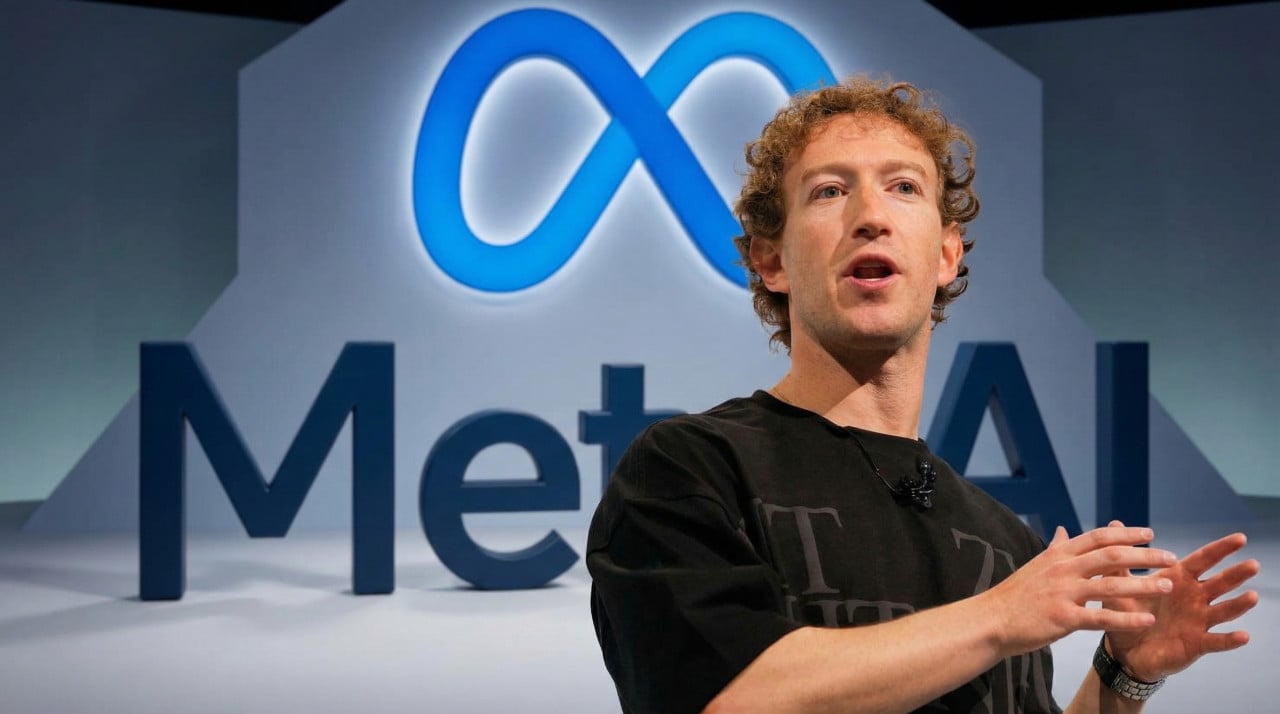
Mark Zuckerberg is not asleep, even if it may seem that way. While other technology companies are fine-tuning their AI strategies, Meta announced the creation of an entirely new engineering organization focused on applied artificial intelligence in March 2026. The goal? To build what they internally call a “data engine” capable of accelerating the development and improvement of AI models. And the entire plan is interesting, to say the least.
Details of the new team
Zuckerberg has appointed Maher Saba, vice president of the Reality Labs division, which oversees metaverse products and AI-powered smart glasses, to lead the new organization. Saba will report directly to Chief Technology Officer Andrew Bosworth, one of Zuckerberg’s closest associates.
The new group will work closely with Meta Superintelligence Labs, a research laboratory Meta created last summer. It is led by Alexandr Wang, the former head of Scale AI. Wang became one of the key figures in Meta’s AI strategy after joining the company in June 2025.
In an internal memo first published by the Wall Street Journal, Saba wrote clearly: “Building great models is not just about researchers and computing power. It requires real-world data, feedback, and evaluation.” That is exactly what the new team will focus on.
Two teams with clearly divided responsibilities
The new organization consists of two separate groups with different responsibilities:
The first team will focus on creating user interfaces and internal tools. This is the infrastructure without which the entire system would not function.
The second team is responsible for data collection, task completion, and evaluating model results. This data is then sent back to the research teams, which use it to further train the AI.
The result is intended to be a continuous feedback loop between model performance and real-world data. Saba described it simply: the team will build a “data engine that helps our models improve faster.” It sounds like a technical detail, but in reality, it is one of the most important links in the entire AI development chain.
50 people per manager
Here comes the truly interesting part. The new organization will operate with an unusually flat hierarchy, with a ratio of up to 50 employees per manager. That is literally a rarity in the corporate world.
Why? Zuckerberg explained it during the latest earnings call with investors. He said that Meta is “elevating individual contributors and flattening teams” and that the company is already seeing projects that previously required large groups of people being completed by a single talented individual. In other words, fewer bosses, more work.
Nvidia also uses a similar approach. CEO Jensen Huang has more than 30 direct reports, which is legendary in the technology world. Meta has clearly taken inspiration from this.
Why Meta is reorganizing its AI forces
The entire reorganization comes at a time when the race to develop advanced artificial intelligence is gaining momentum. Meta is competing with OpenAI, Google, Anthropic, and others. And Zuckerberg has committed to a clear strategy: dividing AI work among multiple specialized teams to reduce risk and increase speed. Alongside Saba’s new team and Wang’s research laboratory, Meta is working on new generations of AI models internally code-named Avocado and Mango. Bosworth, meanwhile, oversees the overall technology strategy.
It is worth noting that Meta Superintelligence Labs also recently underwent layoffs. At the time, Wang wrote in an internal letter that a smaller team means fewer meetings and greater responsibility for each member. Of the roughly one hundred members of the team, only two researchers left after their stock vested in November, suggesting that the rest of the group is stable and motivated.
Meta’s artificial intelligence
Zuckerberg is building organizational redundancy. If one team encounters an obstacle, the others continue moving forward. It is the same approach Meta uses for other major projects, where risk is distributed among multiple executives instead of everything depending on a single person.
Saba also mentioned in the memo that Meta has an opportunity to accelerate thanks to recent advances in reinforcement learning and post-training techniques. These methods are precisely where high-quality data and evaluation play the greatest role. And that is exactly what the new team will provide.
It could be said that Meta is no longer relying on great models being created solely through researchers and computing power. It is betting that the real advantage lies in data, feedback, and the speed at which they are processed. Time will tell whether this bet pays off. But one thing is clear: Zuckerberg is taking this game very seriously.
Sources: eweek.com and the-decoder.com