Transforming Text and Images into Production-Ready 3D Models
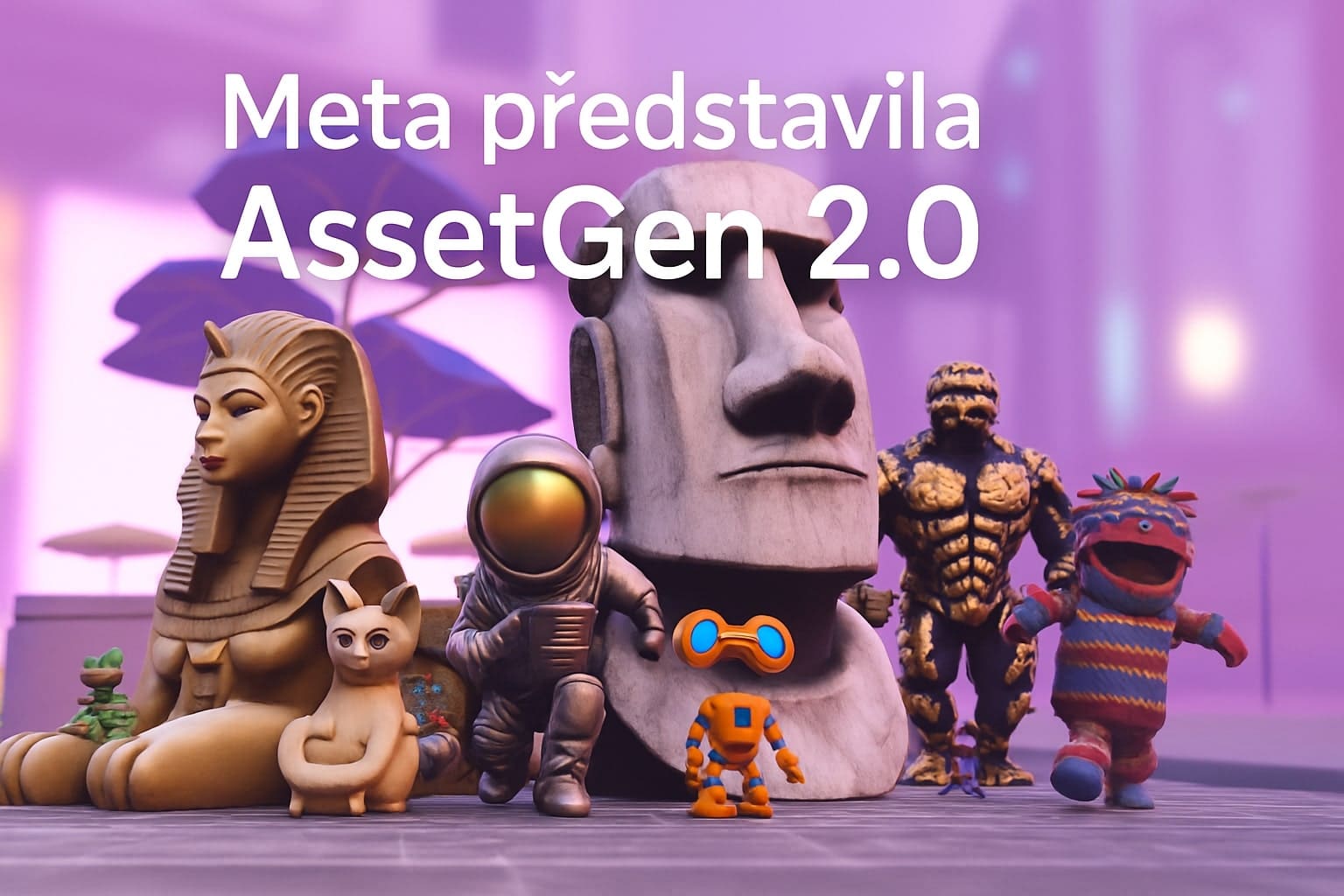
Meta has introduced AssetGen 2.0, a breakthrough advancement in the field of AI-powered 3D asset generation that promises to revolutionize the way creators develop content for virtual reality environments. This sophisticated system represents a significant evolutionary step beyond its predecessor, enabling users to transform simple text descriptions or reference images into high-quality, production-ready 3D assets with unprecedented ease and quality.
A Technological Leap in AI-Powered 3D Content Generation
According to Meta’s official developer blog, AssetGen 2.0 utilizes a single-stage 3D diffusion model – representing a fundamental improvement over previous multi-stage approaches. The system has been thoroughly trained on extensive libraries of real-world assets, enabling it to directly generate geometrically consistent meshes with remarkably fine details. This advanced architecture uses sign-distance functions to reliably represent shapes and incorporates deferred shading loss for effective supervision during the training process. One of the most notable technical improvements is the specialized TextureGen module, which generates high-resolution textures that maintain view consistency across the entire model. This subsystem supports intelligent in-painting to seamlessly fill gaps or imperfections on the mesh surface – a critical capability that results in visually stunning assets suitable for professional production environments. The model also includes a sophisticated transformer for enhancing textures in UV space, increasing sharpness and detail after the initial mesh extraction process.
Impressive Performance Metrics and Quality Improvements
Meta’s internal testing reveals that AssetGen 2.0 achieves up to a 17% improvement in Chamfer Distance – a key metric for measuring geometric accuracy in 3D models. Even more impressive is a 40% improvement in LPIPS (Linear Perceptual Image Patch Similarity) scores, which quantify perceptual similarity and overall visual quality. In a direct comparison with competing solutions, human evaluators preferred AssetGen 2.0 outputs in 72% of cases when compared with other industry solutions that support physically based rendering (PBR) materials at similar generation speeds.
Physically Based Rendering for Realistic Virtual Experiences
A key feature of AssetGen 2.0 is its native support for physically based rendering materials. The system automatically generates assets with PBR materials that enable realistic interactions with lighting – an essential element for creating truly immersive virtual reality experiences. These materials allow objects to respond naturally to various lighting conditions within virtual environments, significantly enhancing the realism and immersion experienced by users on platforms such as Meta Horizon Worlds.
Integration with the Meta Horizon Platform
According to reports from UploadVR, Meta is already using AssetGen 2.0 internally to create rich, detailed virtual worlds within its Horizon Worlds platform. This integration allows its team to rapidly prototype and develop immersive environments at a pace that was previously unattainable using traditional 3D modeling workflows. Current asset generation times range from three to six minutes per model, although future optimizations may further reduce this timeframe.
Democratizing 3D Creation for All Skill Levels
Perhaps the most transformative aspect of AssetGen 2.0 is the way it democratizes access to sophisticated 3D content creation. Meta plans to make this technology available to external creators through the Horizon Desktop Editor later this year, potentially opening the floodgates to a new generation of virtual world builders who lack traditional 3D modeling experience. As Meta’s developer blog explains, this tool will allow anyone to create custom VR content simply by describing what they want to create in natural language or by providing reference images.
Future Plans: From Individual Assets to Entire Worlds
Meta has outlined ambitious plans that go beyond the creation of individual assets. Future updates are expected to enable the generation of entire scenes from text or image prompts – potentially allowing users to construct complete interactive worlds through simple descriptive prompts. This vision aligns with Meta’s broader strategy of making the metaverse more accessible and creator-friendly by removing the technical barriers that have historically limited who could contribute to the development of virtual worlds.
Meta AssetGen 2.0 sets a new standard for accessible, AI-driven content creation in virtual reality by combining cutting-edge geometry synthesis with advanced texturing techniques. By making these sophisticated tools controllable through intuitive natural language or visual references, Meta empowers both professional developers and enthusiastic hobbyists to rapidly prototype and build immersive digital experiences within the Meta ecosystem.