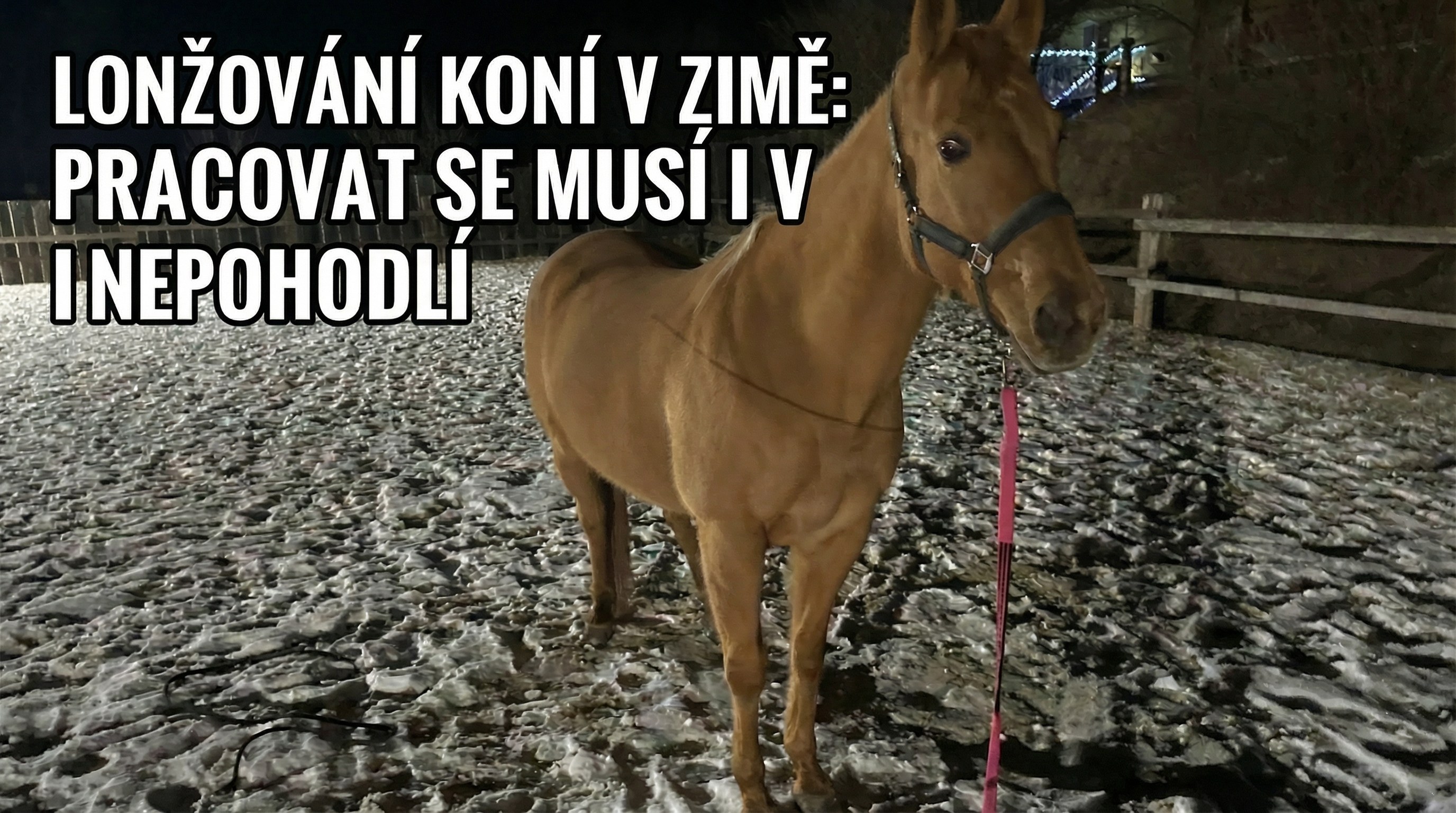
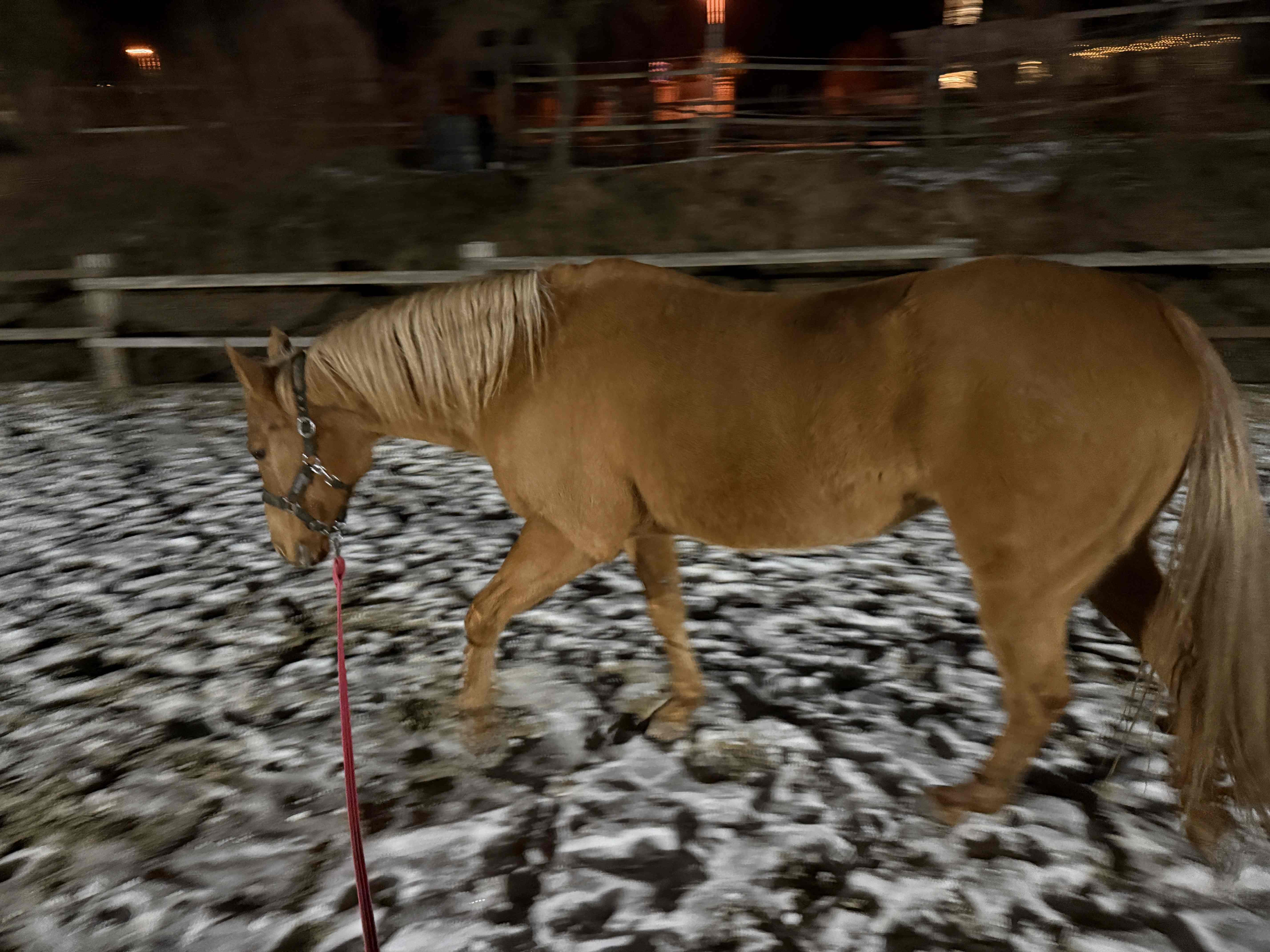
Today I went to see the horses and lunged Frosty. The winter weather was really kind to us this time—the thermometer showed a “pleasant” -10 °C. Even so, Frosty handled everything calmly and without any problems. Days like this remind me once again that lunging horses in winter is worthwhile, even though the frost, snow, or wind sometimes makes us reluctant to leave the stable.
Yesterday, the farrier was at the stables and fitted the horseshoes with special rubber pads to prevent the horses from slipping. And that is absolutely essential in winter.
Rubber Horseshoe Pads: Keeping Horses Safe in Winter Conditions
Rubber horseshoe pads (often also referred to as anti-slip inserts) are rubber pads placed between the hoof and the horseshoe. Their main purpose is to increase stability and reduce the risk of slipping on snow, ice, or frozen surfaces.
In winter, snow can easily build up under the horseshoe and harden into ice. The horse then literally walks “on stilts,” which is not only uncomfortable but, above all, dangerous—it may slip, strain its tendons, or even fall. Rubber pads effectively prevent this problem by stopping snow from accumulating and improving traction on the surface.
Thanks to them, lunging horses in winter is significantly safer, both for the horse itself and for the person working with it.
Although it was really cold today, Frosty worked willingly and remained focused. I regularly lunge horses even in winter, despite often not feeling like it at all because of the weather. Cold mornings, hard ground, fingers numb from the frost… but horses do not accept excuses.
Why Lunging Horses in Winter Is Important
Lunging during winter is not just about “maintaining a routine.” It has a much deeper significance for the horse’s health and mental well-being.
Maintaining Fitness
Without regular exercise, a horse loses muscle, flexibility, and overall fitness very quickly. Returning to work in spring is then much more demanding and increases the risk of injury.
Musculoskeletal Health
Regular, appropriately paced exercise helps keep the tendons, joints, and back in good condition. A short but meaningful lunging session is often better than doing nothing at all.
The Horse’s Mental Well-Being
Horses are used to working. If their movement is restricted for a prolonged period, they may become nervous or bored, or release their excess energy through unwanted behavior. Lunging horses in winter gives them structure and mental stimulation.
A Smooth Transition Between Seasons
A horse that continues working through winter is ready in spring. You do not have to start from scratch and gradually get its entire body moving again.
Of course, having an indoor arena would be ideal, mainly because of the ice, snow, and hard ground. But that does not mean you cannot work in winter without one. On the contrary—winter teaches us to adapt, slow down, think more carefully about the ground conditions, and listen to the horse. And that experience is useful throughout the year.
Lunging horses in winter simply is not about comfort. It is about responsibility, consistency, and respect for what the horse needs—even when we ourselves are cold and would rather stay at home.
What about you? Do you enjoy lunging in winter? 🐎❄️
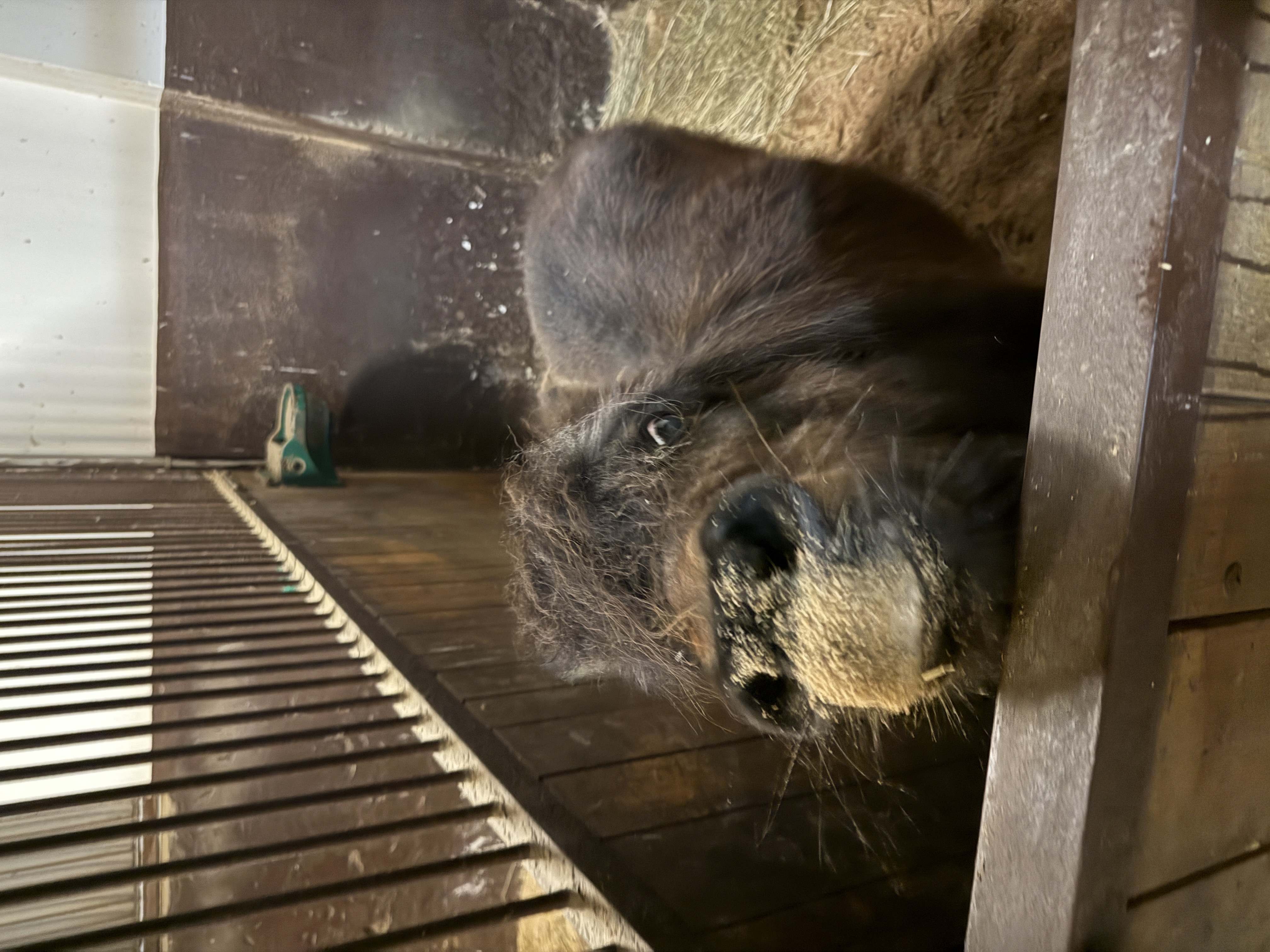
PS: Of course, our little “feed guzzler,” Bizonka the Miniature Shetland Pony, must not be left out :D