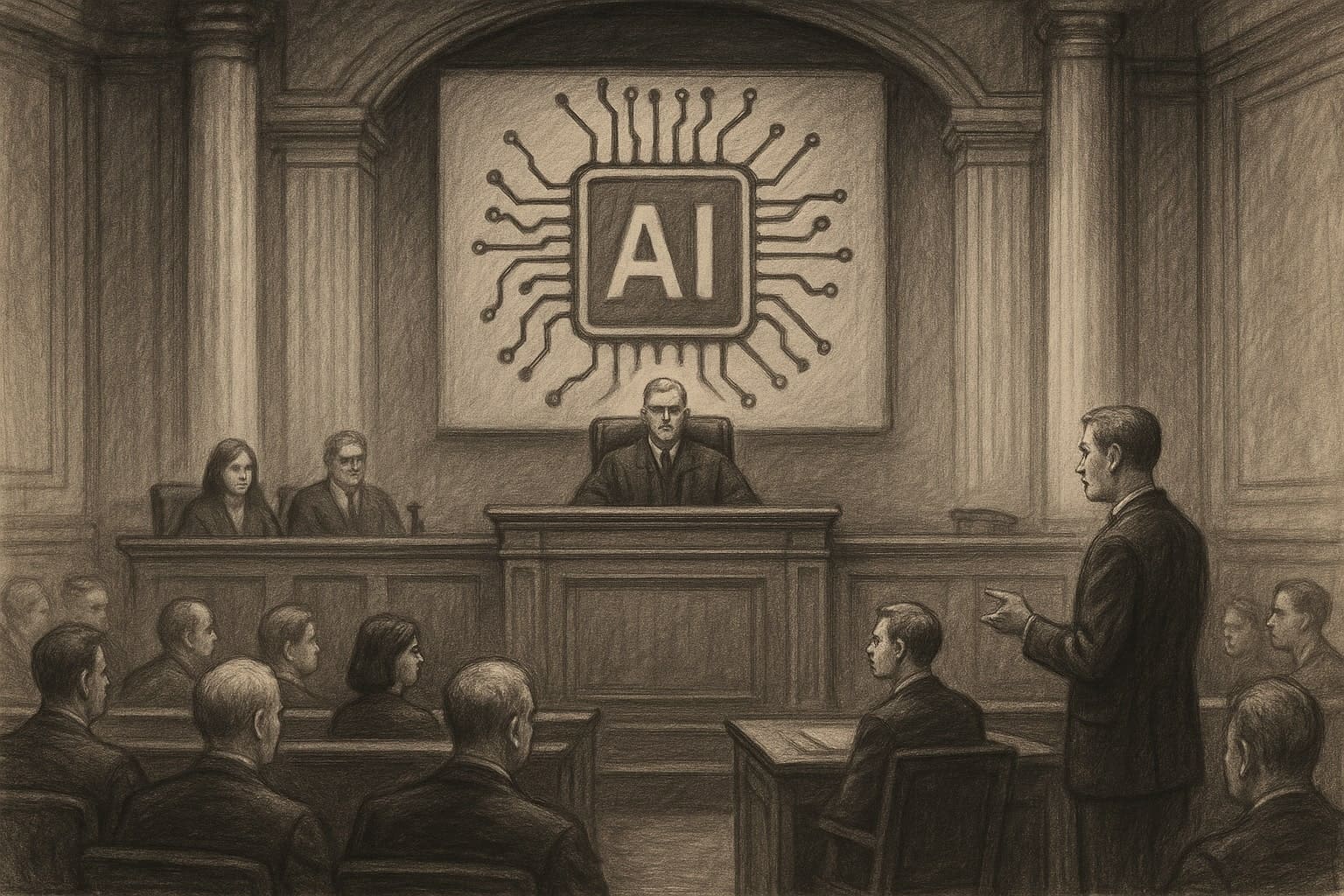
Over the past two years, numerous cases have emerged in U.S. courts in which attorneys used artificial intelligence (AI) to write documents, only for it to invent nonexistent court cases. Judges are calling it an "epidemic" and imposing fines on lawyers. According to a database compiled by French lawyer Damien Charlotin, who collected 23 such cases, attorneys often make excuses instead of admitting the mistake and apologizing immediately. The best way to receive a lighter penalty is to admit using AI, show humility, report the incident to bar associations, and complete courses on AI in law. But many do not do this and instead come up with wild excuses.
The Most Common Excuse: "I Didn't Know It Was AI"
Since 2023, when these problems began receiving public attention, attorneys have often pretended that they did not know their texts had been written by AI. For example, one California lawyer claimed that he thought he was using an ordinary Google search, but it was actually AI Overviews. They often blame subordinates or even clients. In Texas, a judge questioned an attorney's client because the attorney said she had helped him with case theories, even though she was not a lawyer. Other attorneys pretend they did not know that chatbots such as ChatGPT fabricate facts. In Oklahoma, one lawyer said he only wanted to "improve his writing," but the AI added fabricated citations. In California, another attorney had AI "enhance" his filings and then checked them with other AI tools, but did not read them himself—he was fined $10,000 (about CZK 235,000).
Wild Excuses: From Hackers to Laptop Problems
Some attorneys go even further and blame technical difficulties. In New York, lawyer Innocent Chinweze initially admitted using Microsoft Copilot, but then claimed that hackers had breached his computer and added the errors. Judge Kimon C. Thermos called this "incredible and unsupported" and fined him $1,000 (about CZK 23,500), in addition to reporting him to the disciplinary committee. Chinweze even filed another document containing AI-generated text, which angered the judge even more—the filing was chaotic, 88 pages long, and full of signs of AI-generated writing.
In Alabama, attorney James A. Johnson said he had accidentally used the Ghostwriter Legal AI tool in Microsoft Word because he was at the hospital with a family member and was in a hurry. He claimed that switching windows on his laptop was "tedious," so he preferred to use what was readily available. Judge Terry F. Moorer was not persuaded and fined him $5,000 (about CZK 117,500) because Johnson worked for the government and had wasted public funds. His client immediately fired him.
Other Tactics: Login Problems and Motions Filed "By Accident"
In Georgia, one attorney claimed that he had accidentally filed a rough draft instead of the final version. In Iowa, a lawyer said she had trouble logging into Westlaw, so she used AI—she received a $150 fine (about CZK 3,500) or two hours of training. In Louisiana, another lawyer lied that the errors had come from Westlaw Precision, but she had actually outsourced the work to a suspended colleague—she was fined $1,000 (about CZK 23,500).
In Illinois, attorney William T. Panichi was sanctioned at least three times. He admitted that AI had tempted him when he did not have access to research tools. In one case, he had to repay $6,925.62 (about CZK 162,750), plus a $1,000 fine (about CZK 23,500). He promised not to do it again, but soon received additional penalties.
Severe Penalties for Those Who Resist
Courts often impose fines payable either to the court or to the opposing party, depending on who wasted time checking the fabricated citations. One attorney claimed that checking takes only 7.6 seconds, but Judge Nancy Miller said that responsibility lies with the person who made the mistake. In Florida, attorney James Martin Paul refused to pay the full amount and offered only one-quarter—the court sanctioned him more than $85,000 (about CZK 2 million) for "repeated, malicious conduct." Judge Michael B. Slade in Illinois warned that anyone who is now unaware of the risks of AI has their head in the clouds.
These cases serve as a reminder that attorneys must be careful when using AI because courts have had enough of the excuses and are imposing increasingly severe penalties.
Source: arstechnica.com